
How can a number on a bathroom scale warn you about your heart? In heart failure, the heart can't pump as well as it should, so fluid builds up in the body. Fluid has weight. A few pounds in a few days can show up on the scale before you feel it in your lungs or ankles.
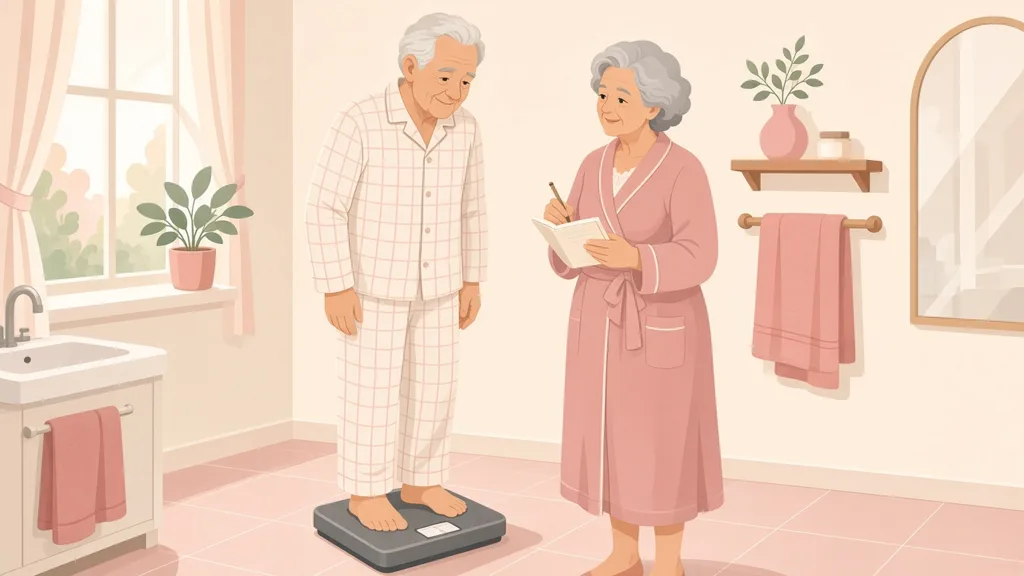
This guide is based on the American Heart Association's "Lifestyle Changes for Heart Failure" and MedlinePlus's "Heart failure - fluids and diuretics." It explains in detail how to weigh yourself and what to do with the numbers. Your heart team gives you the personal targets, medicines and fluid limits. Call them with questions.
Why weight matters in heart failure
MedlinePlus explains that when your heart doesn't pump enough blood, fluids build up in your body, and too much sodium can lead to fluid retention, with swelling, weight gain and shortness of breath. The American Heart Association says sudden weight gain or loss can be a sign that heart failure is developing or getting worse, and that your care team needs to know even if you feel fine, because they can adjust medicines, which may help you avoid a hospital stay.

How to weigh yourself
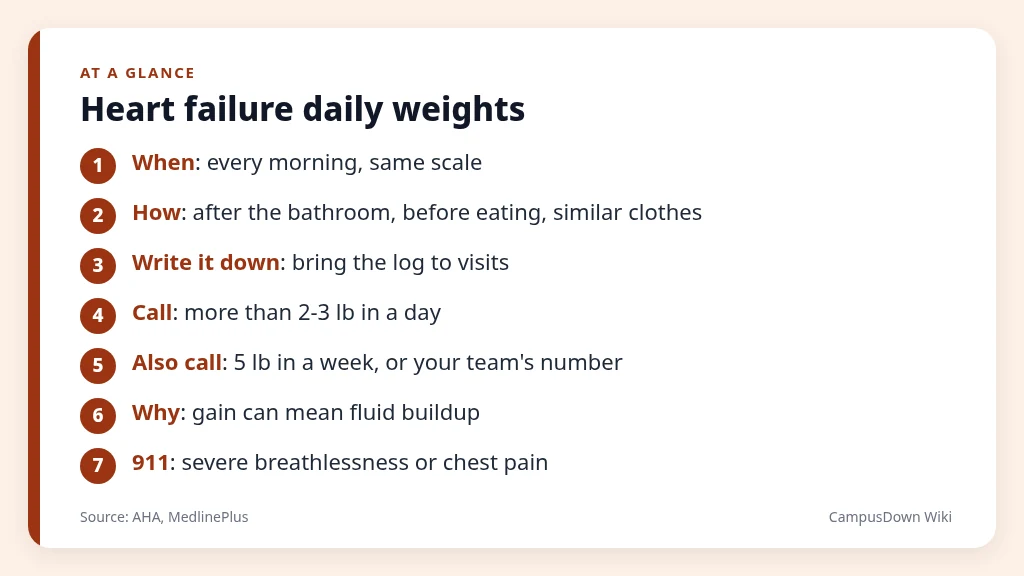
Both sources agree on the routine:
- Weigh every morning when you get up.
2. After using the bathroom and before you eat. 3. Wear similar clothing each time; the AHA says no shoes. 4. Use the same scale in the same place. 5. Write the weight down on a chart and bring it to each visit.
MedlinePlus adds that you'll get to know what weight is right for you, and that tighter clothes and shoes can be another sign of extra fluid.
What changes to report
MedlinePlus says to contact your provider if your weight goes up more than 2 to 3 pounds (1 to 1.5 kg) in a day or 5 pounds (2 kg) in a week, and also if you lose a lot of weight. The AHA says to notify your team if you gain two to three pounds in one day for several days in a row, five or more pounds in one week, or whatever amount your healthcare team told you to report. If your team gave you a different number, use theirs.
Other things your team may ask you to watch
- Sodium: MedlinePlus says your provider may ask you to limit sodium to 1,500 to 2,300 mg a day, and that "hidden salt" is in prepared, canned and frozen foods. Learn the label tricks from a dietitian.
- Fluids: the AHA says your team might recommend limiting liquids; ask how much to drink each day.
- Medicines: MedlinePlus says NSAIDs such as ibuprofen and naproxen can make the body retain sodium and may make heart failure worse. Ask before taking pain relievers.
- Water pills (diuretics): they help your body get rid of extra fluid. MedlinePlus says to take them at the same time each day, try not to take them at night, and have regular checkups so your provider can check potassium and kidney function. Learn what the numbers mean in eGFR and kidney function.
Bring all your pills to a brown bag medication review so someone can check for interactions.
Swelling, compression and other symptoms
Ankle swelling can come with weight gain. Our swollen ankles guide explains other causes, and you should ask your doctor before you try compression socks, because tight garments aren't right for everyone. Some blood pressure medicines can also cause ankle swelling; see amlodipine.
When to call
MedlinePlus lists reasons to contact your provider, including feeling tired or weak, short of breath when active, at rest or when lying down, wheezing, a cough that doesn't go away (dry, or wet with pink, foamy spit) and swelling.
Get help now if
Call 911 for severe shortness of breath, chest pain or pressure, fainting, or a cough with pink, foamy spit. Don't wait for the next clinic day.
Making the routine stick
- Keep the scale, notebook and pen where you'll see them every morning.
- Ask a family member to learn the routine, as MedlinePlus suggests, in case you're sick.
- Take a photo of your log before visits, or ask your clinic about home monitoring and Medicare home health nursing.
- Check your home blood pressure if your team asked you to; see blood pressure goals.
Example scenario: the three pounds that mattered
- Who
- Ephraim, 74, a retired postal supervisor in Dayton, Ohio, had heart failure and kept a spiral notebook by his bathroom scale. His wife, Ludmila, 72, a former school secretary, added a column for how many pillows he used.
- What happened
- One Thursday his weight was three pounds higher than Wednesday's, and by Friday it was five higher. He felt a little breathless on the stairs, but said he'd had a salty ham dinner and it would pass.
- How it felt
- Ephraim felt foolish calling the clinic over "a few pounds." Ludmila felt a rising fear, remembering the night in the emergency room the year before.
- What they did
- She called the heart clinic's nurse line while Ephraim sat on the edge of the bed. The nurse asked about his symptoms, medicines and salt, and said the care team would decide what to adjust. They saw him that week. Ephraim kept weighing himself, and Ludmila taped the clinic's phone number inside the notebook.
- How it turned out
- Ephraim said the notebook turned out to be the most useful thing in the house. Ludmila said she slept better knowing there was a number to act on.
This is an illustrative example, not a real patient or a review.
Ephraim's story is an illustrative example. Your targets and treatment come from your own care team.
Most-asked questions about heart failure weights
How should I do heart failure daily weights?
Weigh every morning on the same scale after the bathroom and before eating, in similar clothing, and write it down.
Why people ask: "heart failure daily weights" is #1 for "heart failure daily weight" (US autocomplete, November 2026).
What should a heart failure daily weight log include?
Date, morning weight, and notes on symptoms, swelling or pillows. Bring it to every visit.
Why people ask: "heart failure daily weight log" is #2 for "heart failure daily weight" (US autocomplete, November 2026).
What are the guidelines for heart failure daily weight?
MedlinePlus says to contact your provider if weight rises more than 2 to 3 pounds in a day or 5 pounds in a week; the AHA also says to report whatever your team told you.
Why people ask: "heart failure daily weight guidelines" is #3 for "heart failure daily weight" (US autocomplete, November 2026).
How much weight gain with heart failure is concerning?
More than 2 to 3 pounds in a day or 5 pounds in a week, or your team's number. Call your provider.
Why people ask: "how much weight gain in heart failure is concerning" is #5 for "how much weight gain with heart failure" (US autocomplete, November 2026).
Why are daily weights important in CHF patients?
Weight gain can mean fluid is building up, so catching it early lets your team adjust care.
Why people ask: "importance of daily weights in chf patients" is #8 for "heart failure daily weight" (US autocomplete, November 2026).
How much weight do you gain with heart failure?
It varies by person. Sudden gain is the signal to report, so follow your own team's instructions.
Why people ask: "how much weight do you gain with heart failure" is #2 for "how much weight gain with heart failure" (US autocomplete, November 2026).
Related on CampusDown
You can learn more about swollen ankles and take a closer look at kidney function numbers that your team may check while you take water pills.
Frequently asked questions
- Should I weigh myself more than once a day?
- Follow your team's advice. The usual routine is once each morning.
- What if my scale numbers jump around?
- Use the same scale, same time and same clothes, and tell your team if the numbers still seem off.
- Is weight loss also a concern?
- Yes. MedlinePlus says to contact your provider if you lose a lot of weight too.
- Can I skip a day if I feel fine?
- Try not to. The AHA says to tell your team about weight changes even if you feel OK. Check it for yourself with a daily habit.
A daily weight takes a minute and gives your care team a head start. Weigh the same way, write it down, and call early when the numbers move.
Browse more guides like this in the Senior Health and Medicare hub.
This article is for general education and does not replace advice from your own doctor, nurse or pharmacist.