
Does anyone have the full picture of every medicine you take? If you see several doctors and use more than one pharmacy, the honest answer may be no. A brown bag medication review fixes that in one visit: you bring everything, and a professional looks at it all together.

This guide uses the National Institute on Aging (NIA) page on taking medicines safely and Medicare.gov's page on Medication Therapy Management. It explains in detail how to prepare. Don't stop or change a medicine without talking to your doctor or pharmacist.
What goes in the bag
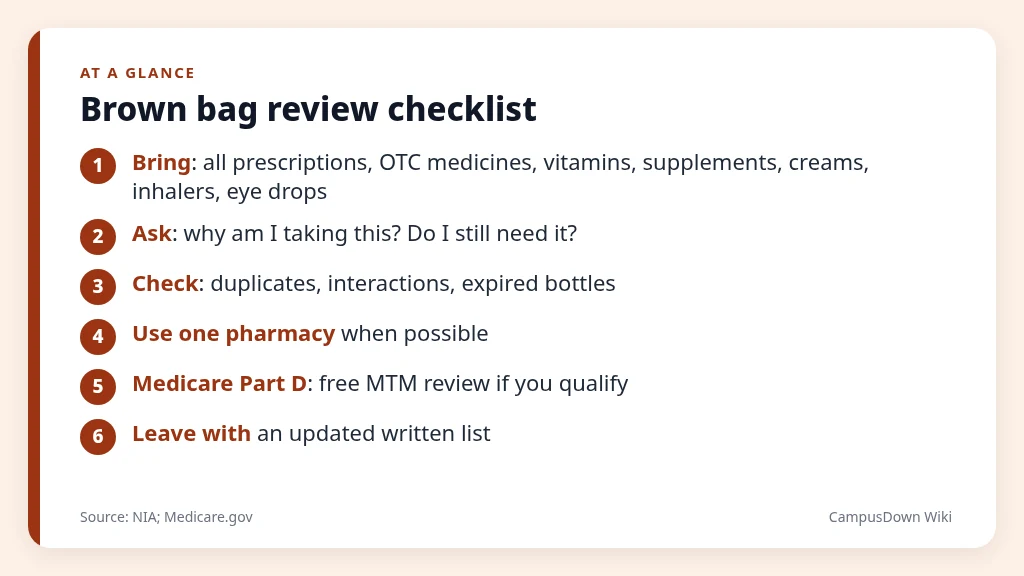
Put every medicine in a bag, in its original container:
- Prescriptions, including ones you take only sometimes
- Over-the-counter pain relievers, sleep aids, allergy and stomach medicines
- Vitamins, supplements and herbal products
- Inhalers, eye drops, creams, patches and injections
- Old or expired bottles you haven't thrown out
NIA advises telling providers about everything, "even ones you use infrequently."

Questions to ask about each medicine
- What is this for, and do I still need it?
- Is the dose still right for my age and kidney function?
- Could it interact with anything else here?
- Could it cause dizziness, confusion or falls? See anticholinergic drugs.
- Is there a duplicate, like two pain relievers with the same ingredient?
- Is there a safer or cheaper alternative?
A pharmacist may also compare your list with the Beers Criteria of medicines that deserve a second look after 65.
Free reviews through Medicare drug plans
Medicare.gov says plans with Medicare drug coverage must offer Medication Therapy Management (MTM) to members who meet certain requirements, at no cost. MTM may include:
- A comprehensive review of your medicines and why you take them
- A written summary of the review
- A recommended to-do list and a medication list
If you take drugs for more than one chronic condition, call your drug plan to ask if you're eligible. You can also bring your bag to a Medicare Annual Wellness Visit.
Keep a current medication list
NIA suggests carrying a list of all prescriptions, OTC medicines and supplements with your doctors' and pharmacists' phone numbers. Include:
- Name, strength and dose
- When and how you take it
- Why you take it and who prescribed it
- Allergies and past reactions
Bring it to every visit and to the hospital or ER, and check it for yourself after every medicine change. Organizers can help; see pill organizer tips and automatic pill dispensers.
One pharmacy, and safe disposal
- NIA suggests filling prescriptions at the same pharmacy so records are in one place. If you can't, share your list at each one.
- Check expiration dates and don't take expired medicines.
- Dispose of unneeded medicines safely. FDA says the best option is a drug take-back location or a prepaid mail-back envelope. If neither is available, check the FDA flush list; otherwise mix pills with used coffee grounds, dirt or cat litter, seal them in a bag or container, put them in household trash, and scratch out personal information on the bottles.
Get help now if
Never stop blood thinners, heart, seizure, diabetes or mental health medicines, or sleeping pills you've taken a long time, without medical advice. Some need a slow taper.
Example scenario: two pharmacies, one problem
- Who
- Cyrus, 74, a retired civil engineer in Dearborn, Michigan, used two pharmacies and saw a cardiologist, a urologist and his family doctor. His wife, Imogen, 72, noticed he was dizzy when he stood up.
- What happened
- When she emptied every bottle into a grocery bag, they found two blood pressure medicines from different doctors, a bladder pill, a nightly allergy sleep aid, and fish oil and ginkgo he'd added on his own.
- How it felt
- Cyrus was embarrassed and worried he'd been "taking poison." Imogen was frightened he'd fall on the basement stairs.
- What they did
- She called his Part D plan, which confirmed he qualified for a free MTM review. The pharmacist went through the bag, sent questions to his doctors, and made a single written list.
- How it turned out
- His doctors adjusted the blood pressure medicines, swapped the sleep aid and reviewed the supplements. The dizziness eased, and Cyrus moved everything to one pharmacy. He now keeps the list in his wallet and says the paper bag did more than any new pill.
This is an illustrative example, not a real patient or a review.
Cyrus's story is an illustrative example. Bring your own bag to your next visit.
Most-asked questions about medication reviews
What is a medication review for the elderly?
A structured look at every medicine an older adult takes, to check whether each is still needed, safe and correctly dosed.
Why people ask: "medication review elderly" is #1 for "medication review elderly" (US autocomplete, November 2026).
What's on a pharmacist medication review checklist?
Every prescription, OTC medicine and supplement, plus questions about purpose, dose, interactions, duplicates, side effects and cost.
Why people ask: "pharmacist medication review checklist" is #2 for "pharmacist medication review" (US, November 2026).
What is a Medication Therapy Management program?
A free service Medicare drug plans must offer to members who qualify, including a comprehensive review, written summary and medication list.
Why people ask: "medication therapy management program" is #3 for "medication therapy management" (US, November 2026).
What should a medication list template include?
Each medicine's name, strength, dose, timing, purpose and prescriber, plus allergies and your doctors' and pharmacy's numbers.
Why people ask: "medication list template" is #2 for "medication list" (US, November 2026).
How do I dispose of old medications at home?
FDA recommends take-back locations or mail-back envelopes first. Otherwise, unless a drug is on the FDA flush list, mix it with coffee grounds or cat litter, seal it and put it in the trash.
Why people ask: "how to dispose of old medications at home" is #2 for "how to dispose of old medications" (US, November 2026).
Related on CampusDown
To take a closer look at medicines that deserve extra caution, read the Beers Criteria.
Frequently asked questions
- How often should I do a brown bag review?
- At least once a year and whenever you add a medicine, see a new doctor or leave the hospital. NIA suggests asking at each visit if you still need all your medicines.
- Should I bring vitamins and supplements?
- Yes. NIA advises mentioning all supplements and herbal remedies, since they can interact with medicines.
- Is MTM free?
- Yes, for people who qualify through their Medicare drug plan.
One bag, one review, one updated list. Bring everything, ask why you take each medicine, use one pharmacy, and let your doctor and pharmacist guide any changes.
Browse more guides like this in the Senior Health and Medicare hub.
This article is for general education and does not replace advice from your own doctor, nurse or pharmacist.