
Are you trying to figure out Medicare for a parent while also worrying about their last fall? Later-life health questions rarely come one at a time. A hospital stay raises Medicare questions, a new medicine raises fall questions, and a memory change raises caregiving questions, often in the same week. This hub collects CampusDown's 100 guides for older adults and caregivers in one place. Medicare figures are taken from Medicare.gov with the date they were checked. If a deadline is coming up, take a closer look at the Medicare cluster first.
How to use this hub
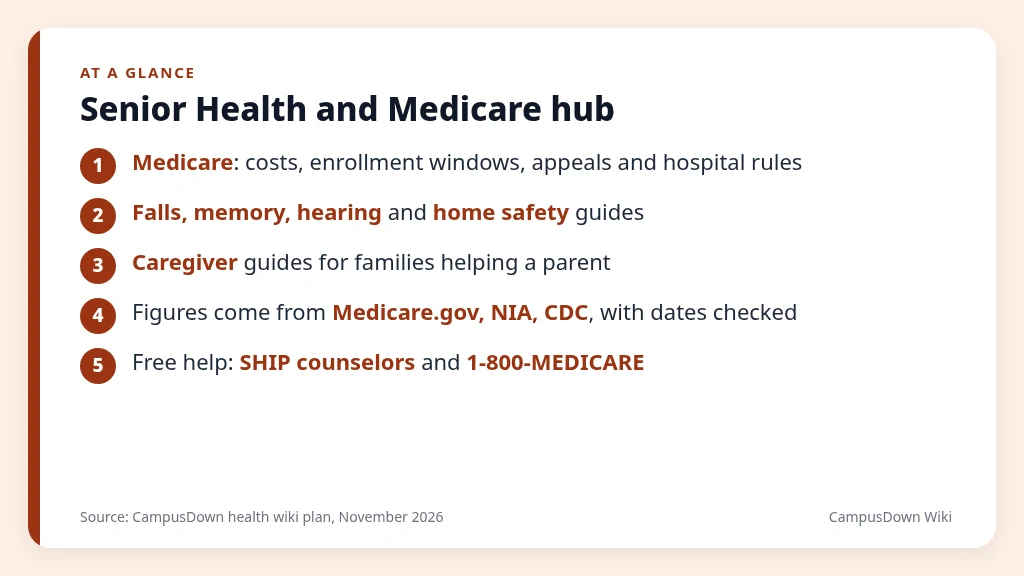
- Start with the cluster that matches today's problem: Medicare, falls, memory, caregiving or another topic.
- Medicare guides list dates and dollar amounts with the month we checked them; confirm current figures on Medicare.gov.
- Caregiver guides are written for adult children, spouses and friends as well as older adults themselves.
- Titles shown as plain text are coming soon and switch on automatically.

Medicare and costs
- Fast Appeals When Medicare Coverage Ends: The Notice of Non-Coverage
- Hospital Discharge Planning for an Older Parent: Questions to Ask
- Medicare Advantage vs Medigap: Networks, Prior Authorization and Switching Rules
- Medicare Extra Help (LIS): Income Limits and How to Apply
- Medicare Open Enrollment Oct 15 to Dec 7: What You Can Change
- Medicare Part B Premium and Deductible for 2026: What Comes Out of Social Security
- Medicare Part D Out-of-Pocket Cap and the Prescription Payment Plan
- Medigap Plan G vs Plan N: Copays, Excess Charges and Premiums
- Observation Status vs Inpatient Admission: The Medicare 3-Day Rule for Rehab
- Skilled Nursing Rehab After a Hospital Stay: Medicare's 100-Day Benefit
- Advance Directives and Living Wills: Writing Down Medical Wishes
- Assisted Living vs Nursing Home: Care Levels and Who Pays
- Continuing Care Retirement Communities (CCRCs): Entry Fees and Contracts
- Healthcare Power of Attorney vs Financial POA: Basics Before a Crisis
- IRMAA: The Medicare Income Surcharge and How to Appeal After Retirement
- Long-Term Care Insurance: Elimination Periods and Hybrid Policies
- Lost Medicare Card: How to Get a Replacement and Protect Your Number
- Medicaid for Nursing Home Care: The 5-Year Look-Back Basics
- Medicare Annual Wellness Visit vs a Physical: What Is Included
- Medicare Home Health Benefit: Homebound Rules and What Is Covered
- Medicare Hospice Benefit: Eligibility and What Families Should Know
- Medicare Savings Programs: QMB, SLMB and QI Explained
- Medicare Telehealth Rules: Video Visits From Home
- Medigap Birthday Rules: States That Let You Switch Without Underwriting
- Nursing Home Star Ratings on Care Compare: How to Read Them
- PACE Program: All-Inclusive Care for the Elderly
- POLST Forms: Medical Orders for Seriously Ill People
- Scams Targeting Seniors: Medicare Card, Grandparent and Tech Support Scams
- Signing Up for Medicare at 65 While Still Working: Avoiding Late Penalties
- VA Aid and Attendance Pension: Help for Veterans Needing Care
Caregiving
- Brown Bag Medication Review: Bringing Every Pill to the Doctor
- Can a UTI Cause Confusion in the Elderly? What the Evidence Says
- Caregiver Burnout: Signs and Respite Options
- Depression in Older Adults: Not a Normal Part of Aging
- Grief After Losing a Spouse in Later Life
- Hoarding in Older Adults: Safety Risks and Gentle Approaches
- In-Home Care Options: Home Health vs Home Care Aides
- Loneliness and Social Isolation in Older Adults: Health Effects and Help
- Older Drivers: Warning Signs and How to Talk About Giving Up Keys
- Polypharmacy and the Beers Criteria: Medicines That Need a Second Look After 65
- Respite Care: Adult Day Programs and Short Stays
- Signs of Elder Abuse and Neglect and Where to Report
- Unintended Weight Loss in Older Adults: When to Investigate
Example scenario: the week everything happened at once
- Who
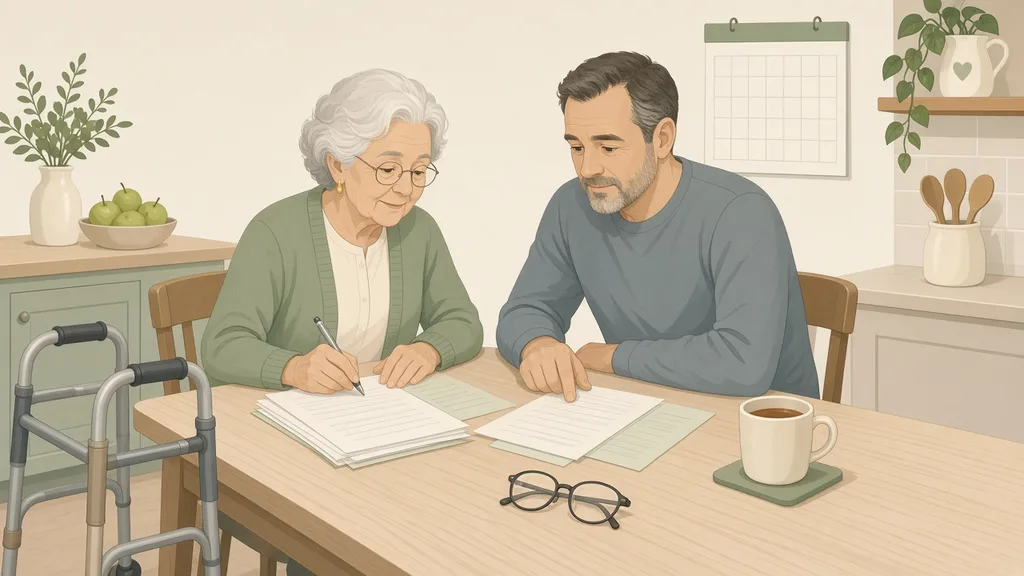
- Dorothy, 82, a retired church organist in Kentucky, fell at home, spent two nights in the hospital, and was told she might go to rehab.
- What happened
- Her son Gil, 55, drove in from Indiana and found a discharge notice, a Medicare letter he did not understand, and a new blood pressure pill on her counter.
- How it felt
- Gil felt guilty for living far away and panicked about money; Dorothy felt embarrassed and insisted she was fine.
- What they did
- Gil used the senior hub to read about observation versus inpatient status, rehab coverage and fall prevention, then called the hospital case manager with specific questions.
- How it turned out
- Dorothy went to rehab under the right status, came home with a walker and grab bars installed, and Gil set up a weekly call. He says knowing the right questions made him feel like a son again, not just a paperwork manager.
This is an illustrative example, not a real patient or a review.
Dorothy and Gil are an illustrative example, not real people. Always confirm coverage with Medicare or your plan.
Falls and mobility
- Aging in Place: Home Modifications That Matter Most
- Balance Exercises for Seniors: Safe Moves to Practice at Home
- DEXA Scan T-Score: Osteopenia vs Osteoporosis
- Fall Prevention at Home: A Room-by-Room Checklist
- Fear of Falling After a Fall: How It Leads to Less Activity
- Hip Fracture in Older Adults: Surgery, Rehab and Recovery Milestones
- How to Get Up Safely After a Fall and When Not to Try
- Medicare Durable Medical Equipment: Walkers, Wheelchairs and Suppliers
- Peripheral Neuropathy in the Feet: Numbness, Falls and Foot Checks
- Power Wheelchairs and Scooters Under Medicare: The Face-to-Face Rule
- Tai Chi for Fall Prevention: What Studies Found
Memory and dementia
- Alzheimer's Blood Tests: What Amyloid and p-tau Tests Can Show
- Anticholinergic Medications and Memory: Diphenhydramine and Others
- Early Signs of Dementia Families Notice: 10 Warning Signs
- Everyday Memory Aids for Older Adults: Routines, Lists and Pill Reminders
- Hospital Delirium in Older Adults: Sudden Confusion Is Not Dementia
- Leqembi and Kisunla: Anti-Amyloid Drugs, Eligibility and ARIA Monitoring
- Memory Care: What Is Different From Assisted Living
- Sundowning in Dementia: Late-Day Agitation and Calming Routines
- Vitamin B12 Deficiency After 60: Absorption and Memory Symptoms
- Wandering in Dementia: Prevention and Location Tools
- When a Parent With Dementia Refuses to Bathe
Hearing
- Age-Related Hearing Loss (Presbycusis): Signs Families Notice First
- Does Medicare Cover Hearing Aids, Dentures and Glasses?
- Getting Used to New Hearing Aids: The First Month
- Hearing Loss and Dementia Risk: What the ACHIEVE Trial Found
Home safety
- Alcohol and Aging: Why the Same Drink Hits Harder After 65
- Emergency Medical Info for Seniors: Medical ID and Fridge Lists
- Heat Waves and Older Adults: Medications That Raise Heat Risk
- Indoor Cold and Older Adults: Hypothermia Risk at Home
Pain, joints and bones
- Dentures: Daily Cleaning, Fit Problems and Sore Spots
- Hip Replacement Recovery: Precautions and Timeline
- Knee Replacement Recovery: Week-by-Week Expectations
- Shingles After 50: Rash, Nerve Pain and Prevention
Eyes, teeth and mouth
- Cataract Surgery: Lens Choices and the First Weeks of Recovery
- Dry Mouth in Older Adults: Medication Causes and Tooth Decay
- Low Vision Aids: Magnifiers, Lighting and Large-Print Tools
Heart, rhythm and blood thinners
- AFib in Older Adults: Stroke Risk and Blood Thinner Decisions
- Heart Failure: Daily Weights, Salt and Swelling Warning Signs
- Swollen Ankles in Older Adults: Medications, Heart and Vein Causes
More topics
- Diabetes in Older Adults: Why A1C Goals Are Often Relaxed
- Low Blood Sugar in Older Adults: Confusion, Falls and Prevention
- High-Dose and Adjuvanted Flu Shots for People 65+
- Protein and Appetite After 70: Meals That Help Keep Muscle
- Dehydration in Older Adults: Why Thirst Fades and Warning Signs
- Low Sodium in Older Adults: Medication Causes and Confusion
- COPD Flare-Ups: Early Warning Signs and Action Plans
- Pneumonia Vaccines for Adults 50+: PCV20 and PCV21 Basics
- Chair Exercises for Seniors With Limited Mobility
- Pressure Sores in Bed-Bound Older Adults: Turning and Skin Checks
- Nocturia: Waking at Night to Urinate and Fall Risk
- Sleep Changes With Age: Early Waking and Daytime Naps
- Blood Pressure Targets for Older Adults: Balancing Strokes and Falls
- Constipation in Older Adults: Medication Causes and Fiber Tips
- Sudden Eye Floaters and Flashes After 60: Retinal Detachment Warning
- Stroke Recovery at Home: Therapy and Family Support
- Urinary Incontinence: Stress vs Urge and Pelvic Floor Training
Other CampusDown health hubs
Get help now if
Call 911 after a fall with a head strike, if someone cannot get up, or for confusion, chest pain or stroke signs. For Medicare scams, hang up on anyone asking for your Medicare number by phone.
Free help
State Health Insurance Assistance Programs (SHIPs) give free, unbiased Medicare counseling, and 1-800-MEDICARE (1-800-633-4227) answers coverage questions. You can learn more about both inside the Medicare guides.
Frequently asked questions
- Are Medicare figures current?
- Each guide states when figures were checked; confirm on Medicare.gov before deciding.
- Is this hub only for seniors?
- No. Many guides are written for family caregivers.
- Do you sell insurance?
- No. CampusDown does not sell insurance or take referral fees for plans.
- Where can I get free Medicare help?
- Your local SHIP or 1-800-MEDICARE.
Later-life health decisions go better with good information and someone on your side. You can check it for yourself in the guides above, and talk to the doctor, pharmacist or a SHIP counselor before big decisions.
This article is for general education and does not replace advice from your own doctor, nurse or pharmacist.