
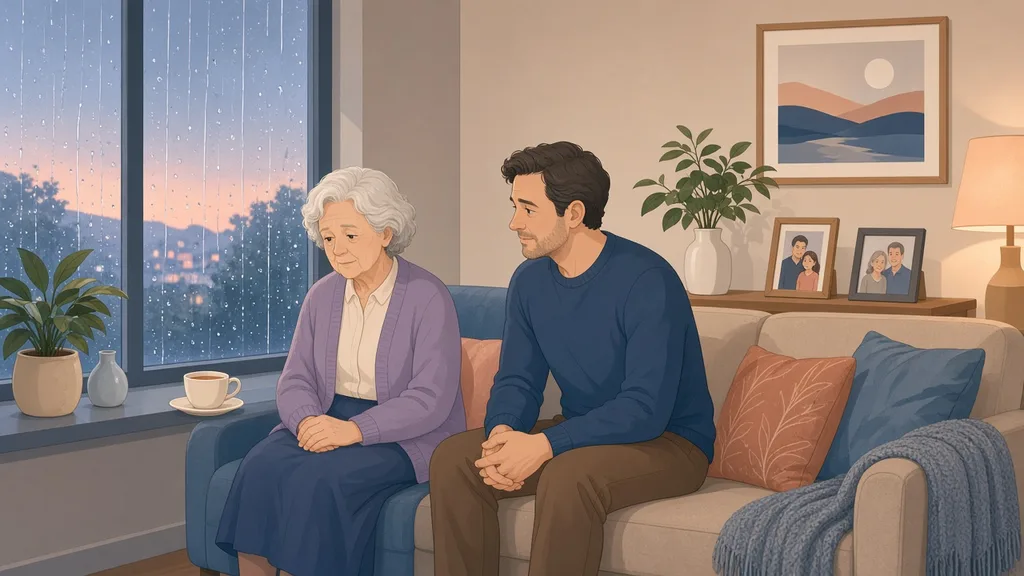
Is it just old age, or is something wrong? When a parent stops calling friends, skips meals, or says "what's the point," families often assume it's part of getting older. It isn't. NIA says depression is common in later life but not a normal part of aging, and most people get better with treatment.
This guide is based on the National Institute on Aging (NIA) page on depression and older adults. It explains in detail the signs, risks and treatments. If you or someone you love is thinking about self-harm, call or text 988 or call 911 now.
What depression is
NIA describes depression as a serious mood disorder that affects how you feel, think and act. Types seen in older adults include:
- Major depressive disorder: symptoms for at least two weeks that interfere with daily life
- Persistent depressive disorder: low mood lasting more than two years
- Substance- or medication-induced depression, such as from alcohol or pain medicines
- Depression due to a medical condition, such as heart disease
NIA notes that most older adults feel satisfied with their lives, even with more health problems.

Symptoms can look different after 65
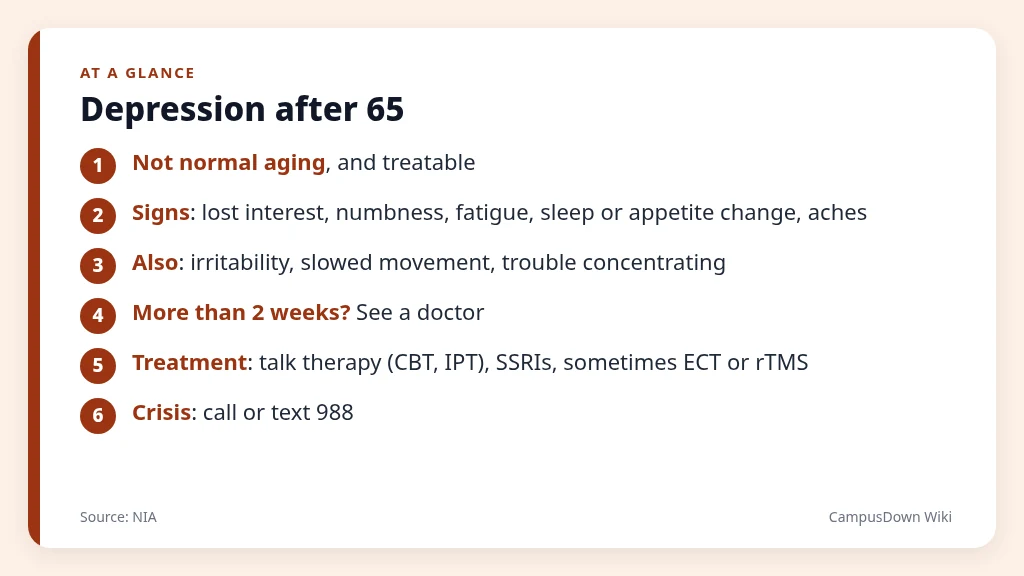
NIA says sadness may not be the main symptom. Older adults may feel emotional numbness, lose interest, or be less open about feelings. In some cultures, depression shows up mostly as aches, headaches, cramps or digestive problems. Common symptoms:
- Persistent sad, anxious or "empty" mood
- Hopelessness, guilt or worthlessness
- Irritability or restlessness
- Loss of interest in activities once enjoyed
- Fatigue, moving or talking more slowly
- Trouble concentrating, remembering or deciding
- Sleep problems, early waking or oversleeping
- Eating more or less, with weight change
- More alcohol or drug use
- Thoughts of death or suicide
If several last more than two weeks, talk with a doctor and learn more about what an evaluation includes.
Risk factors
NIA lists factors linked to depression: illnesses like stroke or cancer, personal or family history, caregiver stress (see caregiver burnout), sleep problems, isolation and loneliness (see loneliness in older adults), inactivity, functional limits and alcohol use disorder. Loss also matters; see grief in older adults.
Depression and dementia
NIA says depression is common in people with dementia, the two share symptoms, and depression can be an early warning sign of dementia. Learn the differences in early signs of dementia.
Treatment
A doctor first checks whether medicines or medical conditions are causing symptoms, then may refer to a mental health professional. NIA lists:
- Psychotherapy, such as CBT or interpersonal therapy
- Antidepressants; SSRIs are commonly prescribed to older adults. See sertraline.
- ECT, usually when other treatments haven't helped
- rTMS, which uses magnets and doesn't need anesthesia
Many people need to try more than one option. Tell your doctor if a plan isn't working.
Get help now if
Aging changes how medicines are absorbed and used, raising interaction risks. Share every medicine and supplement before starting an antidepressant, and don't stop one suddenly without medical advice.
How family can help
- Encourage treatment and help set up or attend appointments.
- Invite them for walks or activities they enjoy.
- Listen for signs they're feeling worse.
- Ask directly about suicidal thoughts. NIA says asking won't make someone more likely to act and may help them open up.
Example scenario: "I'm just tired"
- Who
- Agatha, 76, a retired parish secretary in Worcester, Massachusetts, had always run the church bake sale. A year after her hip replacement and her sister's death, she stopped going, left mail unopened and lost weight.
- What happened
- She told her son, Lorcan, 49, that she was "just tired" and that her back ached all the time. She wasn't crying, so he assumed it wasn't depression.
- How it felt
- Lorcan felt helpless and guilty for not visiting more; Agatha felt like a burden and quietly wondered what the point was.
- What they did
- After reading NIA's signs, he took her to her doctor and mentioned the weight loss and lost interest. The doctor checked her thyroid and medicines, screened for depression, and referred her to a therapist; they also discussed starting an SSRI. Lorcan asked her directly about suicidal thoughts and added 988 to her phone.
- How it turned out
- Over three months, with weekly therapy and the medicine, Agatha started baking again and rejoined the bake sale committee. She said she hadn't known depression could feel like nothing at all.
This is an illustrative example, not a real patient or a review.
Agatha's story is an illustrative example. Talk with a doctor about any treatment.
Most-asked questions about depression in older adults
What are the symptoms of depression in the elderly?
Lost interest, numbness, fatigue, sleep and appetite changes, aches, irritability, trouble concentrating, and thoughts of death. Sadness may not be the main sign.
Why people ask: "depression in elderly symptoms" is #5 for "depression in elderly" (US autocomplete, November 2026).
How is depression in the elderly treated?
With talk therapy such as CBT, antidepressants such as SSRIs, or both. ECT or rTMS may be options when other treatments haven't worked.
Why people ask: "depression in elderly treatment" is #4 for "depression in elderly" (US, November 2026).
Does depression look different in elderly women?
NIA's symptom list applies to everyone. Watch for lost interest, fatigue and weight change, not just sadness.
Why people ask: "depression in elderly women" is #2 for "depression in elderly" (US, November 2026).
What does depression look like in elderly men?
NIA's list applies to men too, including irritability, aches, more alcohol use and lost interest, and older adults may talk less about feelings. See a doctor if signs last more than two weeks.
Why people ask: "depression in elderly men" is #3 for "depression in elderly" (US, November 2026).
What medication is used for depression in the elderly?
NIA says SSRIs are commonly prescribed to older adults. A doctor chooses based on health and other medicines.
Why people ask: "depression in elderly medication" is #8 for "depression in elderly" (US, November 2026).
What are signs of depression in elderly people with dementia?
Symptoms overlap, so lost interest, withdrawal or mood changes should be evaluated by a doctor. Depression is common in dementia.
Why people ask: "signs of depression in elderly with dementia" is #5 for "signs of depression in elderly" (US, November 2026).
Related on CampusDown
To take a closer look at a common contributor, read loneliness in older adults.
Frequently asked questions
- Is depression a normal part of aging?
- No. NIA says it's common but not normal, and treatable.
- Will asking about suicide put the idea in their head?
- No. NIA says asking doesn't make someone more likely to act and may help them open up.
- Can medicines cause depression?
- Some can. NIA says a doctor will check for medicine or medical causes first.
Depression in later life is real, common and treatable. Learn the quieter signs, see a doctor if they last two weeks, try treatment with patience, and ask directly about safety. Call or text 988 in a crisis.
Browse more guides like this in the Senior Health and Medicare hub.
This article is for general education and does not replace advice from your own doctor, nurse or pharmacist.