
It's day four on a new antidepressant. Your stomach is unsettled, you feel jittery and you're wondering whether it's working, or whether something is wrong. What is normal at the start, and what means you should call?

This guide is based on MedlinePlus's sertraline drug information (last revised October 2025) and NIMH's mental health medications page. It does not give doses and cannot replace your prescriber. If you or someone you know is thinking about suicide, call or text 988, or call 911 in an emergency. To learn more about conditions it treats, take a closer look at panic disorder.
What sertraline is
MedlinePlus says sertraline is in a class of antidepressants called selective serotonin reuptake inhibitors (SSRIs). Zoloft is a brand name. It is used to treat:
- depression
- obsessive-compulsive disorder (OCD)
- panic attacks (see what to do during a panic attack)
- posttraumatic stress disorder (PTSD)
- social anxiety disorder
- premenstrual dysphoric disorder (PMDD)
NIMH says SSRIs are commonly prescribed because they improve symptoms of a broad group of depression and anxiety conditions and are associated with fewer side effects than older antidepressants.

The boxed warning
MedlinePlus opens with an IMPORTANT WARNING: antidepressants such as sertraline may increase the risk of suicidal thoughts and actions in children, teenagers and young adults under 24, and the risk may be more likely in the first few months of treatment and when the dose is changed. NIMH says similar: young people may have an increase in suicidal thoughts or behavior, especially in the first few weeks or after a dose change, and people of all ages should be watched closely early in treatment.
MedlinePlus asks you to call your doctor right away if you notice new or worsening depression; thoughts of harming or killing yourself; extreme worry; agitation; panic attacks; new or worsening anxiety; trouble sleeping; aggressive behavior; irritability; acting without thinking; severe restlessness; or frenzied, abnormal excitement. It also says to make sure family or caregivers know which symptoms may be serious so they can call if you can't.
Get help now if
If you or someone else has thoughts of suicide, call or text the 988 Suicide & Crisis Lifeline, or call 911 if there is immediate danger. Don't wait for the next appointment.
How it's taken, and how long it takes
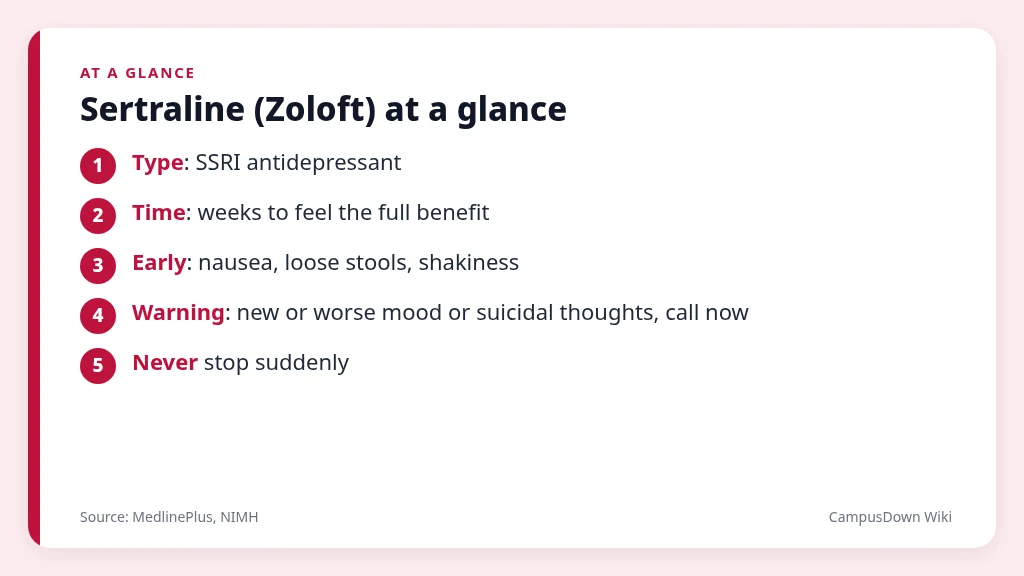
MedlinePlus says sertraline comes as a tablet and an oral concentrate, taken once daily in the morning or evening at about the same time each day, and that a doctor may start with a low dose and increase gradually. The concentrate must be diluted using only the liquids listed on the label. It may take a few weeks or longer to feel the full benefit, and you should keep taking it even if you feel well. NIMH says antidepressants usually take 4 to 8 weeks to work, with sleep, appetite, energy and concentration often improving before mood.
Start-up side effects
MedlinePlus lists these side effects to report if severe or persistent: nausea, diarrhea, heartburn, loss of appetite, uncontrollable shaking of part of the body, excessive sweating, and sexual problems (for males: decreased drive, trouble getting or keeping an erection or delayed or absent ejaculation; for females: decreased drive or difficulty reaching orgasm). It also says sertraline may make you drowsy, so don't drive or operate machinery until you know how it affects you, and ask your doctor about alcohol, which can worsen side effects. NIMH says common SSRI side effects such as upset stomach, headache or sexual dysfunction are generally mild and tend to go away with time, and that starting low and increasing slowly can help.
Weight changes aren't highlighted on MedlinePlus' adult list, though it notes decreased appetite and weight loss can occur in children; if weight, sleep or mood changes worry you, talk to your prescriber rather than guessing or stopping.
Serious side effects
MedlinePlus says to call your doctor immediately for seizures; abnormal bleeding or bruising; agitation, hallucinations, fever, sweating, confusion, fast heartbeat, shivering, severe muscle stiffness or twitching, loss of coordination, nausea, vomiting or diarrhea; headache, weakness, unsteadiness, confusion or memory problems; or rash, hives, swelling and difficulty breathing.
Stopping
MedlinePlus says don't stop sertraline without talking to your doctor. Stopping suddenly can cause withdrawal symptoms such as nausea, sweating, mood changes, irritability, anxiety, confusion, dizziness, headache, tiredness, seizures, ringing in the ears, numbness or tingling and trouble sleeping. If you want to stop, ask how to taper.
Interactions to mention
- MAO inhibitors, including linezolid and methylene blue, within the past two weeks
- St. John's wort and tryptophan
- Aspirin and NSAIDs such as ibuprofen and naproxen, which may interact (abnormal bleeding or bruising is also a warning sign); don't start them without talking to a provider
- Other medicines and supplements; use a brown bag review. If you're also prescribed an anti-anxiety drug such as alprazolam, tell every prescriber.
Also tell your doctor about a recent heart attack or stroke, high blood pressure, bleeding problems, seizures, liver, kidney or heart disease, and pregnancy, breastfeeding or plans to conceive.
Questions to bring to your prescriber
- How long should I wait before judging whether it works?
- Which early side effects are expected, and which mean I should call?
- Who should know the warning signs, and who do I call after hours?
- Which of my medicines, supplements or pain relievers interact?
- How would we plan a taper if we decide to stop?
- Should I also try therapy alongside the medicine?
Example scenario: day four
- Who
- Sybil, 31, a dental hygienist in Raleigh, North Carolina, started sertraline and felt queasy and shaky by the fourth day.
- What happened
- She wasn't sure whether to push through or call, and she was tempted to stop and see if she felt better.
- How it felt
- She felt frustrated and scared that the medicine was making things worse.
- What they did
- She called her prescriber's office, who talked through what is common early on and what would be urgent. She asked her sister to learn the warning signs. They set a follow-up call in a few days instead of having her stop abruptly.
- How it turned out
- Sybil said having a plan and a second person who knew the signs made the first weeks easier.
This is an illustrative example, not a real patient or a review.
Sybil's story is an illustrative example. Your own plan comes from your prescriber.
Most-asked questions about sertraline side effects
What are the side effects of sertraline in women?
MedlinePlus lists nausea, diarrhea, heartburn, sweating and sexual side effects such as decreased drive or difficulty reaching orgasm. Tell your prescriber about pregnancy plans.
Why people ask: "sertraline side effects women" is #2 for "sertraline side effects" (US autocomplete, November 2026).
What are the sertraline side effects in the first week?
Nausea, diarrhea and shakiness are listed, and NIMH says mild effects tend to fade; call right away for new or worse anxiety, agitation or thoughts of self-harm.
Why people ask: "sertraline side effects first week" is #3 for "sertraline side effects" (US autocomplete, November 2026).
What are the sertraline side effects in men?
MedlinePlus lists decreased sex drive, trouble getting or keeping an erection and delayed or absent ejaculation, plus the general side effects.
Why people ask: "sertraline side effects men" is #4 for "sertraline side effects" (US autocomplete, November 2026).
Does sertraline cause weight gain?
Weight gain isn't on MedlinePlus' adult list; appetite loss is. Ask your prescriber about any weight change.
Why people ask: "sertraline side effects weight gain" is #5 for "sertraline side effects" (US autocomplete, November 2026).
What are the side effects when stopping sertraline?
Withdrawal symptoms such as nausea, dizziness, anxiety, headache, tingling and sleep trouble; ask about tapering.
Why people ask: "sertraline side effects when stopping" is #10 for "sertraline side effects" (US autocomplete, November 2026).
Does sertraline make anxiety worse in the first week?
New or worsening anxiety is a reason to call your doctor right away, per MedlinePlus.
Why people ask: "sertraline side effects first week anxiety" is #3 for "sertraline side effects first week" (US autocomplete, November 2026).
Related on CampusDown
You can learn more about medicines and check it for yourself in the anxiety guide. For panic symptoms in detail, see panic attack steps.
Frequently asked questions
- How long does sertraline take to work?
- MedlinePlus says a few weeks or longer; NIMH says antidepressants usually take 4 to 8 weeks.
- Is the boxed warning only for kids?
- It applies to children, teenagers and young adults under 24, and NIMH says people of all ages should be watched closely early in treatment.
- Can I stop if I feel better?
- Not on your own. MedlinePlus says to keep taking it and talk to your doctor about stopping.
- Which pain relievers should I avoid?
- Aspirin and NSAIDs may interact; ask your pharmacist about safer options.
- When is it an emergency?
- Thoughts of suicide, seizures, severe agitation or trouble breathing. Call 988 or 911.
Sertraline can help, and the first weeks need attention: expect some mild effects, know the warning signs, tell someone close to you and call your prescriber before changing anything.
Browse more guides like this in the Medicines hub.
This article is for general education and does not replace advice from your own doctor, nurse or pharmacist.