
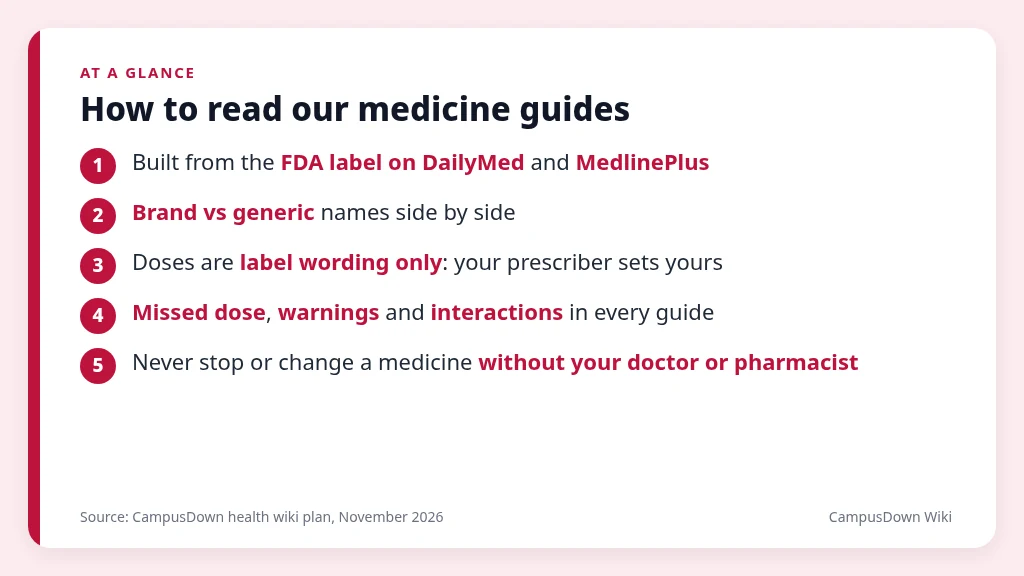
Did you leave the pharmacy with a new pill and a folded leaflet you never read? Most people do. Yet the questions people search afterward, such as side effects, missed doses, generics and cost, are usually answered in the FDA label, just in hard-to-read language. This hub collects CampusDown's 100 medicine guides, each built from the FDA label on DailyMed and MedlinePlus. If you take several medicines, take a closer look at the medication safety cluster near the end.

How to use this hub
- Find the cluster for the condition, then the medicine by brand or generic name.
- Each guide covers what it is used for, label doses, missed doses, warnings, interactions and the most-asked questions.
- Medicare negotiated prices are listed where CMS has published them; your copay depends on your plan.
- Titles shown as plain text are coming soon and switch on automatically.

Heart, rhythm and blood thinners
- Apixaban (Eliquis): Blood Thinner for AFib and Clots
- Low-Dose Aspirin: Who Takes It and the Changed Prevention Advice
- Rivaroxaban (Xarelto): Taking It With Food and Bleeding Signs
- Warfarin: INR Checks, Vitamin K and Drug Interactions
- Atorvastatin (Lipitor): How Statins Lower LDL and Muscle Ache Questions
- Azithromycin (Z-Pak): Five-Day Course and Heart Rhythm Warning
- Clopidogrel (Plavix): Antiplatelet After Stents
- Famotidine (Pepcid): H2 Blocker for Heartburn
- Furosemide (Lasix): Loop Diuretic for Fluid and Potassium Checks
- Loperamide (Imodium): Diarrhea Use and High-Dose Heart Warning
- Meloxicam: Once-Daily NSAID and Stomach/Heart Warnings
- Pravastatin: A Statin With Fewer Interactions
- Rosuvastatin (Crestor): Potency, Side Effects and Label Cautions
- Simvastatin (Zocor): Drug Interactions and Grapefruit Warning
- Spironolactone: Uses From Heart Failure to Acne and Potassium Warnings
Mental health
- Alprazolam (Xanax): Benzodiazepine Boxed Warnings and Dependence
- Bupropion (Wellbutrin): Seizure Warning and Smoking Cessation Use
- Buspirone (Buspar): Non-Benzodiazepine Anxiety Medicine
- Duloxetine (Cymbalta): SNRI for Depression and Nerve Pain
- Escitalopram (Lexapro): SSRI for Depression and Anxiety
- Fluoxetine (Prozac): Long Half-Life SSRI
- Lamotrigine (Lamictal): Slow Titration and Rash Warning
- Methylphenidate (Ritalin, Concerta): ADHD Stimulant
- Mixed Amphetamine Salts (Adderall): ADHD Use and Boxed Warning
- Quetiapine (Seroquel): Antipsychotic Uses and Metabolic Effects
- Sertraline (Zoloft): SSRI Uses, Start-Up Side Effects and Boxed Warning
- Tramadol: Opioid Pain Reliever With Seizure and Serotonin Warnings
- Venlafaxine (Effexor XR): Discontinuation Symptoms
Example scenario: the bag on the counter
- Who
- Pauline, 69, a retired payroll clerk in New Mexico, was taking nine medicines from three different prescribers and two pharmacies.
- What happened
- After a dizzy spell she found two bottles with different names that her daughter suspected were the same drug.
- How it felt
- She felt foolish and scared, and worried she had been "poisoning herself" for weeks.
- What they did
- She read the brand vs generic sections in the medicine guides, then brought every bottle in a bag to one pharmacist for a full review.
- How it turned out
- The pharmacist confirmed a duplicate brand and generic, contacted her doctor, and moved all her prescriptions to one pharmacy. Pauline now keeps a single printed list and says the review gave her back her confidence.
This is an illustrative example, not a real patient or a review.
Pauline is an illustrative example, not a real patient. Ask your pharmacist for a medication review.
Pain, joints and bones
- Acetaminophen (Tylenol): Liver Warning and Hidden Sources in Combo Products
- Cyclobenzaprine (Flexeril): Muscle Relaxant and Drowsiness
- Gabapentin (Neurontin): Nerve Pain, Dizziness and Breathing Warning
- Ibuprofen (Advil, Motrin): OTC NSAID Label Directions and Warnings
- Naproxen (Aleve): Longer-Acting NSAID Label Use
- Pregabalin (Lyrica): Neuropathic Pain and Swelling
- Sumatriptan (Imitrex): Triptan for Migraine Attacks
- Topiramate (Topamax): Migraine Prevention and Word-Finding
- Valacyclovir (Valtrex): Cold Sores, Shingles and Genital Herpes
Infections, vaccines and antibiotics
- Amoxicillin-Clavulanate (Augmentin): Uses and Diarrhea
- Amoxicillin: Penicillin Antibiotic and Allergy Questions
- Cephalexin (Keflex): Skin Infection Antibiotic
- Ciprofloxacin: Fluoroquinolone Tendon and Nerve Boxed Warnings
- Diphenhydramine (Benadryl): Sedation and Older Adult Cautions
- Doxycycline: Sun Sensitivity and Taking It Upright
- Nitrofurantoin (Macrobid): UTI Antibiotic and Urine Color
- Oseltamivir (Tamiflu): When Flu Antivirals Help
Blood pressure
- Amlodipine: Calcium Channel Blocker and Ankle Swelling
- Lisinopril: ACE Inhibitor, Dry Cough and Angioedema Warning
- Carvedilol: Beta Blocker With Food and Dizziness Cautions
- Chlorthalidone: Long-Acting Thiazide-Like Diuretic
- Hydrochlorothiazide: Water Pill, Potassium and Sun Sensitivity
- Losartan: ARB for Blood Pressure and Kidney Protection
- Metoprolol Succinate vs Tartrate: Two Forms of a Beta Blocker
Blood sugar and diabetes
- Empagliflozin (Jardiance): SGLT2 Inhibitor, Heart and Kidney Uses
- Metformin: How It Lowers Blood Sugar, Stomach Side Effects and Label Warnings
- Dapagliflozin (Farxiga): SGLT2 Uses and Genital Infection Warnings
- Dulaglutide (Trulicity): Weekly GLP-1 for Type 2 Diabetes
- Glipizide: Sulfonylurea and Low Blood Sugar Risk
- Insulin Glargine (Lantus, Basaglar, Toujeo): Long-Acting Basal Insulin
- Rapid-Acting Insulin (Humalog, Novolog): Mealtime Timing
Lungs and breathing
- Albuterol Inhaler: Rescue Bronchodilator Use and Tremor
- Budesonide/Formoterol (Symbicort): Maintenance Inhaler
- Dupilumab (Dupixent): Eczema and Asthma Biologic
- Fluticasone Nasal Spray (Flonase): Allergy Use and Technique
- Fluticasone/Salmeterol (Advair, Wixela): Controller Inhaler
- Montelukast (Singulair): Asthma/Allergy Use and Neuropsychiatric Boxed Warning
- Paxlovid (Nirmatrelvir/Ritonavir): COVID Treatment and Drug Interactions
Immune system and biologics
- Adalimumab (Humira and Biosimilars): TNF Blocker and Infection Risk
- Allopurinol: Lowering Uric Acid for Gout
- Hydroxychloroquine (Plaquenil): Lupus/RA Use and Eye Exams
- Methotrexate for Arthritis: Weekly Dosing Safety
- Methylprednisolone Dose Pack (Medrol): The Tapering Schedule
- Prednisone: Steroid Uses, Short Courses and Side Effects
Stomach and digestion
- Docusate and Senna: Stool Softener vs Stimulant Laxative
- Omeprazole (Prilosec): Proton Pump Inhibitor Uses and Long-Term Questions
- Ondansetron (Zofran): Nausea Medicine and QT Warning
- Pantoprazole (Protonix): Uses and When to Take It
- Polyethylene Glycol 3350 (MiraLAX): Osmotic Laxative
Allergies
- Cetirizine (Zyrtec): Antihistamine and Drowsiness
- Fexofenadine (Allegra): Fruit Juice Interaction
- Loratadine (Claritin): Non-Drowsy Antihistamine
- Pseudoephedrine vs Phenylephrine: Why Oral Phenylephrine Was Questioned
Medication safety
- Colchicine: Gout Flares and Interaction Warnings
- Dextromethorphan: Cough Suppressant and Misuse Warnings
- Guaifenesin (Mucinex): Expectorant Label Use
- Naloxone Nasal Spray (Narcan): OTC Overdose Reversal
Bladder and urology
- Oxybutynin: Overactive Bladder and Dry Mouth
- Sildenafil and Tadalafil: PDE5 Inhibitors and Nitrate Danger
- Tamsulosin (Flomax): Enlarged Prostate and Dizziness on Standing
More topics
- Alendronate (Fosamax): Osteoporosis Pill and the Upright Rule
- Vitamin D3 Supplements: Label Units and Upper Limits
- Semaglutide (Ozempic, Wegovy, Rybelsus): GLP-1 Uses and Boxed Warning
- Tirzepatide (Mounjaro, Zepbound): How the Dual GIP/GLP-1 Drug Works
- Levothyroxine: Taking Thyroid Hormone on an Empty Stomach
- Potassium Chloride Supplements: Swallowing Tablets Whole
- Estradiol: Menopause Hormone Therapy Forms and Boxed Warning
- Folic Acid: Neural Tube Prevention and Prenatal Vitamins
- Progestin-Only Pill (Norethindrone and Opill): Timing Rules
- Finasteride: Prostate and Hair Loss Uses and Pregnancy Handling
- Trazodone: Antidepressant Often Prescribed at Bedtime
- Nicotine Patch, Gum and Lozenge: Quitting Smoking Aids
Other CampusDown health hubs
- U.S. Health Topics hub
- Home Medical Devices hub
- Senior Health and Medicare hub
- Nursing Student and NCLEX hub
Get help now if
Call 911 or Poison Control (1-800-222-1222) for a possible overdose, trouble breathing, swelling of the face or throat, or fainting after a medicine. Do not wait to look it up.
How these guides are written
We quote the FDA label for doses and warnings, separate brand and generic names, avoid promises about results, and date any prices. You can check it for yourself: every guide links its DailyMed label.
Frequently asked questions
- Can I change my dose based on these guides?
- No. Only your prescriber should change a dose.
- Why do you list brand and generic names?
- Many people take both by mistake; knowing both names helps prevent duplicates.
- Are Medicare prices what I will pay?
- No. They are negotiated prices; your copay depends on your plan.
- Where can I report a side effect?
- Tell your doctor or pharmacist, and you can report to FDA MedWatch.
Every medicine works better when you understand why you take it and what to watch for. You can learn more in detail from the guides above, and bring your questions to your doctor or pharmacist.
This article is for general education and does not replace advice from your own doctor, nurse or pharmacist.