
Why does a blood pressure pill make some people cough for weeks? If you take lisinopril, you may have already wondered whether that tickle in your throat is a cold, allergies, or the medicine. Lisinopril is one of the most prescribed medicines in the United States, and its side effects are well described on its FDA label.
This guide explains what lisinopril treats, how it works, and which warnings matter most, using only MedlinePlus and the FDA label. It does not replace the instructions on your prescription. If you are new to this medicine, take a closer look at the warning signs section before your next refill.
What lisinopril is used for
According to MedlinePlus, lisinopril is used:
- Alone or with other medicines to treat high blood pressure in adults and children 6 years and older
- With other medicines to treat heart failure
- To improve survival after a heart attack
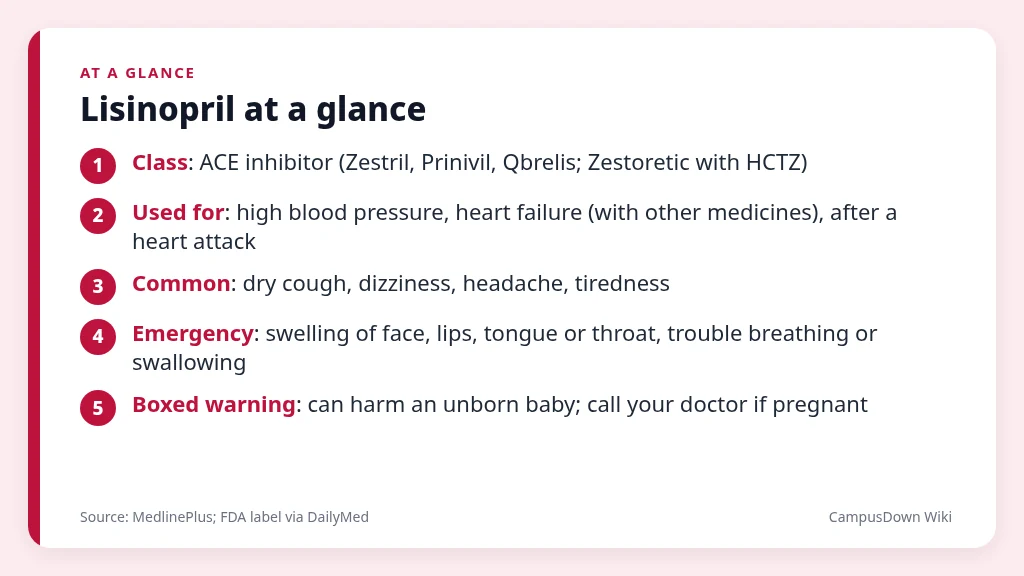
It belongs to a class called angiotensin-converting enzyme (ACE) inhibitors. Brand names include Prinivil, Qbrelis (an oral solution) and Zestril. Zestoretic combines lisinopril with hydrochlorothiazide.

How it works
Your body makes a hormone called angiotensin II that tightens blood vessels. ACE inhibitors reduce the enzyme that produces it, so vessels relax, blood flows more easily, and the heart can pump more efficiently. MedlinePlus notes that lisinopril controls high blood pressure but does not cure it, so people usually keep taking it even when they feel well.
Key point
Lisinopril lowers blood pressure by relaxing blood vessels. It works only while you take it, so stopping on your own can let pressure rise again. Talk to your prescriber before any change.
Example scenario: the cough that would not quit
- Who
- Tom, 52, a high school football coach, started lisinopril after his home readings averaged in stage 2.
- What happened
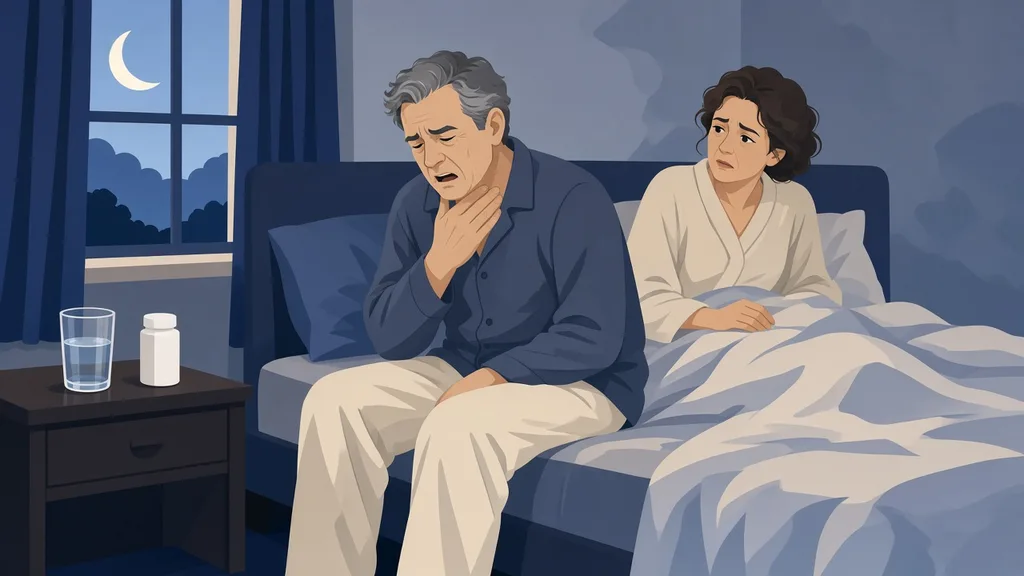
- About a month later he developed a dry, tickly cough, worse at night. Cough drops did nothing, and his wife started sleeping in the guest room.
- How it felt
- He felt embarrassed in team meetings and worried he had something in his lungs. He was tempted to just stop the pill.
- What they did
- Instead he called his pharmacist, who explained that a dry cough is a listed side effect of ACE inhibitors and asked him to contact his prescriber rather than stop on his own. He also learned which symptoms would mean an emergency.
- How it turned out
- His doctor reviewed his history and switched him to a different class of blood pressure medicine. The cough faded over the following weeks, and his readings stayed controlled. Tom said the single phone call saved him weeks of guessing.
This is an illustrative example, not a real patient or a review.
Tom's choice to call before stopping is the part worth copying. A cough is uncomfortable but usually not dangerous; swelling of the face or throat is a very different story. The warning signs below explain that difference in detail.
Common and serious side effects
MedlinePlus lists these side effects to tell your doctor about if they are severe or do not go away: cough, dizziness, headache, excessive tiredness, nausea, diarrhea, weakness, sneezing, runny nose, decreased sexual ability and rash.
Call your doctor immediately for:
- Swelling of the face, throat, tongue, lips, eyes, hands, feet, ankles or lower legs
- Hoarseness, or difficulty breathing or swallowing
- Fever, sore throat, chills or other signs of infection
- Yellowing of the skin or eyes
- Lightheadedness, fainting or chest pain
Get help now if
Swelling of the face, lips, tongue or throat, or trouble breathing or swallowing, can be angioedema. Call 911 or go to the nearest emergency room.
Important warnings and interactions
- Pregnancy: the label carries a boxed warning. Lisinopril can harm an unborn baby. Do not take it if you are pregnant, and call your doctor right away if you become pregnant.
- Angioedema history: tell your doctor if you have had angioedema; they will probably tell you not to take lisinopril.
- Sacubitril/valsartan (Entresto): tell your doctor if you take it or stopped it within the last 36 hours.
- Aliskiren: people with diabetes taking aliskiren are usually told not to take lisinopril.
- Potassium: potassium supplements and salt substitutes containing potassium can raise potassium levels. Read more in high potassium on a blood test.
- NSAIDs: aspirin and NSAIDs such as ibuprofen and naproxen can interact. Ask before using them.
- Fluid loss: diarrhea, vomiting, sweating or not drinking enough can drop blood pressure and cause fainting.
Your clinician may order blood tests to check kidney function and potassium. Keep a written list of all your medicines and supplements, and check it for yourself against the label at each refill.
How it is taken
Lisinopril comes as a tablet and an oral solution and is usually taken once a day. Take it exactly as prescribed, around the same time each day. If you use the solution, measure it with an oral syringe, not a kitchen spoon. Your prescriber chooses and adjusts the dose; do not change it yourself.
The Zestril label lists tablets in 2.5, 5, 10, 20, 30 and 40 mg strengths. Generic lisinopril tablets contain the same active ingredient as the brands Zestril and Prinivil; Qbrelis is an oral solution, and Zestoretic adds hydrochlorothiazide. If your tablets suddenly look different at a refill, ask the pharmacist to confirm the drug and strength before you take them.
Most-asked questions about lisinopril
Lisinopril vs losartan: what is the difference?
Lisinopril is an ACE inhibitor; losartan is an angiotensin receptor blocker (ARB). The National Kidney Foundation explains that the two classes work in similar ways, that about 10% of people on an ACE inhibitor report a dry cough compared with about 3% on an ARB, and that most people with an ACE-inhibitor cough can stop it by switching to an ARB. Only your prescriber can decide whether a switch makes sense. Compare in detail in our losartan guide.
Why people ask: "lisinopril vs losartan" is the #1 Google suggestion for "lisinopril vs" (US autocomplete, November 2026).
Why am I coughing so much on lisinopril?
Cough is a listed adverse reaction on the label. The National Kidney Foundation describes it as a dry tickle that usually begins within 1–2 weeks but can take months to appear. It is not harmful, but it is a good reason to call your prescriber rather than stop on your own.
Why people ask: On a 30,000-view YouTube explainer, "Lisinopril 2 Minute Review," the most-liked comment (19 likes) reads "Now I know why I'm coughing so much," and a viewer on another lisinopril video wrote that the cough kept them awake at 3 a.m. (comments read November 2026).
How long does lisinopril take to work?
In the Zestril label's studies, blood pressure began to fall about one hour after a dose, with the peak drop by about 6 hours. Day-to-day control builds over the following weeks as your prescriber adjusts the dose, so keep a home log and bring it to follow-ups.
Why people ask: "lisinopril how long does it take to work" is the #1 suggestion for "lisinopril how long" (US, November 2026).
Can I use salt substitutes or potassium with lisinopril?
The label warns that ACE inhibitors can raise potassium, with higher risk in kidney disease, diabetes, and with potassium-sparing diuretics, potassium supplements or potassium-containing salt substitutes. It tells patients not to use potassium salt substitutes without asking their physician.
Why people ask: "lisinopril and potassium" is the #1 suggestion for "lisinopril and" (US, November 2026).
Does lisinopril cause weight gain?
Weight gain is not among the common side effects listed by MedlinePlus or the label's main adverse reactions. Sudden weight gain with swelling of the ankles or legs is different: report it to your clinician, because swelling is on MedlinePlus's list of symptoms to call about.
Why people ask: "lisinopril weight gain" is the #1 suggestion for "lisinopril weight" (US, November 2026).
Questions like these are easier to settle with your own numbers in hand. Write down your readings, your symptoms and when they started, then check it for yourself against the warning list above before your next refill.
Related on CampusDown
For the condition itself, see High Blood Pressure (Hypertension) and blood pressure of 130/80. Amlodipine is another common first-line medicine that works differently. People with heart failure can read Heart Failure, and home monitoring tips are in how to take blood pressure at home.
Frequently asked questions
- Why does lisinopril cause a cough?
- A dry cough is a known side effect of ACE inhibitors. If it bothers you, contact your prescriber rather than stopping the medicine on your own.
- Can I take ibuprofen with lisinopril?
- MedlinePlus lists aspirin and NSAIDs such as ibuprofen and naproxen as possible interactions. Ask your doctor or pharmacist before using them.
- Is lisinopril safe in pregnancy?
- No. The label has a boxed warning about harm to the unborn baby. Call your doctor right away if you become pregnant.
- What should I do if I miss a dose of lisinopril?
- MedlinePlus says to take it when you remember unless it is almost time for the next dose; do not double up. Follow your pharmacist's advice for your situation.
If you have been living with a nagging cough or a question about potassium since starting lisinopril, you do not need to guess. Write your symptoms down, call your pharmacist or prescriber, and learn more about your options before you skip a single dose.
Browse more guides like this in the Medicines hub.
This article is for general education and does not replace advice from your own doctor, nurse or pharmacist.