
Your heart doctor added a new pill, and now you feel a little woozy when you stand up. Is that normal at the start, and why does the label say to take it with food?
This guide uses MedlinePlus's drug information on carvedilol (revised March 2026) to explain the basics. It is general information, not a prescription; your doctor and pharmacist decide whether this medicine is right for you and how much to take. If you want to learn more about a related blood pressure problem when standing, take a closer look at orthostatic hypotension.
What it is and what it treats
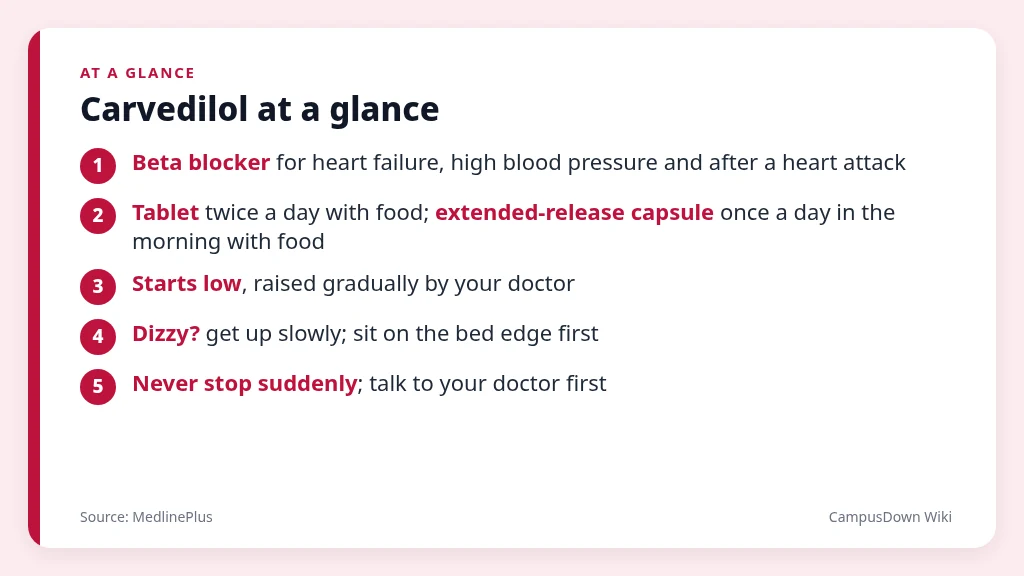
MedlinePlus says carvedilol is used to treat heart failure (when the heart can't pump enough blood to all parts of the body) and high blood pressure. It is also used to improve survival after a heart attack. Carvedilol is in a class of medications called beta-blockers. It works by relaxing blood vessels and slowing heart rate to improve blood flow and decrease blood pressure. The brand name is Coreg.

How it is taken
MedlinePlus says carvedilol comes as a tablet and an extended-release (long-acting) capsule to take by mouth.
- Tablet: twice a day with food.
- Extended-release capsule: once a day in the morning with food.
- Take it around the same time(s) every day and exactly as directed.
- Swallow extended-release capsules whole; don't chew or crush them or divide the beads. If you can't swallow, the capsule may be opened and the beads sprinkled over a spoonful of cool or room temperature applesauce, swallowed right away without chewing and not saved for later.
- Your doctor will probably start you on a low dose and raise it gradually so your body can adjust. Talk to your doctor about how you feel during this time.
- It may help control your condition but won't make it go away. Keep taking it even if you feel well, and don't stop without talking to your doctor.
MedlinePlus doesn't list tablet strengths such as 3.125 mg, 6.25 mg, 12.5 mg or 25 mg, so this article doesn't describe what each means. Your doctor sets the amount, and your pharmacy label shows it.
Dizziness and standing up
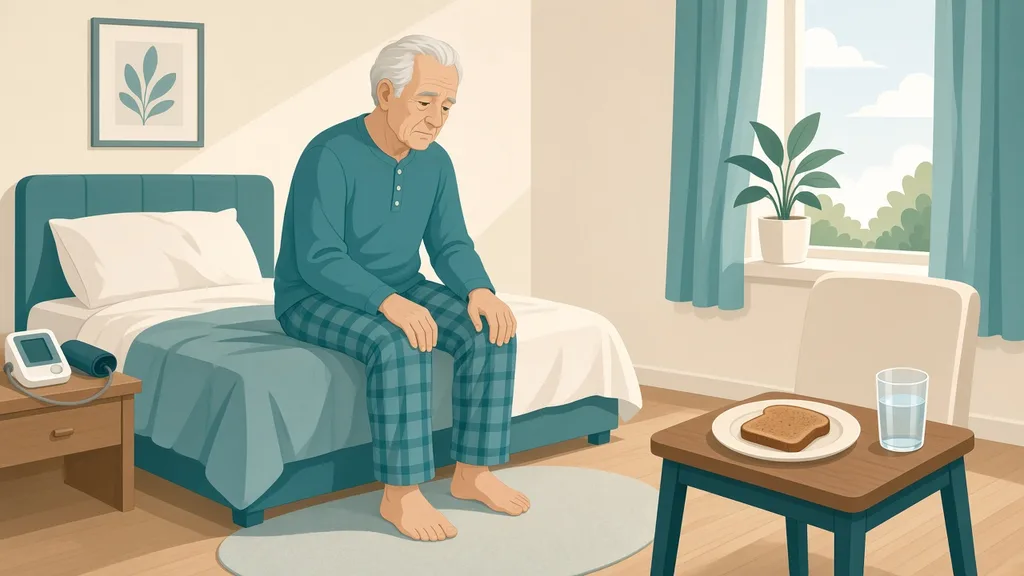
MedlinePlus says carvedilol may make you feel tired, dizzy or lightheaded, especially when you start it and when your dose is increased, and to be especially careful during the first hour after you take it. Don't drive or use machinery until you know how it affects you. It may also cause dizziness, lightheadedness and fainting when you get up too quickly from lying down, which is more common at the start. MedlinePlus suggests to get out of bed slowly, resting your feet on the floor for a few minutes before standing up. For the same standing-up problem from other causes, see orthostatic hypotension, and for home measuring, see home blood pressure measurement steps.
Things to tell your doctor and pharmacist
MedlinePlus lists:
- Allergies to the drug or anything else
- All your medicines, vitamins, supplements and herbals; it names St. John's wort as one that may interact
- Asthma or other breathing problems, slow or irregular heartbeat, heart failure or liver disease; your doctor may tell you not to take it
- Problems with blood flow in the feet or legs, diabetes or other causes of low blood sugar, an overactive thyroid, low blood pressure, Prinzmetal's angina, pheochromocytoma, or heart, kidney or liver disease
- Pregnancy, plans for pregnancy or breastfeeding
- Upcoming surgery, including dental or eye surgery; tell the doctor or dentist you take carvedilol
Blood sugar, allergies and dry eyes
MedlinePlus says three things many people don't expect:
- Low blood sugar: carvedilol may increase the risk of hypoglycemia and prevent the warning signs that would tell you your sugar is low. Tell your doctor if you can't eat or drink normally or are vomiting while taking it, and learn the symptoms of low blood sugar and what to do. See hypoglycemia in older adults.
- Allergic reactions: if you have allergic reactions, they may be worse while you take carvedilol, and they may not respond to the usual doses of injectable epinephrine.
- Contact lenses: your eyes may become dry; tell your doctor if it bothers you.
Side effects
MedlinePlus lists diarrhea among side effects to tell your doctor about if severe or persistent, along with the dizziness and tiredness above.
Call your doctor immediately or get emergency care for: fainting; shortness of breath; weight gain; swelling of the arms, hands, feet, ankles or lower legs; chest pain; slow or irregular heartbeat; or rash, hives, itching, difficulty breathing or swallowing, or swelling of the face, lips, tongue or throat. Weight gain and swelling are also signs people with heart failure watch for; see daily weights for heart failure for how to track them. You or your doctor may report side effects to the FDA's MedWatch program.
Get help now if
Fainting, chest pain, a very slow or irregular heartbeat, trouble breathing or swelling of the face or throat needs emergency care. Call 911.
Missed doses and diet
MedlinePlus says to take a missed dose as soon as you remember, but skip it if it is almost time for the next one; don't double up. Continue your normal diet unless your doctor says otherwise.
Questions for your pharmacist
- Is my pill the tablet or the extended-release capsule, and when do I take it with food?
- What should I do if I feel dizzy after a dose?
- Do I need to watch my blood sugar more closely?
- Which over-the-counter products or herbals should I avoid?
- What should I do if I run out and can't refill right away?
- Should I report my morning pulse or blood pressure readings, and at what numbers should I call?
Example scenario: the wobbly first weeks
- Who
- Humphrey, 71, a retired high school band director in Lansing, Michigan, started carvedilol after his heart failure diagnosis and felt woozy when he stood up from his recliner.
- What happened
- He was afraid the pill was "making him worse" and thought about skipping it.
- How it felt
- He felt worried and a little embarrassed.
- What they did
- He called the pharmacy, who reminded him the label says to take it with food and to stand up slowly; his cardiology nurse asked him to bring his home blood pressure log to his next visit. Humphrey sat for a minute before standing and kept taking the medicine as directed.
- How it turned out
- Humphrey said calling instead of quietly stopping kept his doctor in the loop.
This is an illustrative example, not a real patient or a review.
Humphrey's story is an illustrative example. Call your doctor for ongoing dizziness, and call 911 for fainting, chest pain, a very slow or irregular heartbeat or trouble breathing.
Most-asked questions about carvedilol
What is carvedilol used for?
Heart failure, high blood pressure and improving survival after a heart attack, according to MedlinePlus.
Why people ask: "carvedilol used for" is #2 for "carvedilol" (US autocomplete, November 2026).
What does carvedilol 25 mg mean?
MedlinePlus doesn't list tablet strengths; your doctor sets the amount and starts low and raises it gradually, and your pharmacy label shows your strength.
Why people ask: "carvedilol 25mg" is #3 for "carvedilol" (US autocomplete, November 2026).
What does carvedilol 12.5 mg mean?
MedlinePlus doesn't describe strengths; the amount depends on your condition and your doctor's plan.
Why people ask: "carvedilol 12.5 mg" is #4 for "carvedilol" (US autocomplete, November 2026).
What does carvedilol 3.125 mg mean?
MedlinePlus doesn't list strengths; ask your pharmacist what your label means and why your doctor chose it.
Why people ask: "carvedilol 3.125 mg" is #5 for "carvedilol" (US autocomplete, November 2026).
What does carvedilol 6.25 mg mean?
MedlinePlus doesn't list strengths, and doctors usually start low and raise it gradually, so follow your own label.
Why people ask: "carvedilol 6.25 mg" is #6 for "carvedilol" (US autocomplete, November 2026).
What drug class is carvedilol?
A beta-blocker; it relaxes blood vessels and slows the heart rate.
Why people ask: "carvedilol drug class" is #7 for "carvedilol" (US autocomplete, November 2026).
What is the brand name for carvedilol?
Coreg, according to MedlinePlus.
Why people ask: "carvedilol brand name" is #9 for "carvedilol" (US autocomplete, November 2026).
What are carvedilol side effects in women or men?
MedlinePlus doesn't separate effects by sex; it lists diarrhea, tiredness and dizziness, and tells you to call for fainting, shortness of breath, swelling, weight gain or a slow or irregular heartbeat.
Why people ask: "carvedilol side effects in women" is #2 for "carvedilol side effects" (US autocomplete, November 2026).
What are carvedilol side effects in older adults?
MedlinePlus doesn't give an age-specific list; dizziness and fainting when standing are most common at the start or after a dose increase, so stand up slowly and call if they continue.
Why people ask: "carvedilol side effects in elderly" is #3 for "carvedilol side effects" (US autocomplete, November 2026).
Does carvedilol cause hair loss or a cough?
Neither is listed on the MedlinePlus page; tell your doctor about any new symptom, and call right away for trouble breathing or swelling.
Why people ask: "carvedilol side effects hair loss" is #9 for "carvedilol side effects" (US autocomplete, November 2026).
Related on CampusDown
You can learn more about the medicines hub and check it for yourself in the brown bag medication review. For the pressure targets your clinician might use, see blood pressure targets in older adults in detail, and for another heart rate topic see resting heart rate.
Frequently asked questions
- Should I take it with food?
- Yes; MedlinePlus says the tablet is taken twice a day with food and the capsule once a day in the morning with food.
- Can I stop it if I feel fine?
- No; keep taking it even if you feel well, and don't stop without talking to your doctor.
- Why am I dizzy after standing?
- MedlinePlus says it can cause dizziness and fainting when getting up quickly, especially at the start; get up slowly and call if it continues.
- Does it affect low blood sugar warning signs?
- Yes; it may hide them, so tell your doctor if you have diabetes or can't eat normally, and learn the symptoms.
- Can I take it with St. John's wort?
- MedlinePlus lists St. John's wort as a possible interaction; discuss it with your doctor and pharmacist first.
Carvedilol is a beta-blocker for heart failure, high blood pressure and after a heart attack. Take it with food, expect to start low, stand up slowly, never stop it suddenly, watch for hidden low blood sugar signs, and call for fainting, swelling, weight gain, chest pain or a slow or irregular heartbeat.
Browse more guides like this in the Medicines hub.
This article is for general education and does not replace advice from your own doctor, nurse or pharmacist.