
Is Grandpa confused because of his age, or because his blood sugar just dropped? That question matters, because a low can look like a "bad memory day," a dizzy spell or plain grumpiness, and it can end with a fall. In older adults, low blood sugar is common, easy to miss and, in most cases, quick to treat once you recognize it.
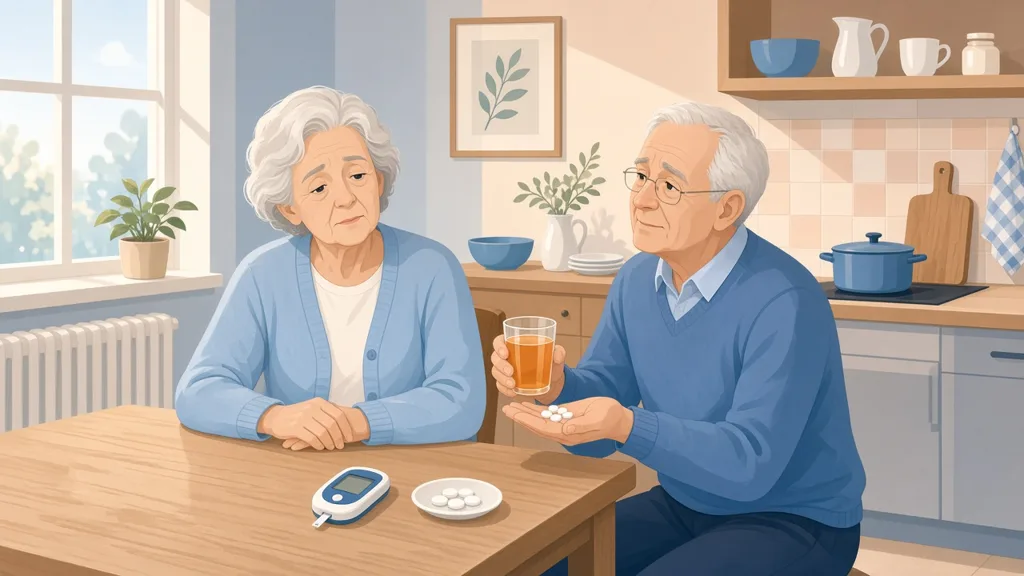
This guide uses the National Institute of Diabetes and Digestive and Kidney Diseases (NIDDK) and the American Diabetes Association to explain who is at risk, what a low looks like, and exactly what to do. If you care for someone on insulin or a sulfonylurea, take a closer look at the treatment steps.
What counts as low
For many people with diabetes, the NIDDK says low blood glucose means a reading below 70 mg/dL, but your number may be different, so ask the care team. The NIDDK reports that among US adults with diabetes who take insulin or certain pills that make the pancreas release insulin, about 2 in 100 may have a severe low each year, meaning one so low they cannot treat it themselves.
You are more likely to have lows if you:
- take insulin or some diabetes pills, mainly sulfonylureas such as glipizide and meglitinides
- are 65 or older
- have had lows before
- have kidney disease, heart disease or cognitive impairment
The NIDDK also lists skipped or delayed meals, more activity than usual (the effect can last up to 24 hours), drinking alcohol without enough food, and being sick.

Symptoms, including the ones that fool families
Mild-to-moderate symptoms in the NIDDK list include feeling shaky or jittery, hungry, tired, dizzy, lightheaded, confused or irritable, a fast or irregular heartbeat, headache, and trouble seeing or speaking clearly. Severe lows can cause seizures or loss of consciousness.
Lows during sleep can show up as crying out or nightmares, sweating enough to dampen pajamas or sheets, and waking up tired, irritable or confused. Some people develop hypoglycemia unawareness, where they do not notice symptoms until the level is very low.
Recognizing a low is half the job. The story below shows what the other half looks like at 6 a.m.
Example scenario: the confused morning
- Who
- Bea, 78, a retired piano teacher with type 2 diabetes on insulin glargine and glimepiride, living with her husband George.
- What happened
- George found her sitting on the edge of the bed, sweaty, slow to answer and unable to find the words for "coffee."
- How it felt
- He was terrified she was having a stroke, and Bea, embarrassed and irritable, insisted she was fine and tried to stand.
- What they did
- George remembered their nurse's advice, checked her sugar (58 mg/dL), gave her half a cup of apple juice, and rechecked after 15 minutes. It was still low, so he gave four glucose tablets and checked again.
- How it turned out
- Fifteen minutes later she was back in range and herself again, and she ate breakfast. That afternoon George called her clinician, who adjusted her medicines and prescribed a glucagon nasal spray. Bea now has a CGM that alerts George's phone.
This is an illustrative example, not a real patient or a review.
Bea's story is an illustration, not a real patient. If symptoms point to a stroke, such as face drooping, arm weakness or slurred speech that does not clear quickly after treatment, call 911.
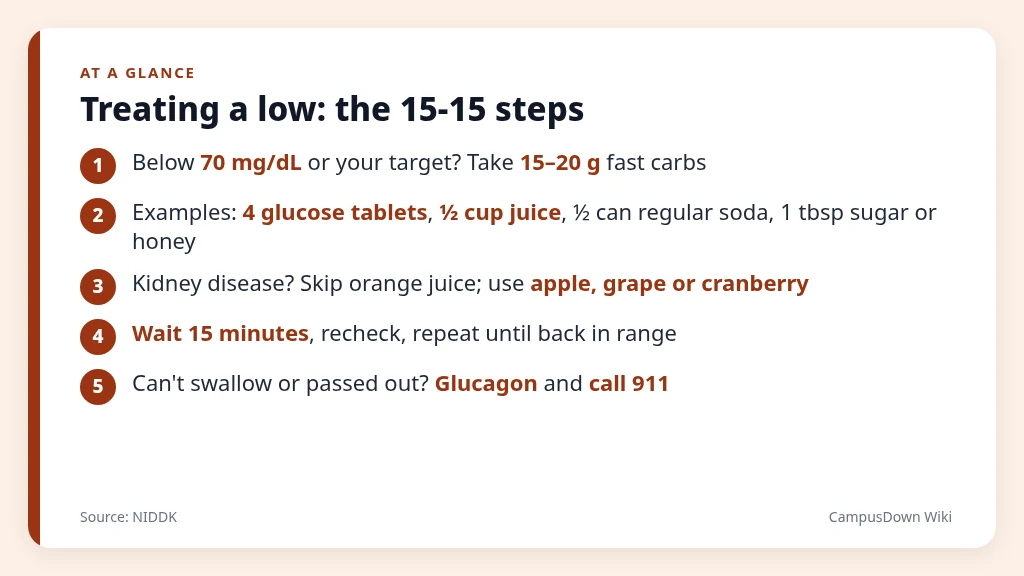
How to treat a low: the 15-15 steps
The NIDDK steps, if the reading is below your target or below 70 mg/dL:
- Eat or drink 15 to 20 grams of glucose or carbohydrate right away: four glucose tablets or one tube of glucose gel, ½ cup (4 ounces) of fruit juice, ½ can (4 to 6 ounces) of regular soda, or 1 tablespoon of sugar, honey or corn syrup. Do not use low-calorie or reduced-sugar drinks.
2. Wait 15 minutes and check again. If still low, repeat. 3. When back in range, have a snack such as crackers or fruit if the next meal is more than an hour away.
People with kidney disease should avoid orange juice because of its potassium; apple, grape or cranberry juice are listed as good options. People taking medicines that slow carbohydrate digestion need glucose tablets or gel, because other carbs work too slowly.
Get help now if
If the person cannot swallow safely, is passing out or having a seizure, do not put food or drink in their mouth. Use glucagon (injection or nasal spray) if it has been prescribed, then call 911, as the NIDDK advises.
Most-asked questions about low blood sugar in seniors
What are the symptoms of low blood sugar in older adults?
Shakiness, hunger, sweating, dizziness, confusion, irritability, a racing heart, headache, and trouble seeing or speaking. In older adults, confusion or a fall may be the first thing anyone notices.
Why people ask: "low blood sugar in elderly symptoms" is #5 and "hypoglycemia in elderly symptoms" is #5 for their searches (US autocomplete, November 2026).
What is the rule of 15 for hypoglycemia?
Take 15 to 20 grams of fast-acting carbohydrate, wait 15 minutes, recheck, and repeat if still low, as described by the NIDDK.
Why people ask: "rule of 15 hypoglycemia" is #2 for "rule of 15" (US, November 2026).
Why does low blood sugar happen at night?
Insulin or sulfonylureas, a skipped evening snack, extra activity earlier in the day or alcohol can lower glucose overnight. Signs include nightmares, damp sheets and morning confusion. A CGM with alerts may help; ask the care team.
Why people ask: "low blood sugar at night symptoms" is #2 and "low blood sugar at night what to do" is #6 for "low blood sugar at night" (US, November 2026).
Can older adults without diabetes get low blood sugar?
It can happen, for example with some medicines, serious illness, missed meals or alcohol, though it is less common. Repeated unexplained lows need a medical evaluation.
Why people ask: "low blood sugar in elderly without diabetes" is #3 for "low blood sugar in elderly," and "hypoglycemia in elderly non diabetic" is #4 for "hypoglycemia in elderly" (US, November 2026).
Want to know whether lows are happening silently? You can check it for yourself with a simple log of times, symptoms and readings, and share it at the next visit.
Preventing the next one
- Ask whether any medicine on the list raises the risk of lows, and whether the goals in diabetes in older adults fit.
- Do not skip meals after taking insulin or a sulfonylurea; carry glucose tablets.
- Ask about a CGM such as the Dexcom G7, which the NIDDK notes can sound an alarm if glucose drops below target.
- Keep a reliable meter like the Contour Next One where you eat.
- Make the home safer with the fall prevention checklist.
You can learn more about the basics in Hypoglycemia and Diabetes.
Frequently asked questions
- What blood sugar level is dangerous for a senior?
- For many people with diabetes, below 70 mg/dL is low; a level so low that the person cannot treat it themselves is a severe low and needs urgent help.
- Is orange juice good for low blood sugar?
- It works for many people, but the NIDDK advises people with kidney disease to choose apple, grape or cranberry juice instead because of potassium.
- Who should have glucagon at home?
- Ask the clinician if you take insulin or another medicine that can cause severe lows. The NIDDK advises teaching family and friends how to use it.
- Can a low cause a fall?
- Yes. Dizziness, confusion and weakness during a low can lead to falls, especially in older adults.
Low blood sugar is common in older adults, but it is predictable and treatable. Learn more about each medicine's risk with the pharmacist, and keep a written 15-15 plan where the whole family can see it.
Browse more guides like this in the Senior Health and Medicare hub.
This article is for general education and does not replace advice from your own doctor, nurse or pharmacist.