
You've been tired, a little foggy and nauseated, and a blood test shows low sodium. Does that mean you need more salt? Not necessarily, and that's why it needs a doctor.
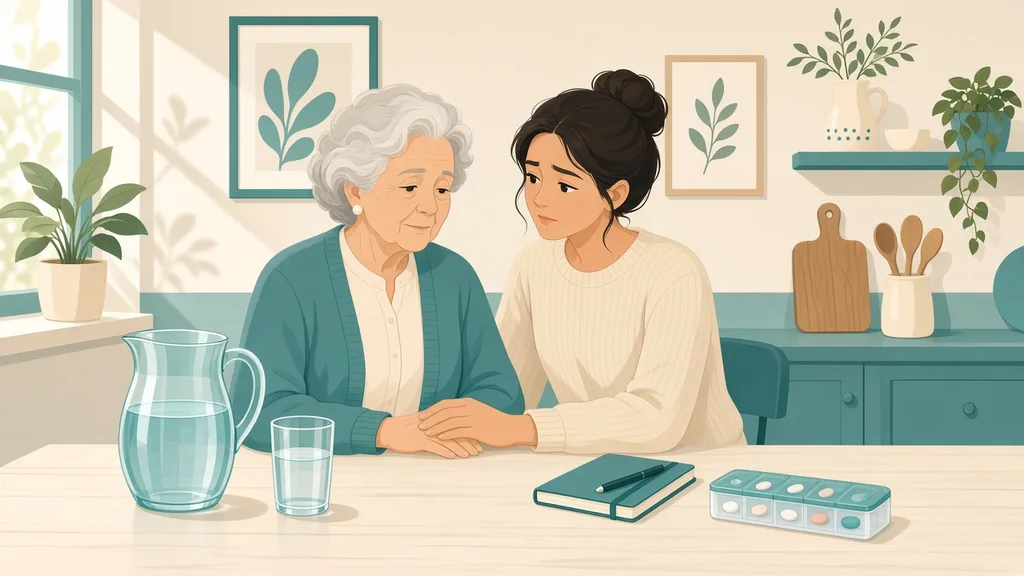
This guide draws on MedlinePlus pages for low blood sodium and the sodium blood test, the Mayo Clinic overview of hyponatremia and a peer-reviewed review on hyponatremia in older adults. It is general education, not a diagnosis. Talk with your doctor before changing how much you drink, how much salt you eat or any medicine. To learn more about a related topic, see low sodium in older adults, and take a closer look at the sections below.
What low sodium means
Hyponatremia is the medical name for a blood sodium level lower than normal. MedlinePlus explains that sodium is an electrolyte found mostly in the fluid outside cells, needed for blood pressure and for nerves and muscles to work. When sodium outside the cells falls, water moves into the cells and they swell. Brain cells are especially sensitive, and that swelling causes many of the symptoms.
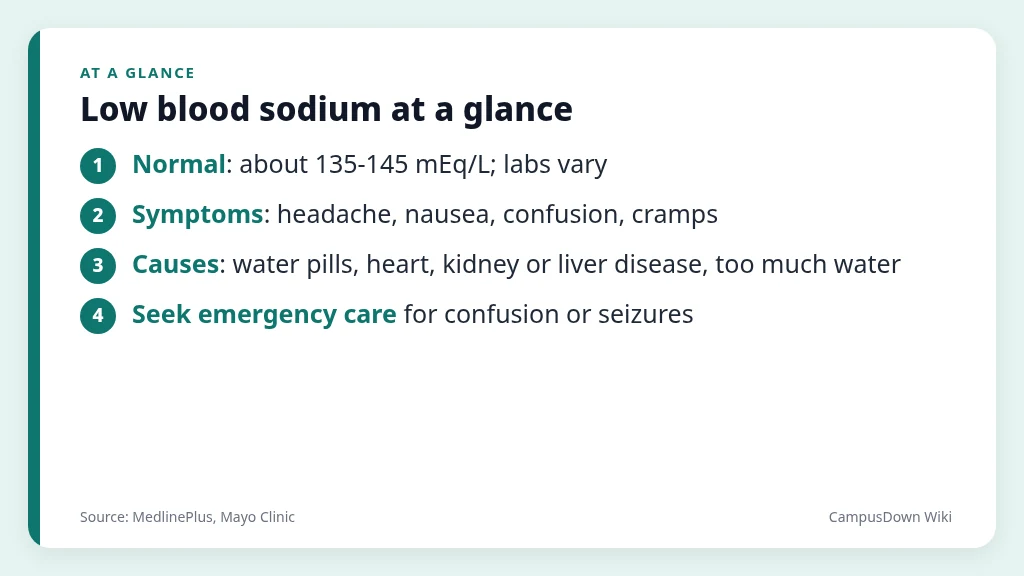
Normal values depend on the lab. MedlinePlus's low blood sodium page gives 136 to 144 mEq/L, its sodium blood test page gives 135 to 145 mEq/L, and Mayo Clinic says a healthy level is 135 to 145 mmol/L with hyponatremia below 135. Each source notes that ranges vary slightly by laboratory, so your report's range counts. For more on the lab side, see sodium normal range for nursing students.

Symptoms
MedlinePlus lists confusion, irritability, restlessness, convulsions, fatigue, headache, loss of appetite, muscle weakness, spasms or cramps, and nausea or vomiting. Mayo Clinic adds drowsiness, seizures and coma for severe cases. Symptoms can be vague, so a blood test is how it's confirmed.
Common causes
MedlinePlus says the imbalance of water to sodium comes from one of three situations: total body water increases while sodium stays the same, both increase but water more, or both are lost but sodium more. Causes it lists include:
- Diuretics (water pills), which increase urine output and sodium loss
- Heart failure, kidney disease and cirrhosis
- SIADH, where the body doesn't urinate out the right amount of water
- Diarrhea, vomiting and sweating, and large burns
Mayo Clinic adds that certain medicines (water pills, antidepressants and pain medicines), hormonal problems such as Addison disease and low thyroid hormone, chronic severe vomiting or diarrhea and drinking too much water can all lower sodium. Drinking excessive water can overwhelm the kidneys' ability to excrete it, and because sodium is lost in sweat, drinking too much water during endurance events such as marathons can dilute blood sodium. Mayo also notes that the recreational drug ecstasy increases the risk of severe, even fatal, hyponatremia.
For related guides, see heart failure, chronic kidney disease and dehydration in older adults.
Who is at higher risk
Mayo Clinic says older adults may have more contributing factors, including age-related changes, taking certain medicines and chronic disease. A review in *Clinical Interventions in Aging* calls decreased serum sodium a rather frequent electrolyte disorder in older people, says it is mainly caused by drugs (more often thiazides and antidepressants), SIAD or hormonal problems, and notes it is often multifactorial. It also says symptoms can include fatigue, cognitive problems, gait problems and falls and that hyponatremia is linked with a poor prognosis in elderly people. Mayo says people who take thiazide diuretics or who do endurance exercise and over-drink also have higher risk.
How doctors check and treat it
MedlinePlus says the provider will do an exam and order blood and urine tests, which may include a basic or comprehensive metabolic panel, blood osmolality, urine osmolality and urine sodium. The cause must be diagnosed and treated. MedlinePlus says treatment depends on the type and may include IV fluids, medicines to relieve symptoms and limiting water intake. If cancer is the cause, treating the cancer may fix the imbalance.
Speed matters. MedlinePlus says hyponatremia that develops in under 48 hours is more dangerous than hyponatremia that develops slowly, because brain cells have time to adjust. The review also stresses that sodium must be corrected at an appropriate rate, especially in chronic cases, to avoid a serious complication called osmotic demyelination syndrome. This is why correction is supervised by clinicians; never try to fix a low sodium result with large amounts of salt or by yourself.
Get help now if
Seek emergency care for confusion, repeated vomiting, seizures or loss of consciousness. MedlinePlus says very low sodium can be a life-threatening emergency. Call your provider if you're at risk and have nausea, headache, cramps or weakness.
What you can do now
- Don't self-treat. Don't add large amounts of salt or restrict fluids without being told to.
- Review your medicines. Ask your doctor or pharmacist whether water pills, antidepressants or pain medicines could play a role. Don't stop any on your own.
- Drink sensibly. Mayo Clinic says thirst and urine color are good guides to how much to drink; during endurance events, ask your provider about sports drinks with electrolytes.
- Bring a list. List your medicines, symptoms and recent illness, vomiting or diarrhea to your appointment.
Example scenario: the water-bottle resolution
- Who
- Theodore, 71, a retired mail carrier in Pittsburgh, Pennsylvania, began carrying a large water bottle everywhere after reading that older adults should drink more.
- What happened
- He also took a water pill for blood pressure.
- How it felt
- Within a few weeks he felt foggy, nauseated and unsteady, and he worried he was getting dementia.
- What they did
- His daughter drove him to the clinic, where blood tests showed low sodium, and his doctor reviewed his fluids and his medicines and arranged follow-up tests.
- How it turned out
- Theodore said he was relieved that there was a clear explanation and a plan, and he stopped guessing about how much to drink.
This is an illustrative example, not a real patient or a review.
Theodore's story is an illustrative example. Test results and treatment are decided with your own doctor.
Most-asked questions about low sodium
What are the symptoms of low sodium in elderly people?
Fatigue, confusion, falls, nausea and weakness can occur; see a doctor, because symptoms can be vague.
Why people ask: "low sodium symptoms in elderly" is #2 for "low sodium symptoms" (US autocomplete, November 2026).
What are low sodium symptoms in women?
The symptoms listed by MedlinePlus are the same for anyone. Mayo Clinic says people who are premenopausal appear to be at the greatest risk of hyponatremia-related brain damage.
Why people ask: "low sodium symptoms in women" is #3 for "low sodium symptoms" (US autocomplete, November 2026).
How is low sodium treated?
The cause is treated; options include IV fluids, medicines for symptoms and limiting water, under clinician supervision.
Why people ask: "low sodium symptoms treatment" is #4 for "low sodium symptoms" (US autocomplete, November 2026).
What causes low sodium symptoms?
Medicines, heart, kidney or liver disease, SIADH, vomiting or diarrhea, hormone problems and drinking too much water.
Why people ask: "low sodium symptoms causes" is #5 for "low sodium symptoms" (US autocomplete, November 2026).
What is the treatment for hyponatremia?
It depends on the type and cause and is chosen and monitored by clinicians.
Why people ask: "hyponatremia treatment" is #6 for "hyponatremia" (US autocomplete, November 2026).
Related on CampusDown
You can learn more about eGFR and kidney function and check it for yourself with the high potassium guide for the other side of electrolyte balance.
Frequently asked questions
- Does low sodium mean I should eat more salt?
- Not necessarily. Causes include too much water and medicines, so ask your doctor before changing your salt or fluids.
- Can drinking too much water cause low sodium?
- Yes. Mayo Clinic says excessive water can overwhelm the kidneys' ability to excrete it and dilute blood sodium.
- Can my medicine cause low sodium?
- Mayo Clinic lists water pills, antidepressants and pain medicines. Don't stop any medicine without talking to your provider.
- How fast does low sodium need to be corrected?
- Rate matters, and fast correction can be dangerous, so clinicians supervise it.
Low sodium has many causes, from a water pill to too much water, and the right fix depends on which one. Get tested, bring your medicine list and let clinicians guide any correction.
Browse more guides like this in the U.S. Health Topics hub.
This article is for general education and does not replace advice from your own doctor, nurse or pharmacist.