
Your mother has seemed foggy for a few days, not quite herself, a little unsteady at the sink. Her doctor orders blood work and says her sodium is low. How does that happen, and what should you ask?
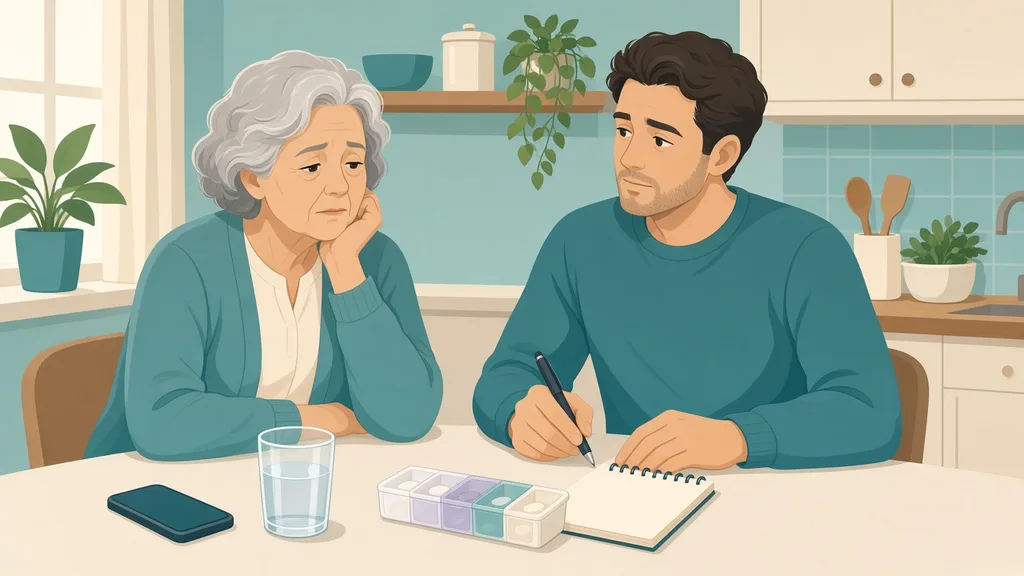
This guide is for older adults and the people who help them. It draws on Mayo Clinic's hyponatremia overview (July 2025), MedlinePlus's low blood sodium page and MedlinePlus's sodium blood test article. It is general education, not a diagnosis. Low sodium can be serious; if someone is confused, vomiting, having seizures or passing out, get emergency care. To learn more about the list below, take a closer look at each section.
What low sodium means
Mayo Clinic says hyponatremia happens when the level of sodium in the blood is lower than the typical range. Sodium is an electrolyte that helps regulate the amount of water in and around cells. When sodium is diluted, body water rises and cells begin to swell, which can cause problems ranging from mild to life-threatening.
MedlinePlus adds that when sodium in the fluid outside cells drops, water moves into the cells, and brain cells are especially sensitive to swelling, which causes many of the symptoms. For the lab numbers and what nurses look at, see the sodium range guide; for the broader patient overview, see low sodium on a blood test.

Why older adults are at higher risk
Mayo says older adults may have more contributing factors: age-related changes, taking certain medicines and a greater likelihood of chronic disease that changes the body's sodium balance. That fits the lists in both sources: heart, kidney and liver problems can hold on to water and dilute sodium, and many older adults take medicines that affect the kidneys or hormones.
Medicines that can lower sodium
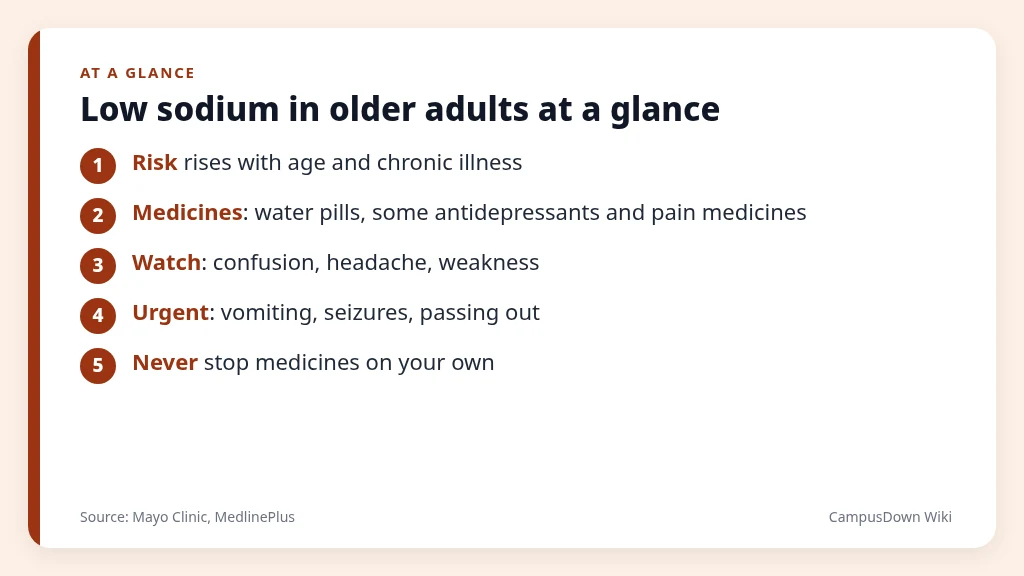
Mayo says some medicines interfere with the hormonal and kidney processes that keep sodium in range, and names water pills (diuretics), antidepressants and pain medicines. It lists thiazide diuretics and some antidepressants and pain medicines among the drugs that raise risk. MedlinePlus's sodium test article lists diuretics, morphine and SSRI antidepressants, and notes that many over-the-counter pain relievers and some antidepressants may be involved.
Do not stop or change a medicine on your own. Instead, bring the full list to the prescriber or pharmacist. A brown bag medicine review is a practical way to do that; include over-the-counter products and supplements.
Other causes
Both sources list a range of causes beyond medicines:
- Heart failure, kidney disease and cirrhosis, which cause fluid to collect; see heart failure and chronic kidney disease
- SIADH, a condition in which the body holds on to water
- Vomiting, diarrhea and other causes of dehydration, which lose sodium and can raise ADH levels; see dehydration in older adults
- Drinking too much water, which can overwhelm the kidneys' ability to excrete it
- Hormone problems such as Addison disease or low thyroid hormone
MedlinePlus also lists burns, sweating and, in its sodium test article, high blood sugar. The cause drives treatment, so the clinician will look for it.
Symptoms families may notice
Mayo lists nausea and vomiting, headache, confusion, loss of energy, drowsiness and fatigue, restlessness and irritability, muscle weakness, spasms or cramps, seizures and coma. MedlinePlus's list is similar and includes loss of appetite.
In an older person, early signs may look like "just slowing down": sleepier, foggier, less hungry, crankier or weaker than usual. Because many conditions cause those changes, don't guess the cause. Write down what you see and when it started, and call the clinician.
Get help now if
Seek emergency care for confusion, repeated vomiting, seizures or loss of consciousness, as Mayo advises. If someone at risk has nausea, headache, cramping or weakness, call a healthcare professional; they may advise urgent evaluation.
How it's found and treated
MedlinePlus says providers examine the person and order blood and urine tests, such as a basic metabolic panel, blood and urine osmolality and urine sodium. Mayo says treatment is aimed at the underlying cause. Depending on the cause, you may simply need to cut back on how much you drink, while other cases need intravenous electrolyte solutions and medicines. MedlinePlus says treatments may include fluids through a vein, medicines to relieve symptoms and limiting water intake, and that if a condition like cancer is the cause, that condition is treated.
Because the right fix depends on the type, don't start salt tablets or restrict fluids on your own. Ask the clinician what to do at home.
Helping at home
- Keep a medicine list current and bring it to every visit.
- Ask about new medicines: Mayo says to always talk with your healthcare professional about the risks of a new medication, especially if you take diuretics.
- Know the symptoms listed above and who to call.
- Ask about fluids: some people need more, others less. Mayo says thirst and urine color are generally good guides for healthy people, but your clinician may give different advice for heart, kidney or liver conditions.
- Share the lab results with the care team and ask when to recheck.
Questions to bring to the appointment
- What is likely causing the low sodium in my mother's case?
- Could any of her medicines be involved, and who should review them?
- Should she drink more, less or the same amount?
- What symptoms mean we should call right away?
- When should the sodium be rechecked?
Example scenario: the foggy week
- Who
- Bertha, 79, a retired school librarian in Spokane, Washington, started a new medicine a few weeks earlier, and her son noticed she was foggy, unsteady and eating less.
- What happened
- Her son wondered whether it was just age, and she insisted she was fine.
- How it felt
- He felt worried and a little guilty for fussing, and she felt irritated at being treated like she was fragile.
- What they did
- He wrote down the changes and the date of the new medicine, brought her whole medicine list and called the clinic. The clinician ordered blood work, found a low sodium level and reviewed her medicines and fluid habits with them.
- How it turned out
- Bertha said she was glad he made the call and that she liked having a written list to carry.
This is an illustrative example, not a real patient or a review.
Bertha's story is an illustrative example. Tests, treatment and any medicine changes are decided with your own clinician.
Most-asked questions about low sodium in older adults
What are the symptoms of low sodium in the elderly?
Nausea, headache, confusion, fatigue, muscle weakness and, in serious cases, seizures, per Mayo Clinic and MedlinePlus.
Why people ask: "low sodium elderly symptoms" is #2 for "low sodium elderly" (US autocomplete, November 2026).
Is low sodium different in elderly women?
The sources used here list risks for older adults generally; Mayo notes premenopausal women appear at greatest risk of hyponatremia-related brain damage. Ask the clinician about individual risks.
Why people ask: "low sodium elderly woman" is #3 for "low sodium elderly" (US autocomplete, November 2026).
What causes low sodium in the elderly?
Medicines such as water pills, antidepressants and pain medicines, heart, kidney or liver problems, dehydration and SIADH.
Why people ask: "low sodium elderly causes" is #5 for "low sodium elderly" (US autocomplete, November 2026).
How is low sodium in the elderly treated?
Treatment targets the cause and may include limiting water, medicines or IV fluids, as the clinician decides.
Why people ask: "low sodium elderly treatment" is #6 for "low sodium elderly" (US autocomplete, November 2026).
Can low sodium cause confusion in the elderly?
Yes. Confusion is a listed symptom in both sources, and Mayo advises emergency care for serious signs like confusion.
Why people ask: "low sodium elderly confusion" is #7 for "low sodium elderly" (US autocomplete, November 2026).
Related on CampusDown
You can learn more about the senior health guides and check it for yourself in the brown bag review guide. For lab context in detail, see the sodium range for nursing students.
Frequently asked questions
- Why do older adults get low sodium more often?
- Mayo says age-related changes, certain medicines and chronic diseases give older adults more contributing factors.
- Can a water pill lower sodium?
- Yes. Mayo and MedlinePlus list diuretics, and Mayo names thiazide diuretics. Don't stop one without the prescriber's advice.
- Should I add salt or cut back on water?
- Not on your own. Treatment depends on the cause; ask the clinician.
- When is low sodium an emergency?
- Mayo says to seek emergency care for serious signs such as vomiting, confusion, seizures or loss of consciousness.
- Can drinking too much water cause it?
- Yes. Mayo says excessive water can overwhelm the kidneys' ability to excrete it and dilute sodium.
Low sodium often has a fixable cause, and age and medicines are two of the big ones. Watch for changes in thinking and energy, keep a medicine list and call early.
Browse more guides like this in the Senior Health and Medicare hub.
This article is for general education and does not replace advice from your own doctor, nurse or pharmacist.