
Your dad says he's fine, he just isn't thirsty. But he's been sleepy all week, a little confused in the afternoons, and his glass of water sits full on the table. Could not drinking enough be part of it?

This guide is for older adults and the people who help them. It draws on MedlinePlus's dehydration page, Mayo Clinic's dehydration overview (May 2025) and MedlinePlus's sodium blood test page. It is general education, not a diagnosis. If you're worried about someone, call their healthcare professional; if there is fainting, severe confusion or no urination, get medical help right away. To learn more about the lists below, take a closer look at each section.
What dehydration means
Mayo Clinic says dehydration occurs when the body uses or loses more fluid than it takes in, so it doesn't have enough water and other fluids to do its usual work. Anyone can become dehydrated, but Mayo adds that the condition is more serious for infants, children and older adults.
MedlinePlus describes it the same way: you are losing more fluids than you are taking in. The usual causes are diarrhea, vomiting, sweating, urinating a lot (which can happen with certain medicines and illnesses), fever and simply not drinking enough.

Why thirst fades with age
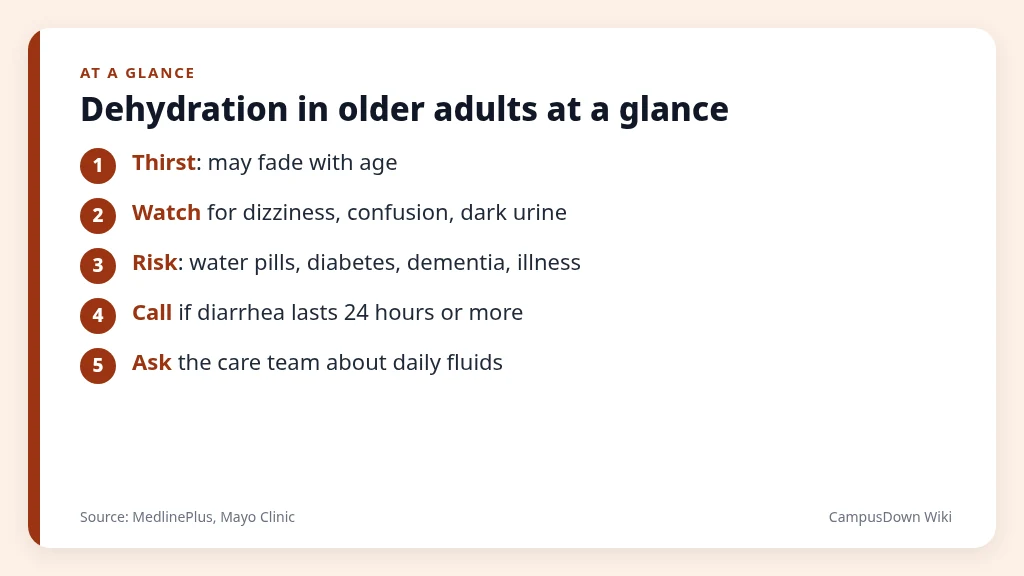
Here's the part that surprises many families. MedlinePlus says some people lose their sense of thirst as they age, so they don't drink enough fluids. Mayo Clinic says thirst isn't always a good way to tell whether the body needs water, and that many people, mainly older adults, don't feel thirsty until they're already dehydrated.
Mayo also explains two other reasons older adults are at higher risk:
- Older adults have a lower volume of water in their bodies to begin with, so there is less reserve.
- With aging, the ability to hold on to water is reduced.
Some older people also can't get a drink for themselves, for example because of mobility problems or memory changes. That isn't a personal failing; it's a gap that a helper can fill.
Signs that are easy to miss
MedlinePlus lists these symptoms in adults: feeling very thirsty, dry mouth, urinating and sweating less than usual, dark-colored urine, dry skin, feeling tired and dizziness. Mayo Clinic's adult list also includes being confused, skin that doesn't flatten back right away after being pinched, and sunken eyes or cheeks.
In an older person, the first changes may look like "just getting older": sleepier than usual, a bit foggy, wobbly when standing up. Because those can also come from other conditions or medicines, don't assume the cause. The practical move is to notice what changed, check recent fluids, and call the clinician if it doesn't make sense. For a general adult checklist, see dehydration signs in adults.
Medicines and conditions that raise the risk
Mayo Clinic says certain medicines cause more urination, which can lead to dehydration, and names water pills (diuretics) and some blood pressure medicines. It also lists diabetes that hasn't been diagnosed or isn't controlled, and notes that illnesses such as diabetes and dementia add to the risk in older adults. MedlinePlus also names kidney problems and chronic illnesses that make you urinate or sweat more.
Mayo adds that older adults can get dehydrated during minor illnesses, such as the flu, bronchitis or bladder infections, and should drink extra fluids when they don't feel well.
Related topics on this site: diabetes in older adults, chronic kidney disease and a brown bag medicine review, which is a way to go through every pill and supplement with a pharmacist or clinician. Never stop or change a medicine on your own because of dehydration worries; ask the prescriber first.
Why it can matter for sodium and the kidneys
MedlinePlus's sodium blood test page says that if sodium levels are too high or too low, it may mean a kidney problem, dehydration or another condition. Mayo says repeated or long-lasting dehydration can lead to urinary tract infections, kidney stones and even kidney failure, and that electrolyte imbalance can cause seizures. The most serious complication Mayo describes is low blood volume shock, which can be deadly.
That's why a clinician may order blood tests for electrolytes and kidney function when dehydration is suspected, as MedlinePlus describes. If you want to understand lab numbers, see sodium 135 to 145 and what nurses watch and low sodium in older adults.
Get help now if
Get medical help right away if an older adult has confusion, fainting, no urination, a rapid heartbeat, rapid breathing or signs of shock. MedlinePlus lists these as reasons for immediate care.
When to call a clinician
Mayo Clinic says to call a healthcare professional if you or a loved one:
- has had diarrhea for 24 hours or more
- is cranky or confused
- is sleepier or less active than usual
- can't keep down fluids
- has bloody or black stool
- has a fever of 102 degrees or higher
Diarrhea that follows antibiotics is its own topic; see C. diff after antibiotics.
Gentle ways to help
Both MedlinePlus and Mayo say the key to prevention is getting enough fluids. MedlinePlus adds that each person's needs can be different, so ask the care team how much to drink each day; some people with heart or kidney conditions have fluid limits, so a general "drink more" rule may not fit.
Ideas based on the two sources:
- Offer fluids on a schedule, not only when asked, since thirst may not prompt a drink.
- Add water-rich foods such as fruits and vegetables, which Mayo mentions.
- Go easy on drinks with a lot of caffeine or sugar, which both sources say to avoid or limit.
- Increase fluids during hot weather and during illness, as both pages advise.
- If vomiting makes drinking hard, MedlinePlus suggests small sips of water or ice chips.
- For lost electrolytes, MedlinePlus says sports drinks may help, but some contain a lot of sugar, so ask whether that suits the person's health conditions.
Severe dehydration is treated in a hospital, where MedlinePlus says people may receive IV fluids with salt.
Example scenario: the full glass
- Who
- Griffin, 78, a retired postal carrier in Rochester, New York, lived alone and took a water pill for his blood pressure.
- What happened
- His daughter noticed he was sleepy and a bit foggy during her afternoon calls, and the glass she left for him was often still full.
- How it felt
- She felt worried and a little guilty, and he felt irritated that she was fussing when he wasn't thirsty.
- What they did
- She called his clinic, listed his medicines and described what she had seen. The nurse asked about fluids, urine and diarrhea, and the clinic arranged a visit. At home they agreed on a routine of small drinks with meals and a reminder on his phone.
- How it turned out
- Griffin said he still didn't feel thirsty, but he liked that the routine kept his daughter from nagging him.
This is an illustrative example, not a real patient or a review.
Griffin's story is an illustrative example. Fluid needs and medicine changes are decided with your own clinician.
Most-asked questions about dehydration in older adults
What are the symptoms of dehydration in the elderly?
MedlinePlus lists dry mouth, dark urine, urinating less, dizziness and tiredness; Mayo Clinic adds confusion.
Why people ask: "dehydration elderly symptoms" is #2 for "dehydration elderly" (US autocomplete, November 2026).
Can dehydration cause confusion in the elderly?
Mayo Clinic lists being confused as a symptom of dehydration in adults and says to call a clinician if someone is confused.
Why people ask: "dehydration elderly confusion" is #3 for "dehydration elderly" (US autocomplete, November 2026).
Is dehydration more dangerous with dementia?
Mayo Clinic says dementia adds to older adults' risk, partly because some people can't get water for themselves. Ask the care team for a plan.
Why people ask: "dehydration elderly dementia" is #4 for "dehydration elderly" (US autocomplete, November 2026).
How is dehydration treated in the elderly?
MedlinePlus says treatment replaces lost fluids and electrolytes; mild cases may need drinking more, and severe cases may need IV fluids in a hospital.
Why people ask: "dehydration elderly treatment" is #7 for "dehydration elderly" (US autocomplete, November 2026).
What are the signs of dehydration in older people?
Dry mouth, dark urine, dizziness, tiredness and confusion, per MedlinePlus and Mayo Clinic.
Why people ask: "dehydration elderly signs" is #9 for "dehydration elderly" (US autocomplete, November 2026).
Related on CampusDown
You can learn more about the senior health guides and check it for yourself with the adult dehydration checklist. For the lab side in detail, read the sodium guide for nursing students.
Frequently asked questions
- How much should an older adult drink each day?
- MedlinePlus says needs differ by person, so ask the care team. Some heart or kidney conditions come with fluid limits.
- Does an older person always feel thirsty when dehydrated?
- No. MedlinePlus and Mayo Clinic say some older adults lose their sense of thirst or don't feel thirsty until they're dehydrated.
- Can a water pill cause dehydration?
- Mayo Clinic says medicines that cause more urination, including water pills, can lead to dehydration. Don't stop one without the prescriber's advice.
- Are sports drinks a good idea?
- MedlinePlus says they may help replace electrolytes, but some have a lot of sugar. Ask a clinician, especially with diabetes.
- When is dehydration an emergency?
- MedlinePlus lists confusion, fainting, lack of urination, rapid heartbeat, rapid breathing and shock as reasons to get medical help right away.
Thirst is not a reliable alarm in later life. Offer small drinks often, notice changes in energy and thinking, and call the clinician early when something seems off.
Browse more guides like this in the Senior Health and Medicare hub.
This article is for general education and does not replace advice from your own doctor, nurse or pharmacist.