
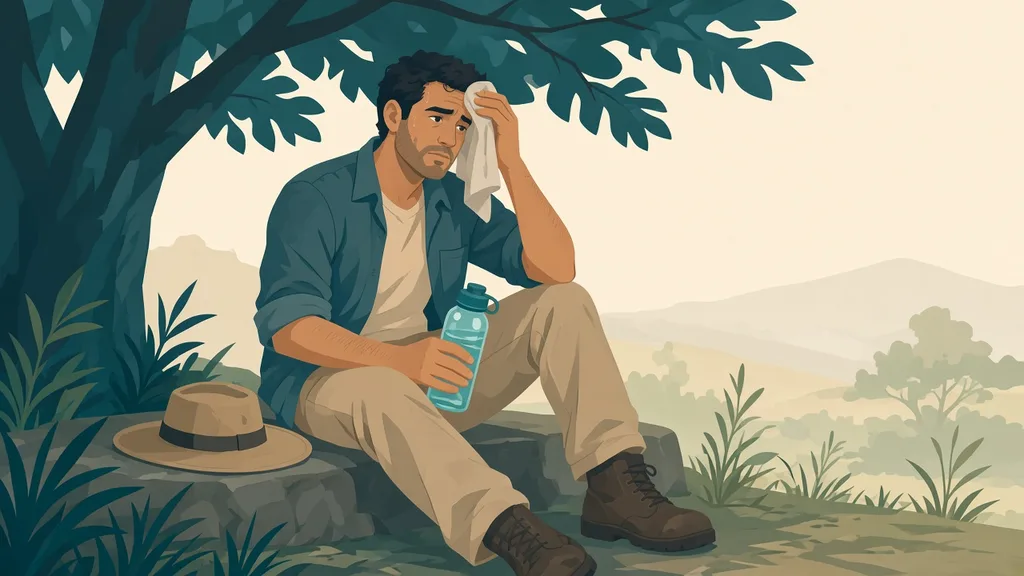
It's been a hot day and a long shift. You realize your urine is dark, your mouth feels dry and you stood up too fast and got dizzy. Is that dehydration, and when does it stop being something you can fix at home?
This guide is an adult checklist built from Mayo Clinic's dehydration overview (May 2025) and MedlinePlus's dehydration page. It's general education, not a diagnosis. Confusion, fainting, very little urine or a racing heart need medical help right away. To learn more about older adults, who have extra risks, take a closer look at dehydration in older adults.
What dehydration is
Mayo says dehydration occurs when the body uses or loses more fluid than it takes in, so it doesn't have enough water and other fluids to do its usual work. MedlinePlus says it can be mild or severe enough to be life-threatening. Anyone can become dehydrated, though Mayo says it is more serious for infants, children and older adults.

Signs to notice in adults
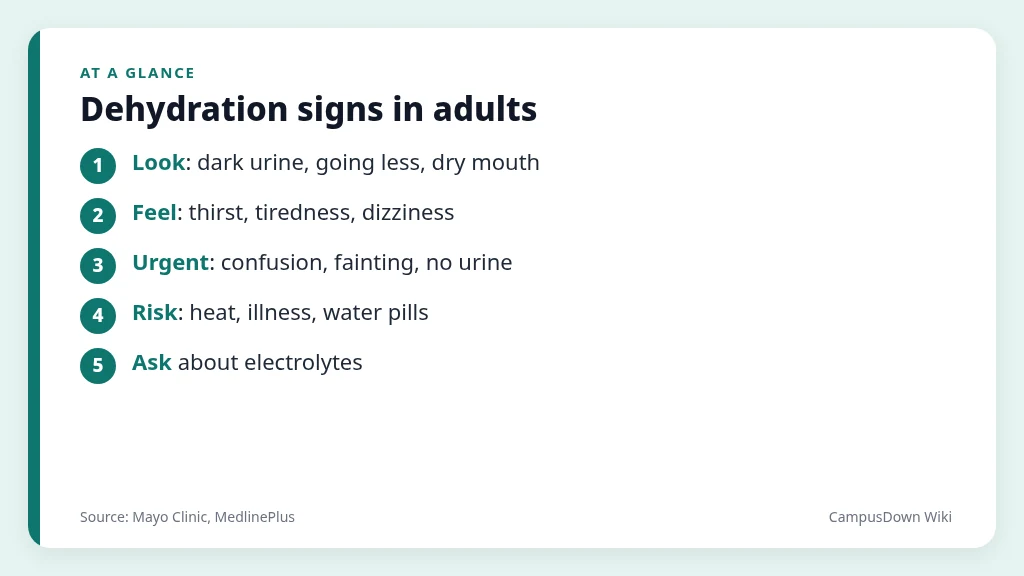
Mayo lists these adult symptoms:
- extreme thirst
- urinating less
- dark-colored urine
- tiredness
- dizziness
- being confused
- skin that doesn't flatten back right away after being pinched
- sunken eyes or cheeks
MedlinePlus adds dry mouth, dry skin and sweating less than usual.
Urine color
Dark-colored urine and passing less of it are among the most practical signs. For active people, Mayo says that making lots of clear urine is a good sign of being well hydrated. Some foods, vitamins and medicines can change urine color, so use color as one clue and look at the others too. For what nurses watch in the hospital, see fluid volume excess vs deficit.
Dizziness
Standing up and feeling lightheaded can be a sign of low fluid, but it has other causes too. If dizziness is new, severe or comes with fainting, don't wait it out.
Skin and eyes
The pinch test, with skin that is slow to flatten, and sunken eyes or cheeks appear on Mayo's adult list. These are less reliable in older adults, so don't rely on them alone.
Thirst isn't always a good guide
Mayo says thirst isn't always a good way to tell if the body needs water, and many people, mainly older adults, don't feel thirsty until they're dehydrated. MedlinePlus says some people lose their sense of thirst with age. Plan to drink more in hot weather or during illness.
Red flags
MedlinePlus says to get medical help right away if symptoms also include confusion, fainting, lack of urination, rapid heartbeat, rapid breathing or shock. Mayo says to call your family healthcare professional if you or a loved one has had diarrhea for 24 hours or more, is confused or unusually sleepy, can't keep down fluids, has bloody or black stool or has a fever of 102 degrees or higher.
Get help now if
Call 911 for fainting, confusion, very little or no urination, a rapid heartbeat with breathing trouble or any symptom that seems severe. Do not drive yourself.
Who is at higher risk
MedlinePlus and Mayo list:
- older adults, who may have a smaller fluid reserve and a weaker thirst response
- people with diabetes, kidney problems or other chronic illnesses that increase urination or sweating (Mayo notes diabetes that isn't controlled can lead to dehydration)
- people taking medicines that increase urination or sweating, such as water pills (diuretics) and some blood pressure medicines; see furosemide
- people with vomiting, diarrhea or fever
- people who exercise or work outdoors in hot weather
If you take a water pill or other medicine that affects fluids, ask your prescriber what to do on sick days; don't stop it on your own.
Why electrolytes matter
MedlinePlus says electrolytes are minerals that help balance the water in your body, support muscle and nerve function and keep heart rate and rhythm steady. Diarrhea and vomiting lose both fluid and minerals. Providers diagnosing dehydration may check vital signs, ask about symptoms and order blood tests for electrolytes, especially potassium and sodium, plus kidney function and urine tests. See the sodium range guide, the potassium range guide and low sodium on a blood test.
MedlinePlus notes that an electrolyte imbalance can happen when the amount of water in the body changes, including both too little (dehydration) and too much (overhydration). Don't drink huge amounts of plain water to fix symptoms without guidance if you have heart, kidney or liver problems.
Treatment and prevention
MedlinePlus says treatment is to replace the fluids and electrolytes you lost. For mild cases, drinking water may be enough; if electrolytes were lost, sports drinks may help. Severe cases may need IV fluids with salt in a hospital. Mayo says drinking more fluids usually fixes mild to moderate dehydration, while severe dehydration needs medical treatment right away.
To prevent it, Mayo suggests drinking fluids, eating foods with lots of water such as fruits and vegetables and avoiding drinks with caffeine or a lot of sugar, which it says can be dehydrating. It also says to drink more when you have vomiting or diarrhea, during hard exercise, in hot or humid weather and when you're ill.
When to talk to a clinician
- Symptoms last or return
- You take diuretics, blood pressure medicines or diabetes medicines and have an illness with vomiting or diarrhea
- You have kidney, heart or liver disease and aren't sure how much to drink
- You feel dizzy when you stand most days
Questions to bring to your appointment
- Could my medicines be raising my risk?
- How much should I drink each day, given my health conditions?
- What should I do on sick days with my medicines?
- Do I need electrolyte or kidney blood tests?
- What symptoms mean I should come in right away?
Example scenario: the long shift in the heat
- Who
- Quillan, 52, a roofer in Tampa, Florida, noticed dark urine, a dry mouth and dizziness when he climbed down at the end of a hot day.
- What happened
- He assumed it would pass and didn't want to lose pay by stopping.
- How it felt
- He felt wiped out and a bit worried but tried to tough it out.
- What they did
- A coworker insisted he sit in the shade and drink. When he still felt dizzy and shaky, he went to urgent care, where the clinicians checked his vitals and ordered blood work. He started planning more water breaks and shade time on hot days.
- How it turned out
- Quillan said he'd stopped treating dark urine as normal.
This is an illustrative example, not a real patient or a review.
Quillan's story is an illustrative example. Your own care is decided with your clinician.
Most-asked questions about dehydration signs in adults
What are the signs of dehydration in adults on the skin?
Skin that doesn't flatten back right away after pinching and dry skin; both are less reliable in older adults.
Why people ask: "signs of dehydration in adults skin" is #2 for "signs of dehydration in adults" (US autocomplete, November 2026).
What does urine look like when dehydrated?
Dark-colored and less of it, per Mayo and MedlinePlus.
Why people ask: "signs of dehydration in adults urine" is #3 for "signs of dehydration in adults" (US autocomplete, November 2026).
What do the eyes look like when dehydrated?
Mayo lists sunken eyes or cheeks as a sign.
Why people ask: "signs of dehydration in adults eyes" is #4 for "signs of dehydration in adults" (US autocomplete, November 2026).
What does the tongue look like when dehydrated?
MedlinePlus lists dry mouth for adults; talk to a clinician if it persists.
Why people ask: "signs of dehydration in adults tongue" is #8 for "signs of dehydration in adults" (US autocomplete, November 2026).
Can dehydration cause a headache?
Headache isn't on the adult lists from Mayo or MedlinePlus used here, and headaches have many causes. Seek care for severe headache, confusion or fainting.
Why people ask: "signs of dehydration in adults headache" is #9 for "signs of dehydration in adults" (US autocomplete, November 2026).
Related on CampusDown
You can learn more about the health topics hub and check it for yourself in the older adult dehydration guide. For lab results in detail, see the sodium range guide.
Frequently asked questions
- What is the first sign of dehydration?
- Thirst, dry mouth, dark urine and urinating less are common early signs, though thirst may be unreliable, especially in older adults.
- When should I get urgent help?
- For confusion, fainting, no urination, rapid heartbeat or breathing, per MedlinePlus.
- Can sports drinks help?
- MedlinePlus says they may help if you lost electrolytes in mild cases; ask your clinician if you have diabetes, kidney or heart conditions.
- Do medicines raise the risk?
- Yes. Mayo lists water pills and some blood pressure medicines. Ask your prescriber before changing anything.
- What tests check electrolytes?
- Blood tests, especially for sodium and potassium, plus kidney function and urine tests, per MedlinePlus.
Dark urine, dry mouth and dizziness are your body's early hints. Drink up and rest, and get help fast if confusion, fainting or very little urine appear.
Browse more guides like this in the U.S. Health Topics hub.
This article is for general education and does not replace advice from your own doctor, nurse or pharmacist.