
Your doctor started a water pill because your ankles are swollen, and now you're making more trips to the bathroom and feeling lightheaded when you stand. Is that normal, and what should you watch for?

Furosemide is common, and so are the questions about it. This guide is based on MedlinePlus's furosemide drug information (last revised April 2025). It does not give doses; follow your own label and talk to your doctor or pharmacist. To learn more about why potassium matters with water pills, take a closer look at the potassium range guide.
What furosemide is
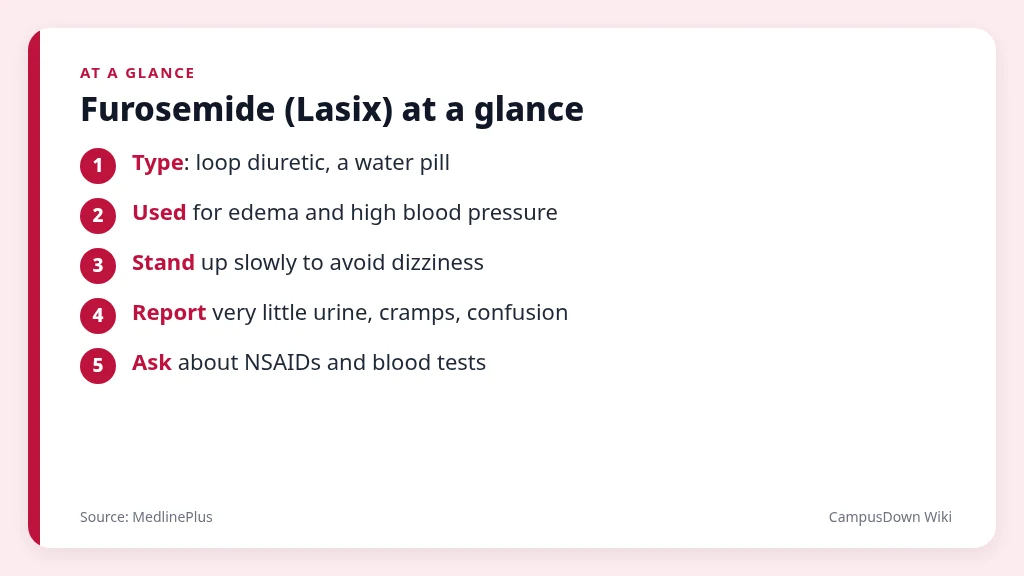
MedlinePlus says furosemide is in a class of medications called diuretics, or "water pills." It works by causing the kidneys to get rid of unneeded water and salt from the body. Lasix is a brand name. It is used:
- alone or with other medicines to treat high blood pressure
- to treat edema, which is excess fluid held in body tissues because of various medical problems, such as heart failure or kidney disease
MedlinePlus is clear that furosemide controls high blood pressure and edema but does not make those conditions go away, and that you should keep taking it even if you feel well. Don't stop it without talking to your doctor.

How it's taken
MedlinePlus says furosemide comes as a tablet and an oral liquid, is usually taken once or twice a day, and that for edema it may be taken daily or only on certain days of the week. For high blood pressure it should be taken at about the same time each day. Take it exactly as directed, and ask your pharmacist about anything unclear. If you miss a dose, MedlinePlus says to take it when you remember unless it's nearly time for the next one, and not to double up.
If your doctor prescribes a low-salt diet or extra potassium-rich foods, MedlinePlus says to follow those instructions carefully.
Dizziness when you stand up
MedlinePlus says furosemide may cause dizziness, lightheadedness and fainting when you get up too quickly from a lying position, and that this is more common when you first start. Its advice is to get out of bed slowly, resting your feet on the floor for a few minutes before standing up. Alcohol can add to these effects.
Warning signs to take seriously
MedlinePlus lists milder side effects to report if severe or persistent: frequent urination, blurred vision, headache, constipation and diarrhea.
It also lists symptoms to call your doctor about immediately or seek emergency treatment for:
- decreased urination, dry mouth, thirst, nausea, vomiting, weakness, drowsiness, confusion, muscle pain or cramps, or rapid or pounding heartbeats
- fever
- ringing in the ears or hearing loss
- rash, hives, blisters or peeling skin, or trouble breathing or swallowing
- yellowing of the skin or eyes
Several of these overlap with dehydration or electrolyte changes; see dehydration signs in adults and low sodium in older adults.
Get help now if
Call 911 for trouble breathing, swelling of the face or throat, fainting, confusion or a rapid or pounding heartbeat that doesn't settle. Don't wait for a scheduled appointment.
Why blood tests matter
Diuretics increase potassium and sodium losses in some people. MedlinePlus's potassium information says certain drugs, especially diuretics, can remove potassium from the body, which is why some people are prescribed a supplement; see potassium chloride tablets. Your prescriber may order blood tests for electrolytes and kidney function. Ask when yours are due and what results would change your plan. Don't start a potassium supplement or salt substitute on your own, since many salt substitutes contain potassium.
Interactions and cautions
MedlinePlus lists:
- Aspirin, ibuprofen (Advil, Motrin) and naproxen (Aleve) may interact. Don't start them without talking to your provider.
- Sucralfate (Carafate): take it 2 hours before or after furosemide.
- Tell your doctor about kidney disease, trouble emptying the bladder, diabetes, gout, lupus or liver disease, as well as pregnancy or breastfeeding.
- Sun sensitivity: furosemide may make skin sensitive to sunlight, so use protective clothing, sunglasses and sunscreen.
- Tell your surgeon or dentist you take it before procedures.
A brown bag medicine review is a good way to catch overlaps.
Questions to ask your pharmacist or doctor
- What is this water pill for in my case: swelling, blood pressure or both?
- Which days or times should I take it?
- How much urine and how much weight change should prompt a call?
- When will my potassium, sodium and kidney tests be checked?
- Which pain relievers are safe for me?
- What should I do on sick days with vomiting or diarrhea?
Example scenario: the quick stand
- Who
- Ivor, 72, a retired electrician in Duluth, Minnesota, started furosemide for swollen ankles and felt lightheaded when he jumped out of bed to answer the phone.
- What happened
- He worried the medicine wasn't right for him and thought about skipping it.
- How it felt
- He felt a bit scared and embarrassed about nearly falling.
- What they did
- He called his pharmacist, who explained the standing-up advice and asked about his other medicines. He began sitting at the edge of the bed for a few minutes first and brought a list of pain relievers he used to his next visit.
- How it turned out
- Ivor said slowing down was a small change that mattered.
This is an illustrative example, not a real patient or a review.
Ivor's story is an illustrative example. Your own plan comes from your clinician.
Most-asked questions about furosemide
What are the side effects of furosemide?
Frequent urination, headache, constipation and diarrhea, plus dizziness on standing; urgent signs include very little urine, cramps, confusion and a pounding heartbeat.
Why people ask: "furosemide side effects" is #4 for "furosemide" (US autocomplete, November 2026).
What is furosemide used for?
Edema and high blood pressure, per MedlinePlus.
Why people ask: "furosemide uses" is #5 for "furosemide" (US autocomplete, November 2026).
What is the brand name for furosemide?
Lasix.
Why people ask: "furosemide brand name" is #7 for "furosemide" (US autocomplete, November 2026).
What is furosemide 20 mg tablet used for?
The same uses as other strengths: edema and high blood pressure; your prescriber chooses what's right for you.
Why people ask: "furosemide 20 mg tablet used for" is #4 for "furosemide 20 mg" (US autocomplete, November 2026).
What are the side effects of furosemide 20 mg?
The same as listed above; strength doesn't change the warning signs. Report any that are severe.
Why people ask: "furosemide 20 mg side effects" is #3 for "furosemide 20 mg" (US autocomplete, November 2026).
Related on CampusDown
You can learn more about medicines and check it for yourself in the potassium range guide. For fluid problems in detail, see fluid volume excess vs deficit.
Frequently asked questions
- Is furosemide the same as a water pill?
- Yes. MedlinePlus calls diuretics "water pills."
- Why do I feel dizzy when I stand?
- It can happen, especially when starting. MedlinePlus advises getting up slowly after resting your feet on the floor.
- Can I take ibuprofen with furosemide?
- MedlinePlus says NSAIDs may interact; ask your provider before using them.
- Can I stop it when swelling goes down?
- Not without your doctor. It controls these conditions but doesn't make them go away.
- What symptoms are urgent?
- Very little urine, dry mouth, confusion, muscle cramps, pounding heartbeat or trouble breathing, per MedlinePlus.
Furosemide helps the body shed extra fluid, but it needs follow-up: slow standing, careful use of pain relievers and regular lab checks. Call early if something feels off.
Browse more guides like this in the Medicines hub.
This article is for general education and does not replace advice from your own doctor, nurse or pharmacist.