
Do you take a baby aspirin every morning because someone once told you it was "good for your heart"? Millions of Americans started that habit years ago. The advice changed in 2022, and for many older adults the answer is now "don't start it on your own."
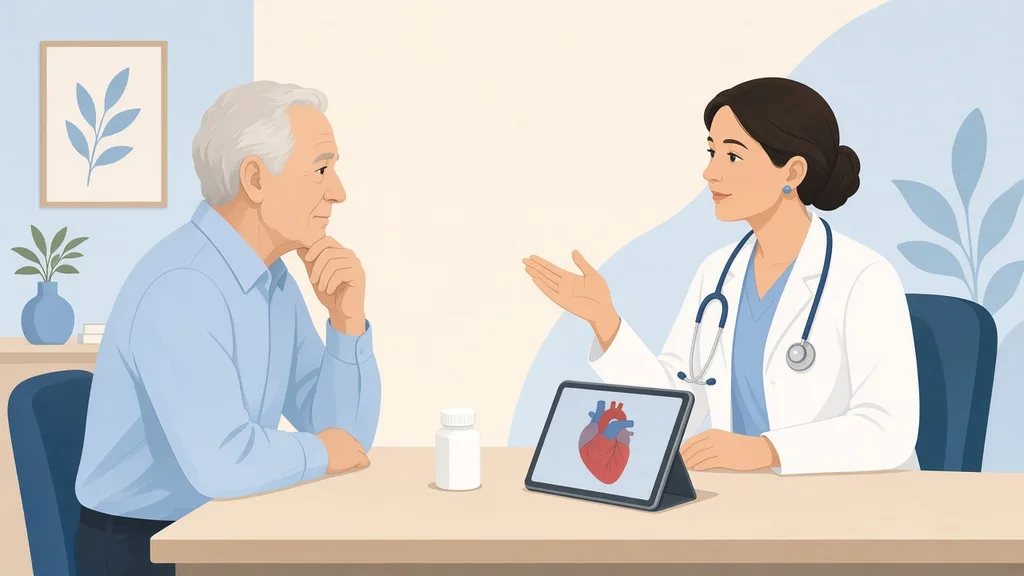
This guide uses the U.S. Preventive Services Task Force (USPSTF) recommendation from April 26, 2022, the separate USPSTF preeclampsia recommendation, and the warnings on the Bayer 81 mg chewable aspirin label on DailyMed. If you are over 60, or take a blood thinner, take a closer look at the bleeding section.
Primary vs secondary prevention
This difference decides almost everything:
- Primary prevention means trying to prevent a first heart attack or stroke in someone who has never had one. This is what the 2022 USPSTF advice covers.
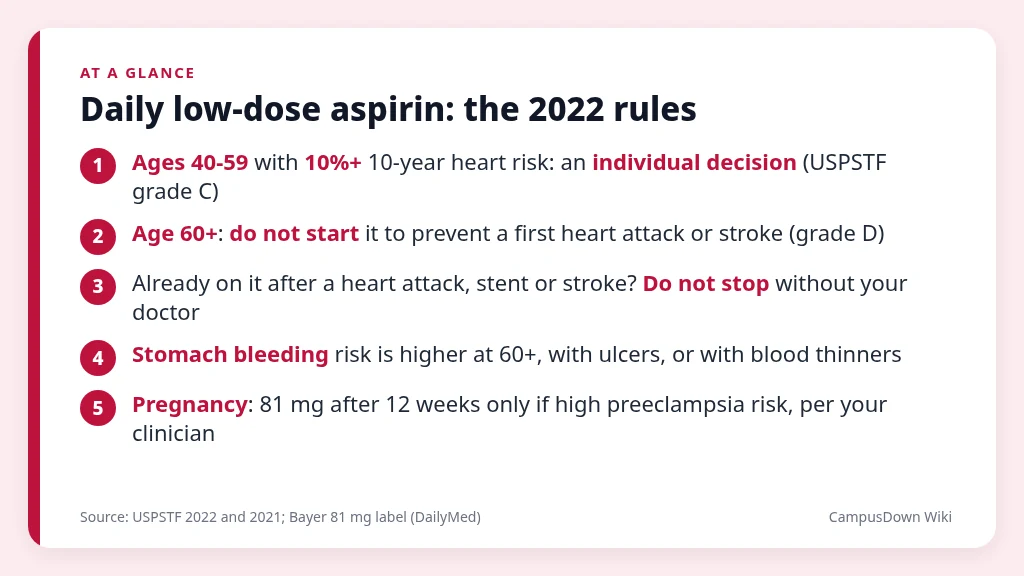
- Secondary prevention means preventing another event in people who already had a heart attack, a stent, bypass surgery, or certain strokes. The USPSTF advice does not apply to them. Their cardiologist or neurologist may prescribe aspirin, and stopping on your own can be dangerous.

What the USPSTF recommends
The Task Force says:
- Ages 40 to 59 with an estimated 10% or greater 10-year risk of cardiovascular disease: starting low-dose aspirin should be an individual decision. The net benefit is small. People who are not at higher bleeding risk and are willing to take it daily are more likely to benefit. Grade C.
- Ages 60 and older: the USPSTF recommends against starting low-dose aspirin for primary prevention. Grade D.
- For people who started and are getting older, the Task Force says benefits shrink with age and that clinicians and patients should consider stopping around age 75.
The advice applies to adults 40 and older without known heart disease and without a higher bleeding risk, such as a history of stomach ulcers, recent bleeding, or medicines that raise bleeding risk. Your 10-year risk is estimated from things like LDL cholesterol, blood pressure, smoking and diabetes.
Example scenario: the habit he picked up at 55
- Who
- Arthur, 72, a retired high school shop teacher in Michigan, had taken a chewable 81 mg aspirin every morning since a coworker's heart attack 17 years earlier. He had never had heart disease himself.
- What happened
- After he was started on Eliquis for newly found AFib, he kept the aspirin going "for extra protection." A month later he noticed black, sticky stools and felt lightheaded on the stairs.
- How it felt
- He was frightened, and also angry at himself: he had thought aspirin was harmless because it was sold next to the cough drops. His wife Joan cried in the car on the way to urgent care.
- What they did
- The urgent care team sent him to the emergency department, where he was treated for stomach bleeding. His doctor reviewed every pill, explained that aspirin plus a blood thinner raises bleeding risk, and made a plan for his medicines.
- How it turned out
- Arthur recovered. His doctor told him to stop the aspirin and keep the blood thinner, and his pharmacist now flags any over-the-counter pain reliever. He keeps a printed medicine list in his wallet and tells friends to ask before they "just take an aspirin."
This is an illustrative example, not a real patient or a review.
Arthur is an illustrative example, not a real patient. Never stop or start aspirin without talking to your doctor, especially if it was prescribed after a heart event.
The bleeding risk on the label
The Bayer 81 mg label's stomach bleeding warning says aspirin is an NSAID that may cause severe stomach bleeding, and the chance is higher if you are age 60 or older, have had stomach ulcers or bleeding problems, take a blood thinner (anticoagulant) or steroid, take other NSAIDs, have 3 or more alcoholic drinks a day, or take more or longer than directed. It also warns about Reye's syndrome in children and teens recovering from chickenpox or flu-like illness, and about severe allergic reactions.
Get help now if
Get emergency care for black or bloody stools, vomiting blood or coffee-ground material, severe stomach pain, or fainting. Call 911 for signs of stroke, such as face drooping, arm weakness or speech trouble, and for chest pain; do not wait to see whether aspirin "works."
Aspirin with Eliquis, Xarelto or warfarin
Blood thinner labels list aspirin as a drug that raises bleeding risk. Some people do need both, for example after certain stents or with specific artery disease (Xarelto 2.5 mg twice daily is labeled with aspirin for CAD and PAD). That decision belongs to your cardiologist. If you started aspirin on your own and later got a blood thinner, tell your doctor right away. See Eliquis, Xarelto and warfarin.
Most-asked questions about low-dose aspirin
Should I take a baby aspirin daily?
Not on your own. The USPSTF says not to start it at 60 or older to prevent a first heart attack or stroke, and to make an individual decision at 40 to 59 with a 10% or higher risk. If you already had a heart attack, stent or stroke, your doctor may want you on it.
Why people ask: "should i take baby aspirin daily" is the #2 Google suggestion for "should i take baby aspirin," with "every day" at #5 (US autocomplete, November 2026).
What are the side effects of low-dose aspirin?
The label warns about stomach bleeding, especially at 60 or older, with ulcers, or with blood thinners, plus allergic reactions and Reye's syndrome in children and teens.
Why people ask: "low dose aspirin side effects" is #5 for "low dose aspirin" (US, November 2026).
Can I take low-dose aspirin with Eliquis?
Only if your doctor specifically wants both. The Eliquis label says aspirin increases bleeding risk.
Why people ask: "low dose aspirin and eliquis" is #10 for "low dose aspirin" (US, November 2026).
Is baby aspirin used in pregnancy?
The USPSTF recommends 81 mg daily after 12 weeks of pregnancy for people at high risk of preeclampsia. Whether you are high risk is decided with your obstetric clinician; do not start it without asking.
Why people ask: "low dose aspirin pregnancy" is #2 for "low dose aspirin," and "baby aspirin during pregnancy" is #3 for "baby aspirin" (US, November 2026).
Is low-dose aspirin the same as baby aspirin?
Yes, in the U.S. both usually mean the 81 mg tablet.
Why people ask: "low dose aspirin vs baby aspirin" is #7 for "low dose aspirin" (US, November 2026).
You can check it for yourself today: look in your medicine cabinet, and if you find a baby aspirin bottle, ask at your next visit whether it is still right for you.
Related on CampusDown
You can learn more about heart attack symptoms in women, stroke warning signs and blood thinners in older adults.
Frequently asked questions
- Should I chew aspirin during a heart attack?
- Call 911 first; the dispatcher or your doctor can tell you whether to chew aspirin.
- Is enteric-coated aspirin safer for the stomach?
- Coating can reduce stomach upset, but bleeding risk remains; ask your pharmacist.
- Does aspirin lower blood pressure?
- No. Aspirin is not a blood pressure medicine.
- Can I stop aspirin before surgery?
- Only with your surgeon and prescriber, who weigh bleeding and clot risk.
For a first heart attack or stroke, daily aspirin is now a personal decision, and after 60 it usually should not be started. Learn more about your own risk with your doctor or pharmacist, and never stop prescribed aspirin on your own.
Browse more guides like this in the Medicines hub.
This article is for general education and does not replace advice from your own doctor, nurse or pharmacist.