
Is 140/85 "fine for an 80-year-old"? Many families hear that phrase, and many others hear the opposite: that older adults should aim just as low as everyone else. Both views have a history, and the 2025 guideline from the American Heart Association (AHA) and American College of Cardiology (ACC) tries to settle it with a clear goal plus room for judgment.
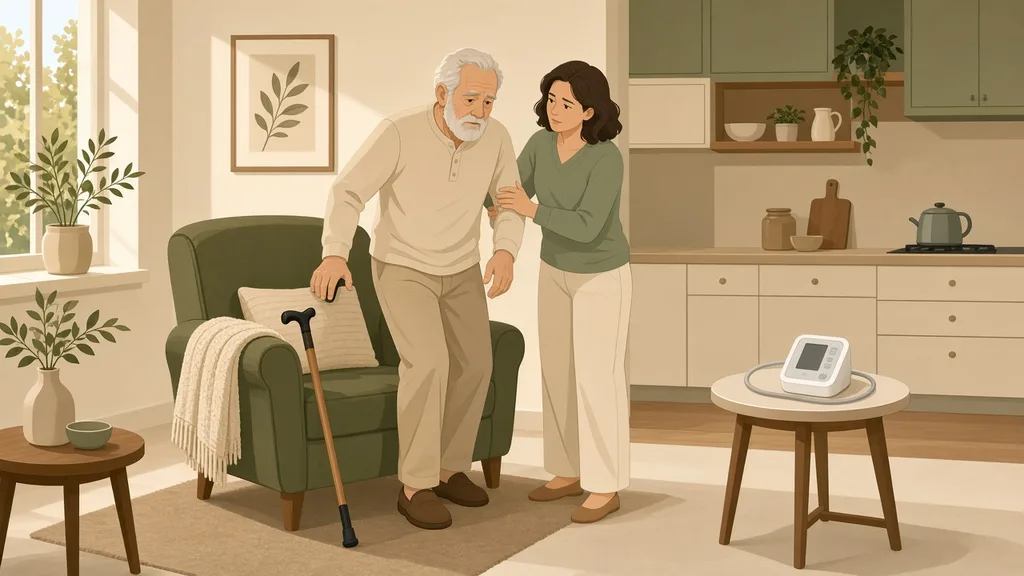
If you help an aging parent with medicines and appointments, this guide explains what that goal is, why falls and dizziness change the conversation, and what to ask at the next visit. It is a good moment to take a closer look at how your parent feels after each dose, not just at the numbers.
What the 2025 guideline says
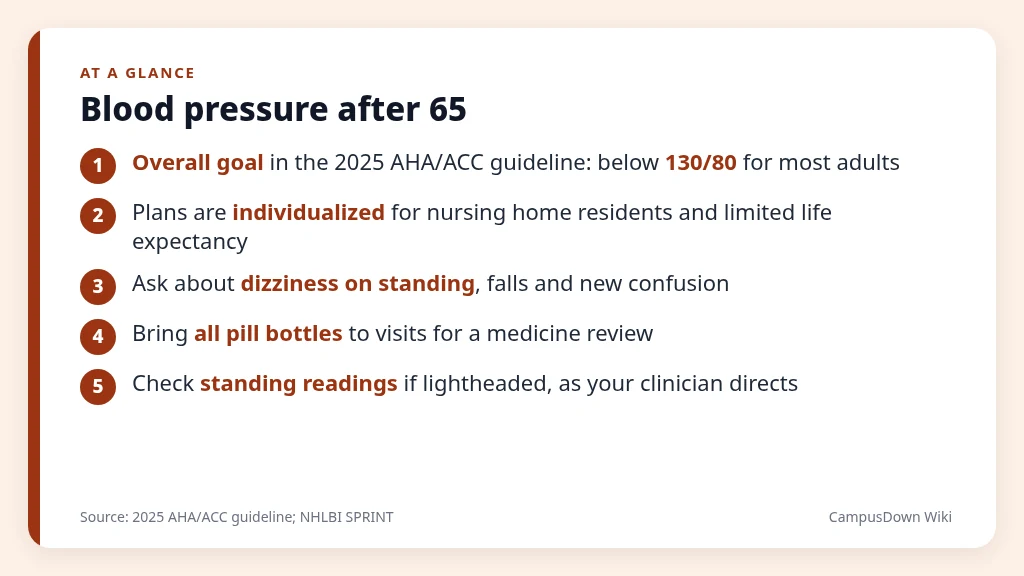
The 2025 AHA/ACC guideline, developed with groups that include the American Geriatrics Society, sets an overall blood pressure treatment goal of below 130/80 mm Hg for all adults. It adds considerations for people who require institutional care, such as nursing home residents, those with a limited predicted lifespan, and pregnancy.
In plain words: age alone does not raise the target, but a frail person in long-term care, or someone near the end of life, may have a different plan. The AHA also notes that systolic pressure tends to rise with age as large arteries stiffen, which is why the top number gets so much attention after 50.
Key point
There is no separate "normal for 80" number in the guideline. The goal is the same, and the path to it is tailored to the person's health, other conditions and risk of side effects.

Why the goal moved lower
Part of the evidence comes from SPRINT, a trial funded by the National Heart, Lung, and Blood Institute (NHLBI). It compared an intensive systolic target below 120 with a standard target below 140 in adults 50 and older at higher heart risk, and the NHLBI reports that about 28 percent of its 9,361 participants were 75 or older. The NHLBI reported in 2015 that the intensive approach lowered rates of cardiovascular events and death. SPRINT studied people without a history of diabetes or stroke, and frail people in long-term care were not its focus, which is one reason guidelines still leave room for individual decisions.
Example scenario: lower numbers, more dizziness
- Who
- Walter, 81, a retired machinist who lives alone and walks with a cane. His daughter Karen manages his medicine organizer.
- What happened
- After a second blood pressure medicine was added, his readings dropped from the 150s to the 120s. Two weeks later he felt lightheaded getting out of bed and grabbed the sink to keep from falling.
- How it felt
- Karen felt torn: proud that the numbers looked better, and terrified that the next dizzy spell would end in a broken hip. Walter was embarrassed and did not want to "make a fuss."
- What they did
- Karen wrote down when the dizziness happened and asked the doctor whether to check standing readings. The doctor measured Walter's blood pressure lying, then standing, and reviewed his full medicine list.
- How it turned out
- His standing pressure dropped noticeably, consistent with orthostatic hypotension. The doctor adjusted the timing and dose of one medicine and added safety steps at home. Walter's readings stayed close to goal without the dizzy spells, and Karen said she now asks "how do you feel when you stand?" at every visit.
This is an illustrative example, not a real patient or a review.
Walter's story shows why numbers and symptoms have to be read together. A plan that lowers pressure but causes falls is not working yet. The questions below help families raise this in detail.
Safety checks families can ask about
- Standing readings: if your parent feels dizzy when getting up, ask whether to check blood pressure sitting and standing.
- Falls: mention any falls or near-falls, even small ones. See the fall prevention checklist.
- Medicine review: bring every bottle, including over-the-counter sleep aids and supplements. The Beers Criteria guide explains which medicines deserve a second look after 65.
- Kidney and potassium tests: many blood pressure medicines need periodic lab checks.
- Home monitoring: a validated upper-arm monitor and the routine in how to take blood pressure at home give the doctor a better picture than one clinic reading.
When to call or seek care
Get help now if
Call 911 for blood pressure higher than 180/120 with chest pain, shortness of breath, back pain, numbness, weakness, vision changes or difficulty speaking. Call the doctor promptly for fainting, a fall, new confusion, or dizziness that keeps returning after a medicine change.
Never stop or halve a blood pressure medicine without the prescriber's advice, even if readings look low. Bring your log and let the clinician check it for yourself and your parent together.
Related on CampusDown
For background, read High Blood Pressure (Hypertension) and what 130/80 means. Caregivers may also want hip fracture recovery and caregiver burnout, and nursing students can connect this to mean arterial pressure.
Frequently asked questions
- What is a normal blood pressure for a 70-year-old?
- The AHA categories are the same for all adults: normal is below 120/80. The 2025 guideline's treatment goal for most adults, including older adults, is below 130/80, with individualized plans for some.
- Is 140/90 OK for an 80-year-old?
- By AHA categories, 140/90 is stage 2 hypertension. Whether and how to treat depends on overall health, other conditions and side effect risks, so discuss it with the doctor.
- Can blood pressure medicine cause falls in older adults?
- Some blood pressure medicines can cause dizziness on standing. Report dizziness or falls promptly so the clinician can review doses and timing.
- Should older adults check blood pressure standing up?
- If there is dizziness on standing, clinicians often check readings lying or sitting and then standing. Ask whether this applies to your parent.
Caring for an older parent's blood pressure means watching two things at once: the numbers in the log and the way they feel when they stand up. Keep both in one notebook, bring it to every visit, and learn more about fall prevention alongside any medicine change.
Browse more guides like this in the Senior Health and Medicare hub.
This article is for general education and does not replace advice from your own doctor, nurse or pharmacist.