
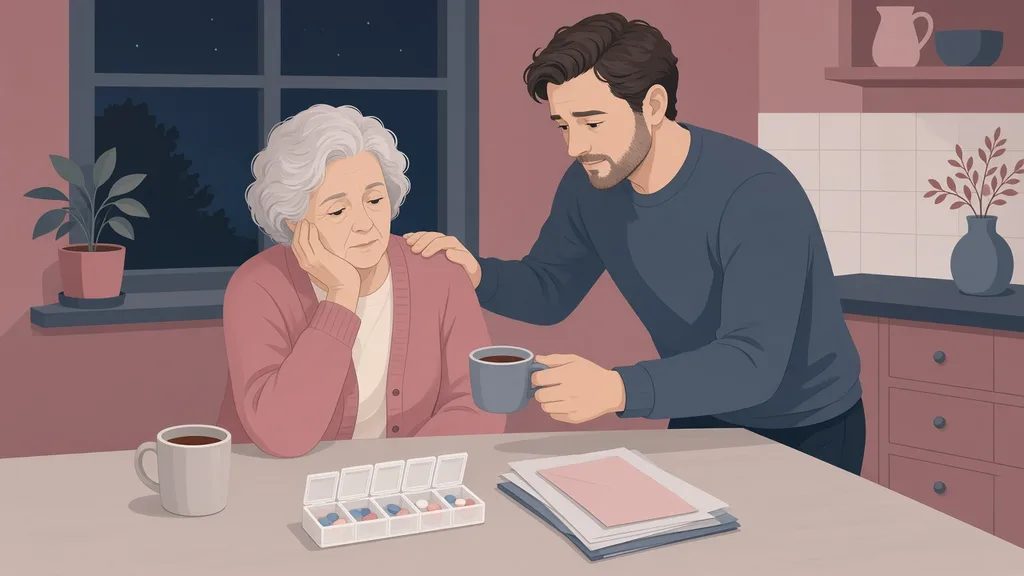
When was the last time you slept through the night, saw your own doctor, or did something just for you? If you can't remember, you're not alone. Family caregivers often put themselves last until exhaustion, anger or sadness takes over. That's caregiver burnout, and it's a signal to get help, not a personal failure.
This guide is based on the National Institute on Aging (NIA) pages on taking care of yourself as a caregiver and on respite care. It explains in detail what NIA recommends. If you're in crisis, call or text 988.
Why caregivers burn out
NIA notes that caregiving can be rewarding, but its ongoing demands can strain even the most resilient person. Caregivers are less likely to get preventive care like annual checkups and tend to have higher risks of physical and mental health problems, sleep problems and chronic conditions such as high blood pressure. NIA even notes an increased risk of premature death.
Caring for someone with dementia can add night waking, sundowning and safety worries on top of daily tasks.

Warning signs of caregiver stress
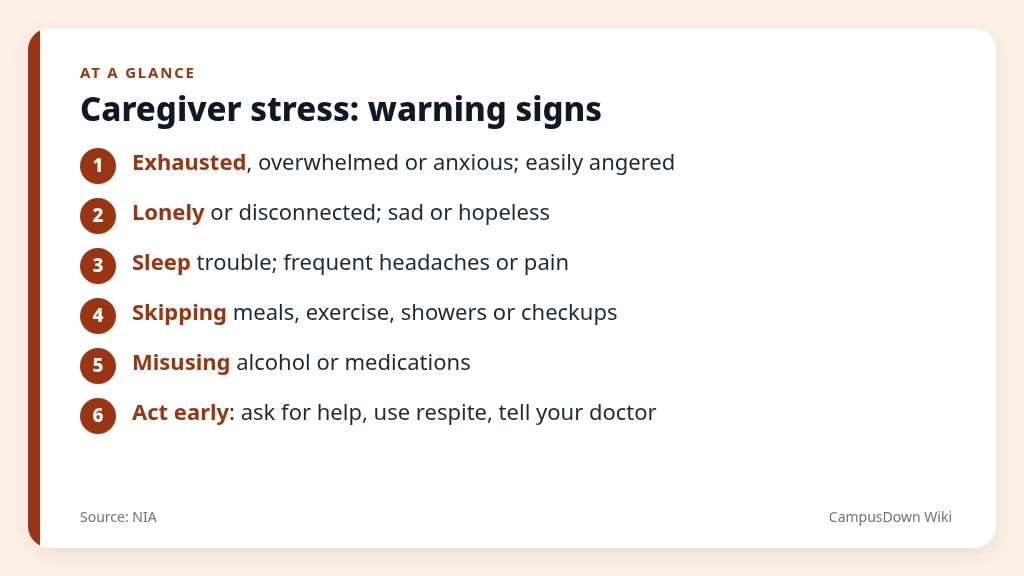
NIA lists these signs:
- Feeling exhausted, overwhelmed or anxious
- Becoming easily angered or impatient
- Feeling lonely or disconnected from others
- Trouble sleeping or not getting enough sleep
- Feeling sad or hopeless, or losing interest in activities you enjoyed
- Frequent headaches, pain or other physical problems
- No time to exercise or prepare healthy food
- Skipping showers or personal care such as brushing your teeth
- Misusing alcohol or drugs, including prescription medicines
NIA's advice: don't wait until you're completely overwhelmed. Learn your own warning signs.
Get help now if
If you feel hopeless, think about harming yourself, or worry you might hurt the person you care for, get help now: call or text 988 (Suicide & Crisis Lifeline), or call 911 in an emergency.
How to ask for help
Many caregivers later say they did too much on their own. NIA suggests:
- Ask for small things first; break big jobs into simple tasks.
- Send a text or email if asking face to face is hard.
- Keep a list of tasks and let people choose.
- When someone offers, practice saying: "Thanks for asking. Here's what you can do."
- Expect some people to say no, and don't take it personally.
Other places to find support
- Your doctor: tell them you're a caregiver; they may know about support groups and respite care.
- A counselor if you feel anxious, frustrated or depressed. Caregivers can develop depression too; see depression in older adults.
- Your Area Agency on Aging, senior center or state aging office. The Eldercare Locator (800-677-1116) can connect you.
- Your faith community, which may host caregiver support groups.
- Paid help at home; compare costs and check it for yourself in in-home care.
Self-care that's realistic
NIA's suggestions, taken one at a time:
- Move a little: a walk, gardening, dancing or playing with a pet.
- Eat well and drink water.
- Protect sleep: aim for 7 to 9 hours with a regular routine; see CBT-I for insomnia.
- Try relaxation: meditation, tai chi or yoga.
- Schedule weekly time for something unrelated to caregiving.
- Keep up with your own health appointments.
- Take breaks: ask family, hire an aide for a few hours, or use an adult day program.
- Be kind to yourself: sadness, frustration and guilt are normal.
When home care is no longer enough, it's okay to consider other settings; see memory care vs assisted living.
Example scenario: "Thanks, but I'm fine"
- Who
- Ottoline, 71, a retired court reporter in Spokane, Washington, had cared for her husband, Florian, 76, who has Parkinson's disease and dementia, for four years. Their son lived 20 minutes away.
- What happened
- She was up three times a night, had skipped her own mammogram and cardiology visits, and snapped at Florian one evening when he spilled his soup.
- How it felt
- Afterward she cried in the pantry, ashamed and scared, and told her son on the phone "Thanks, but I'm fine," as she always did.
- What they did
- When her doctor noticed her blood pressure and asked how she was sleeping, she admitted everything. Using NIA's tips, she made a list. Her son took Tuesday afternoons, the Area Agency on Aging found an adult day program two days a week, and she joined a Parkinson's caregiver group.
- How it turned out
- Three months later she was sleeping better and had restarted her walking group. She said learning to say "Here's what you can do" was harder than any caregiving task, and it saved her.
This is an illustrative example, not a real patient or a review.
Ottoline's story is an illustrative example. Talk to your doctor about your own health as a caregiver.
Most-asked questions about caregiver burnout
What are the symptoms of caregiver burnout?
NIA lists exhaustion, irritability, loneliness, trouble sleeping, sadness or hopelessness, frequent headaches or pain, neglecting your own care, and misusing alcohol or medications.
Why people ask: "caregiver burnout symptoms" is #2 for "caregiver burnout" (US autocomplete, November 2026).
What resources help with caregiver burnout?
Your doctor, a counselor, the Eldercare Locator (800-677-1116), your local Area Agency on Aging, support groups, and respite or adult day programs.
Why people ask: "caregiver burnout resources" is #5 for "caregiver burnout" (US, November 2026).
How is caregiver burnout treated?
Regular breaks, shared tasks, support groups, and attention to sleep and your own health. If you feel depressed or anxious, a doctor or counselor can help.
Why people ask: "caregiver burnout treatment" is #7 for "caregiver burnout" (US, November 2026).
Are there stages of caregiver burnout?
NIA doesn't define stages. It advises learning your own warning signs and getting help before you're completely overwhelmed.
Why people ask: "caregiver burnout stages" is #8 for "caregiver burnout" (US, November 2026).
What does burnout look like for dementia caregivers?
The same warning signs, often driven by night waking, behavior changes and constant supervision. Respite and adult day programs can help.
Why people ask: "dementia caregiver burnout symptoms" is #9 for "caregiver burnout symptoms" (US, November 2026).
Related on CampusDown
To take a closer look at taking breaks, read respite care.
Frequently asked questions
- Is it normal to feel guilty or angry as a caregiver?
- Yes. NIA says sadness, frustration and guilt are normal and understandable. Talking with others can help.
- Should I tell my doctor I'm a caregiver?
- Yes. NIA suggests it, since your doctor can watch your health and suggest local resources.
- Who can help if family won't?
- Your Area Agency on Aging, the Eldercare Locator, paid aides, adult day programs and support groups.
Burnout is a signal, not a failure. Learn your warning signs, ask for specific help, take regular breaks, and protect your own health. Caring for yourself helps you care for the person you love.
Browse more guides like this in the Senior Health and Medicare hub.
This article is for general education and does not replace advice from your own doctor, nurse or pharmacist.