
Does your mom seem fine at lunch but become anxious, angry or determined to "go home" every evening, even though she's already home? Many families of people with dementia live this daily. It has a name, sundowning, and while it can't always be prevented, there are practical ways to make evenings easier.

This guide is based on the National Institute on Aging (NIA) caregiving page on agitation, aggression and sundowning. It explains in detail what NIA suggests. Talk to the person's doctor about new or worsening behavior.
What sundowning means
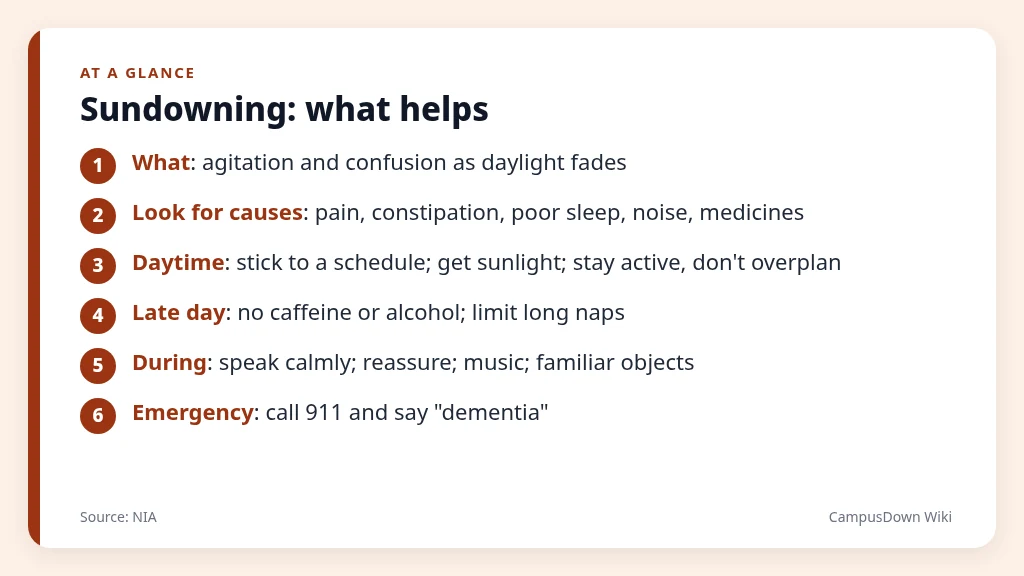
NIA describes sundowning as restlessness, agitation, irritability and confusion that start or get worse as daylight begins to fade, in the late afternoon or early evening. NIA notes the person may also lash out verbally or physically. It helps to take a closer look at the underlying condition in dementia.

Common triggers
NIA says that most of the time, agitation happens for a reason. Possible causes include:
- Pain, depression or stress
- Too little rest or sleep; being overly tired can increase late-day restlessness
- Constipation
- A sudden change in a familiar place, routine or person
- Too much noise, confusion or too many people
- Being pushed to do something that has become very hard, such as bathing or remembering people
- Loneliness
- Certain medicines or interactions between medicines
A sudden change in behavior can also signal an infection or other illness. Sudden confusion that comes on over hours or days may be delirium, a medical emergency; see delirium.
Preventing sundowning: daytime habits
NIA suggests:
- Stick to a schedule, with bathing, dressing and meals at the same times each day.
- Get sunlight: go outside or sit by a window each day, and let in natural light.
- Be active every day, but don't plan too many activities.
- Avoid caffeine and alcohol late in the day, including coffee and cola.
- Discourage long naps and dozing late in the day.
You can learn more about sleep in sleep changes with aging.
During an episode
NIA's calming steps:
- Speak calmly and reassure the person they're safe and you're there to help.
- Use gentle touch and other non-verbal communication.
- Play soothing music and keep well-loved objects and photos nearby.
- Try a simple shared activity: a favorite TV show, a walk, a book, or folding laundry together.
Get help now if
If the person becomes aggressive, stay at a safe distance until the behavior stops. In an emergency, call 911 and explain that your loved one has dementia. Talk to the doctor if aggressive behavior worsens.
When to involve the doctor
Ask for a visit if sundowning is new, suddenly worse, or comes with fever, pain, falls or changes in eating or toileting. Bring a list of all medicines, including sleep aids and allergy pills, since some can worsen confusion. A doctor can look for pain, infection or medicine effects and discuss whether any treatment might help.
Example scenario: the five o'clock hour
- Who
- Bettina, 49, a dental hygienist in San Antonio, moved her mother, 81, who has Alzheimer's, into her home. Every evening around five, her mother began packing her purse to "catch the bus home."
- What happened
- Bettina tried explaining that this was home, which only led to shouting and tears. Some nights her mother didn't sleep until after midnight.
- How it felt
- Bettina felt exhausted and guilty, snapping at her own kids, and afraid she was failing her mother.
- What they did
- She kept a simple log and noticed her mother napped for two hours after a late afternoon coffee. With the doctor, she reviewed medicines and checked for constipation. She moved walks to the morning, stopped afternoon coffee, turned on lamps at four, and started folding towels together at five.
- How it turned out
- Within a few weeks, most evenings were calmer. Hard nights still came, but Bettina said having a plan, and knowing it wasn't her fault, made them bearable.
This is an illustrative example, not a real patient or a review.
Bettina's story is an illustrative example. Talk to the doctor about your situation.
Most-asked questions about sundowning
What does sundowning mean?
It's when restlessness, agitation, irritability and confusion start or worsen as daylight fades, in a person with dementia.
Why people ask: "sundowning meaning" is #2 for "sundowning" (US autocomplete, November 2026).
What are sundowning symptoms?
Late-day restlessness, agitation, irritability and confusion; some people may lash out verbally or physically.
Why people ask: "sundowning symptoms" is #6 for "sundowning" (US, November 2026).
What is sundowning in the elderly?
The term usually describes late-day agitation in people with dementia. New sudden confusion in an older adult should be checked by a doctor, since it may be delirium.
Why people ask: "sundowning in elderly" is #7 for "sundowning" (US, November 2026).
Can sundowning happen without dementia?
The term is used mainly for dementia. Late-day confusion in someone without dementia is a reason to see a doctor to look for illness or medicine effects.
Why people ask: "sundowning without dementia" is #9 for "sundowning" (US, November 2026).
How can I help sundowning symptoms?
Keep a routine, get daylight, stay active without overdoing it, avoid late caffeine and alcohol, limit late naps, and respond calmly with reassurance.
Why people ask: "how to help sundowning symptoms" is #8 for "sundowning symptoms" (US, November 2026).
Related on CampusDown
For related challenges, take a closer look at wandering in dementia and early signs of dementia.
Frequently asked questions
- Is sundowning a stage of dementia?
- It's a behavior pattern that can appear in people with dementia, rather than a formal stage.
- What should I say when she wants to go home?
- NIA suggests speaking calmly, reassuring her she's safe, and trying a soothing activity together. Being pushed to remember can add to agitation.
- Are there medicines for sundowning?
- Talk to the doctor. NIA suggests considering medicines if aggressive behaviors worsen, after looking for causes.
Sundowning is common and exhausting, and it isn't anyone's fault. Look for triggers, protect daytime routines, keep evenings calm, take care of yourself too, and talk to the doctor when things change.
Browse more guides like this in the Senior Health and Medicare hub.
This article is for general education and does not replace advice from your own doctor, nurse or pharmacist.