
Have you ever woken at 3 a.m. to find the front door open and your husband gone? For many dementia caregivers, wandering is the most frightening behavior of all. A person may be looking for a past home or job, or simply be restless, and can become lost within minutes, even in a familiar neighborhood.
This guide is based on the National Institute on Aging (NIA) page on wandering and getting lost. It explains in detail what NIA recommends. Talk to the person's doctor about new or worsening wandering.
Why wandering happens
People with Alzheimer's and other dementias may not remember their address, may feel they need to "go to work" or "go home," or may be restless, especially in the late afternoon and evening. Wandering often overlaps with sundowning. NIA lists pain, too little sleep, noise and changes in routine among common causes of agitation, so it helps to take a closer look at patterns. Learn more about the condition in dementia.

Layer 1: make sure they can get home
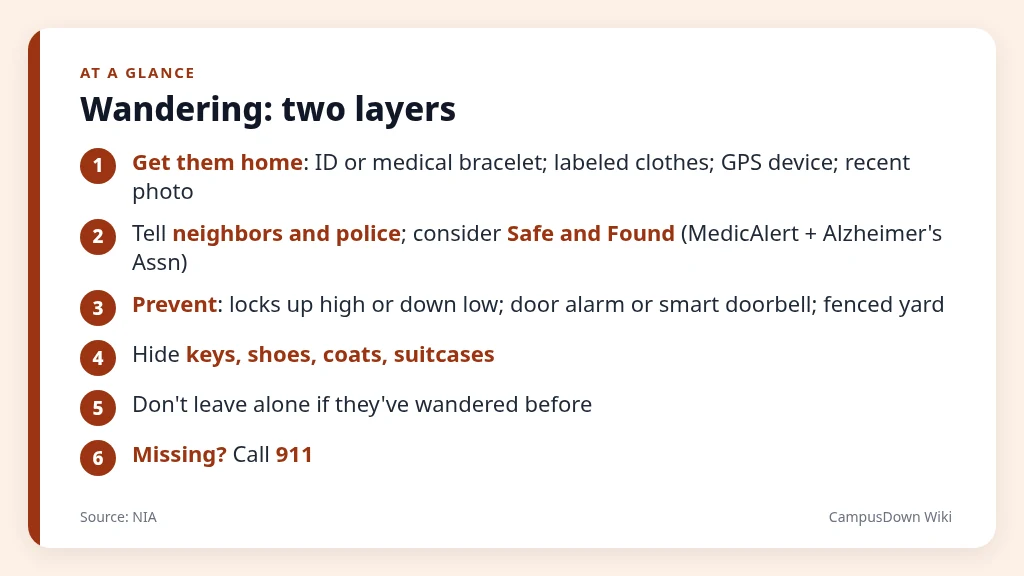
NIA recommends safeguards in case the person wanders:
- An ID or medical bracelet with their name and address and your phone number.
- If they might remove a bracelet, label their clothes with a name and phone number.
- A GPS device to track location, as an alternative or addition to a bracelet.
- Tell neighbors and local police that the person tends to wander.
- Keep a recent photo or video to help police.
- Consider a safe return program, such as the MedicAlert + Alzheimer's Association Safe and Found service. NIA lists the number 800-432-5378 and notes the program isn't affiliated with NIA and may charge a fee.
Layer 2: prevent wandering at home
NIA's home tips:
- Keep doors locked. Consider a keyed deadbolt, or another lock placed up high or down low. Keep the key nearby for emergencies.
- If the person can open a lock, get a new latch or lock.
- Place STOP, DO NOT ENTER or CLOSED signs on doors.
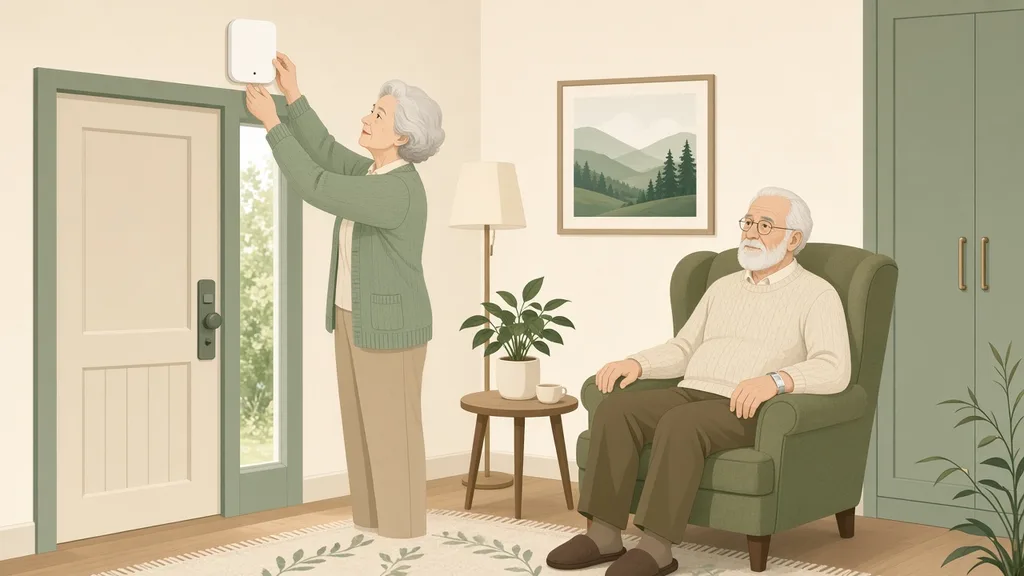
- Install a smart doorbell or alarm that chimes when a door opens.
- Fence the yard with a locked gate.
- Install devices that limit how far windows open.
- Keep shoes, keys, suitcases, coats and hats out of sight.
- Don't leave a person with a history of wandering unattended.
Make sure added locks never block a fast exit for everyone in a fire.
Night wandering
For restless nights, daytime routines matter: daylight, activity and limiting late naps and caffeine, as covered in sundowning. Door alarms and a chime on the bedroom door can wake you if the person gets up. If night wandering becomes frequent, talk to the doctor about sleep, pain, bladder problems and medicines.
Get help now if
If someone with dementia goes missing, call 911 right away and say the person has dementia. Give police the recent photo and a description of what they were wearing and places they might go, such as a former home or workplace.
When home isn't enough
If wandering becomes constant or dangerous despite these steps, it may be time to consider more support, such as adult day programs or a secured memory care unit. Caregivers need rest too; see caregiver burnout.
Example scenario: the open door
- Who
- Anouk, 70, a retired piano teacher in Grand Rapids, cared for her husband, Hollis, 74, who had Alzheimer's. One January night she woke to cold air: the front door was open and Hollis was gone.
- What happened
- A neighbor found him two blocks away in his pajamas, saying he was walking to the factory where he'd worked decades before.
- How it felt
- Anouk felt shaken and ashamed, as if she'd failed him, and couldn't sleep for days for fear it would happen again.
- What they did
- Their daughter helped her follow NIA's checklist: a chime on the front door, a second lock up high, keys and his coat in a closed closet, a medical ID bracelet, and a recent photo on Anouk's phone. They told the neighbors and local police and enrolled him in a safe return program. Hollis's doctor looked for pain and reviewed his evening medicines.
- How it turned out
- Hollis still got restless some nights, but the chime woke Anouk every time and she could gently redirect him. She said the plan let her sleep again.
This is an illustrative example, not a real patient or a review.
Anouk's story is an illustrative example. Talk to the doctor and local services about your situation.
Most-asked questions about dementia wandering
Why does dementia wandering happen at night?
Restlessness, confusion about time, sleep changes, needing the bathroom or pain can all play a role. Daytime routines and door chimes help; talk to the doctor if it's frequent.
Why people ask: "dementia wandering at night" is #2 for "dementia wandering" (US autocomplete, November 2026).
How can I prevent dementia wandering?
NIA suggests locks placed high or low, door alarms or smart doorbells, fencing, window limiters, hiding keys and coats, and never leaving someone who wanders unattended.
Why people ask: "dementia wandering prevention" is #4 for "dementia wandering" (US, November 2026).
What devices help with dementia wandering?
NIA mentions GPS devices to track location, ID or medical bracelets, and alarms or smart doorbells that chime when a door opens.
Why people ask: "dementia wandering devices" is #7 for "dementia wandering" (US, November 2026).
Do door alarms help with dementia wandering?
NIA recommends a smart doorbell or alarm that chimes when a door opens, as one of several layers.
Why people ask: "dementia wandering alarms" is #8 for "dementia wandering" (US, November 2026).
What strategies work for wandering in dementia?
Combine safeguards to get the person home (ID, GPS, photo, safe return program) with home changes that make leaving harder.
Why people ask: "wandering dementia strategies" is #8 for "wandering dementia" (US, November 2026).
Related on CampusDown
To take a closer look at the early picture, read early signs of dementia.
Frequently asked questions
- Should I lock my loved one in?
- Use NIA's door strategies, but keep a key nearby and plan fire exits; never leave someone who wanders alone.
- Can a GPS tracker replace supervision?
- No. NIA presents GPS as an addition to an ID bracelet and other safeguards, not a substitute for supervision.
- Who should I call first if my loved one is missing?
- Call 911 right away and tell them the person has dementia.
Wandering can happen to anyone with dementia, but layers of protection make it far less dangerous. Set up ID and location tools, secure the home, keep a recent photo, and talk to the doctor and your local police before you need them.
Browse more guides like this in the Senior Health and Medicare hub.
This article is for general education and does not replace advice from your own doctor, nurse or pharmacist.