
You can't sleep, your doctor suggests a low-dose trazodone, and a quick search says "it's just a sleep aid." Is it? It's an antidepressant with its own warnings, and knowing them helps you use it safely if your doctor recommends it.
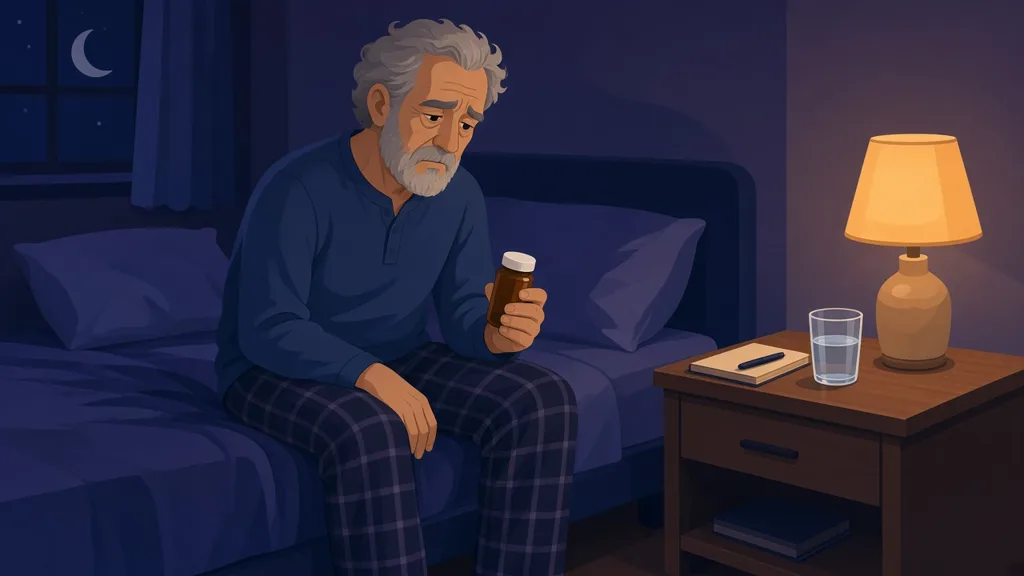
This guide uses MedlinePlus and a trazodone FDA label on DailyMed. It doesn't give a sleep dose, because that's your prescriber's decision. Never start, stop or change trazodone on your own. If you're older or take other medicines, take a closer look at the older-adults section and bring this to your next visit.
What trazodone is approved for
The DailyMed label says trazodone tablets are indicated for major depressive disorder (MDD) in adults and that they are not approved for use in pediatric patients. MedlinePlus says trazodone is used to treat depression and works by increasing serotonin, and adds that it is "also sometimes used to treat insomnia" and other conditions. When a drug is used for something it isn't labeled for, that's called off-label use. It can be reasonable, but it means the prescriber is weighing evidence and your health, not following a label dose for sleep. For non-drug options, see CBT for insomnia.

How it's taken
MedlinePlus says to take it exactly as directed, with a meal or light snack, and not to take more or less than prescribed, take it more often, or take it longer than prescribed. It says not to stop suddenly, because withdrawal symptoms can include dizziness, nausea, headache, confusion, anxiety, agitation, difficulty falling asleep and seizures, and that your doctor will probably lower the dose gradually. The label gives dosing for depression; it doesn't give a sleep dose, so ask your prescriber.
Common side effects
MedlinePlus lists, among others: drowsiness, diarrhea, changes in appetite or weight, weakness or tiredness, stuffy nose, swelling of the hands, feet or legs, and sexual side effects. It says trazodone may make you drowsy and affect judgment, thinking and movement, so don't drive or operate machinery until you know how it affects you, and that alcohol can make side effects worse.
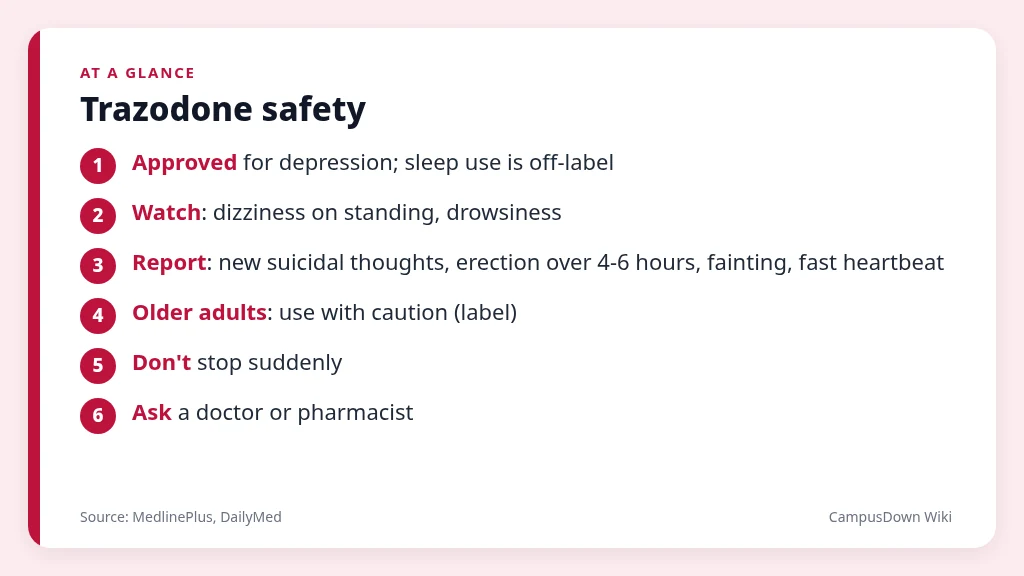
Serious warnings (from the label)
- Suicidal thoughts and behaviors: a boxed warning says antidepressants increased these risks in children and young adults in short-term studies; all patients should be watched for worsening or new suicidal thoughts.
- Serotonin syndrome: risk is higher with other serotonergic drugs. MedlinePlus lists fever, sweating, confusion, fast heartbeat, muscle stiffness or twitching and agitation as symptoms to report right away.
- Heart rhythm: the label says trazodone increases the QT interval; avoid it with other QT-lengthening drugs and in people with risk factors. Tell your doctor about long QT syndrome or a past heart attack.
- Low blood pressure and fainting: the label says hypotension, including orthostatic hypotension and syncope, has been reported. MedlinePlus advises getting out of bed slowly.
- Bleeding: the label says it can increase bleeding risk, especially with aspirin, NSAIDs and anticoagulants.
- Priapism: the label says men with an erection lasting more than 4 hours should stop the drug and seek emergency care.
- Mania: screen for bipolar disorder before starting.
- Low sodium (hyponatremia): the label says it can occur with SSRIs and SNRIs including trazodone, with signs such as headache, confusion, weakness and unsteadiness that can lead to falls. See low sodium.
Older adults
The label says that because experience in the elderly is limited, trazodone should be used with caution in geriatric patients, and that serotonergic antidepressants have been associated with clinically significant hyponatremia in elderly patients. For a sleep medicine, falls are a major concern: combine the orthostatic hypotension and drowsiness warnings with your home safety plan in the fall prevention checklist and review all medicines using the Beers Criteria guide and a brown-bag review.
Compare options with your doctor, including safer habits and the pros and cons of melatonin and diphenhydramine.
Questions to ask your doctor or pharmacist
- Is this being used for depression or for sleep? What's the goal and the plan to review it?
2. What are the risks in my situation (heart, blood pressure, sodium, other medicines)? 3. How long should I take it, and how will we stop? 4. What should I do if I get dizzy when I stand? 5. Are there non-drug options such as CBT-I I should try alongside it?
Get help now if
Call your doctor right away for new or worsening depression, thoughts of harming yourself, a fast or irregular heartbeat, fainting, seizures, or an erection lasting more than 4 hours. In the U.S., call or text 988 if you are in crisis, and call 911 for an emergency.
Example scenario: the dizzy trip to the bathroom
- Who
- Elmer, 74, a retired lineman in Duluth, Minnesota, was prescribed trazodone after months of poor sleep. His wife, Flora, 72, a church choir director, noticed he sounded foggy in the morning.
- What happened
- One night he stood up quickly, felt dizzy and grabbed the dresser to stay on his feet.
- How it felt
- He felt embarrassed and a little scared, and was afraid to tell his doctor in case they took away his only help for sleep. Flora felt worried and tried not to nag.
- What they did
- Flora encouraged him to call, and at the visit his doctor reviewed his medicines and blood pressure, talked about standing slowly, set up a plan to review the medicine and discussed behavioral sleep strategies. Elmer put a lamp by the bed and started sitting for a minute before standing.
- How it turned out
- He said telling the doctor felt harder than the dizziness, and the reward was a plan instead of a secret.
This is an illustrative example, not a real patient or a review.
Elmer's story is an illustrative example. Medication decisions are made with your clinician.
Most-asked questions about trazodone
Is trazodone for sleep safe?
It's an antidepressant with warnings about dizziness, fainting, heart rhythm and low sodium; its safety for you depends on your health and other medicines, so ask your prescriber.
Why people ask: "trazodone for sleep" is #1 for "trazodone for sleep" (US autocomplete, November 2026).
What dose of trazodone is used for sleep?
The label gives dosing for depression, not sleep; a sleep dose is your prescriber's decision.
Why people ask: "trazodone for sleep dosage" is #3 for "trazodone for sleep" (US autocomplete, November 2026).
What are trazodone for sleep side effects?
Drowsiness, dizziness on standing, and other effects listed above.
Why people ask: "trazodone for sleep side effects" is #6 for "trazodone for sleep" (US autocomplete, November 2026).
What are trazodone side effects in the elderly?
The label says to use it with caution in older adults and notes low-sodium and fall risks.
Why people ask: "trazodone side effects in elderly" is #4 for "trazodone side effects" (US autocomplete, November 2026).
Is trazodone safe for the elderly?
The label says it should be used with caution in geriatric patients.
Why people ask: "trazodone for elderly safe" is #7 for "trazodone for elderly" (US autocomplete, November 2026).
Is trazodone used for insomnia in the elderly?
Sometimes, off-label; discuss risks and non-drug options with the prescriber.
Why people ask: "trazodone for elderly insomnia" is #4 for "trazodone for elderly" (US autocomplete, November 2026).
Can older adults with dementia take trazodone?
That's an individual decision with the prescriber; this page doesn't recommend it.
Why people ask: "trazodone for elderly with dementia" is #5 for "trazodone for elderly" (US autocomplete, November 2026).
Related on CampusDown
You can learn more about insomnia and check it for yourself with your pharmacist using the brown-bag medication review.
Frequently asked questions
- Is trazodone a controlled substance?
- The label says it is not a controlled substance.
- Can I drink alcohol with trazodone?
- MedlinePlus says alcohol can make side effects worse; ask your doctor.
- Can I stop trazodone suddenly?
- No. MedlinePlus says stopping suddenly can cause withdrawal symptoms; your doctor will lower the dose gradually.
- Who shouldn't take trazodone?
- Use depends on your health history; the label says it isn't approved for children and lists contraindications, such as recent MAOI use.
A sleep medicine is still a medicine. If your doctor suggests trazodone, ask the questions above, report problems early, and keep working on the habits that help sleep.
Browse more guides like this in the Medicines hub.
This article is for general education and does not replace advice from your own doctor, nurse or pharmacist.