
You started a new blood pressure pill, and the first morning you stand up too fast and the room tilts. Is that normal, and what else should you watch for with a water pill?
This guide uses the MedlinePlus chlorthalidone page (AHFS patient information, last revised November 15, 2025). It is general information, not a prescription; your prescriber and pharmacist set your dose and monitoring. If you want to learn more about what blood pressure numbers mean, take a closer look at blood pressure of 130/80.
What chlorthalidone is used for
MedlinePlus says chlorthalidone treats high blood pressure and fluid retention. It is a diuretic ("water pill") that causes the kidneys to get rid of unneeded water and salt from the body into the urine. MedlinePlus explains that untreated high blood pressure can damage the brain, heart, blood vessels and kidneys and lead to heart disease, heart attack, heart failure, stroke, kidney failure and vision loss, and that lifestyle changes help: a diet low in fat and salt, a healthy weight, exercise for at least 30 minutes most days, not smoking and alcohol in moderation. The page lists brands Hemiclor, Hygroton and Thalitone and combination products such as Edarbyclor (azilsartan and chlorthalidone) and Tenoretic (atenolol and chlorthalidone, discontinued). See high blood pressure.

How it is taken
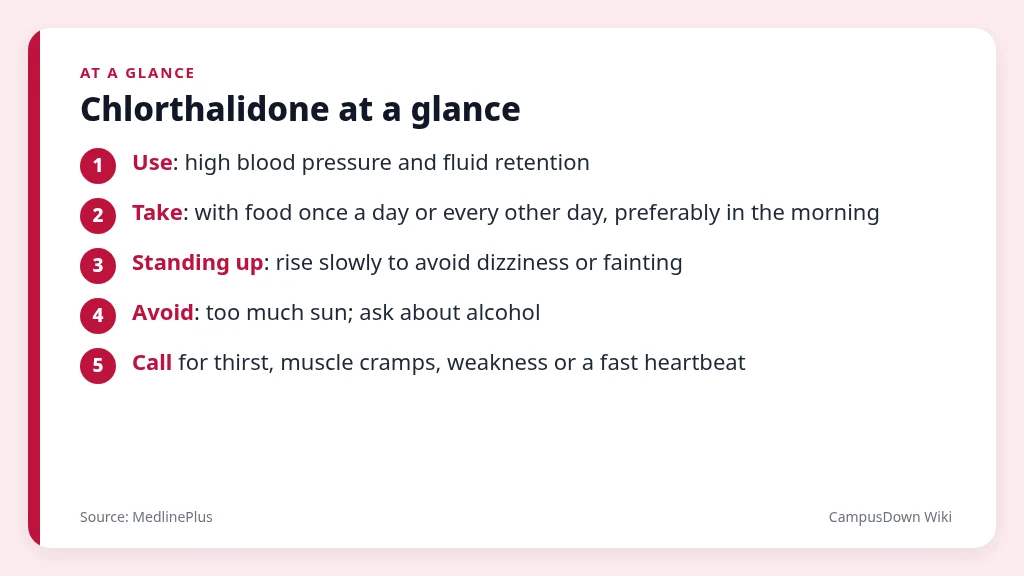
- A tablet by mouth with food, once a day or every other day, at around the same time, preferably in the morning.
- Take it exactly as directed; don't take more, less or more often than prescribed.
- MedlinePlus says it controls high blood pressure but is not a one-time fix; keep taking it even if you feel well and don't stop without talking to your doctor.
- Missed dose: take it when you remember, skip it if it's almost time for the next dose and never double up.
Dizziness when you stand
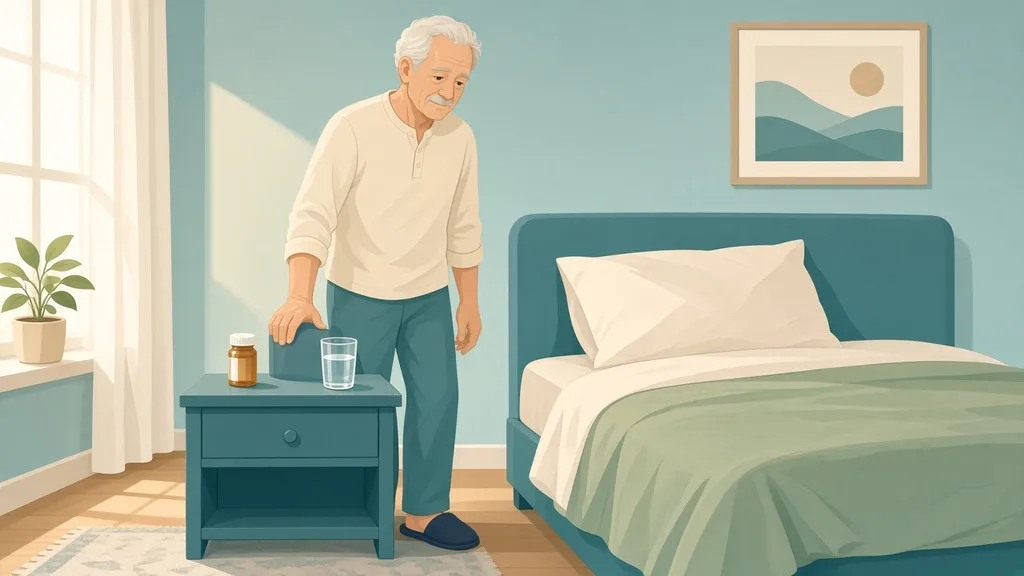
MedlinePlus says chlorthalidone may cause dizziness, lightheadedness and fainting when you get up too quickly from lying down, more commonly when you first start. To avoid this, get out of bed slowly, resting your feet on the floor for a few minutes before standing. If it keeps happening, tell your prescriber; see blood pressure targets in older adults.
Diet, alcohol and sun
- Follow your doctor's directions, which may include a low-salt diet, potassium supplements and more potassium-rich foods (such as bananas, prunes, raisins and orange juice). Don't start potassium on your own; see high potassium for why.
- Ask your doctor about the safe use of alcohol; alcohol can make side effects worse.
- Avoid unnecessary or prolonged sunlight and wear protective clothing, sunglasses and sunscreen, because it may make your skin sensitive.
Who should tell their doctor first
Tell your prescriber about allergies, all medicines and supplements, trouble urinating, diabetes, gout, systemic lupus erythematosus, high cholesterol, kidney or liver disease, pregnancy or plans for pregnancy and breastfeeding. You should not breastfeed while taking chlorthalidone. MedlinePlus says your blood pressure should be checked regularly and your doctor may order lab tests. For other blood pressure medicines see amlodipine, lisinopril and furosemide.
Side effects
Tell your doctor if severe or lasting: frequent urination, dizziness, upset stomach, nausea, vomiting, diarrhea, loss of appetite and headache.
Get help now if
Call your doctor right away for thirst, tiredness, drowsiness, restlessness, muscle weakness, pain or cramps, nausea or vomiting, or a fast heartbeat; unusual bleeding or bruising; rash, itching, hives, blisters or peeling skin; or difficulty breathing or swallowing. In an overdose, MedlinePlus lists nausea, dizziness and weakness; call poison control at 1-800-222-1222, or 911 for collapse or trouble breathing.
Questions for your prescriber or pharmacist
- What blood pressure goal are we aiming for, and how will we check it?
- Do I need blood tests, and how often?
- Should I increase foods with potassium or avoid salt substitutes?
- What should I do if I feel dizzy standing up?
- Do any of my other medicines or conditions change the plan?
Example scenario: the morning dizzy spell
- Who
- Nestor, 66, a retired mail carrier in Albuquerque, New Mexico, started chlorthalidone for high blood pressure.
- What happened
- Two mornings later he stood up quickly and felt lightheaded, and his wife saw him grab the dresser.
- How it felt
- He felt frightened and wondered whether to stop the pill.
- What they did
- He called his pharmacist, who explained the standing-up warning and told him to sit on the edge of the bed with his feet on the floor before rising and to bring it up with his prescriber. Nestor kept a home blood pressure log and took the pill with breakfast.
- How it turned out
- Nestor said the sit-first habit made mornings feel safer.
This is an illustrative example, not a real patient or a review.
Nestor's story is an illustrative example. Never stop a blood pressure medicine suddenly without talking to your prescriber.
Most-asked questions about chlorthalidone
What are chlorthalidone side effects in men?
MedlinePlus lists the same effects for everyone: frequent urination, dizziness, upset stomach, headache and loss of appetite, with serious signs listed above.
Why people ask: "chlorthalidone side effects in men" is #2 for "chlorthalidone side effects" (US autocomplete, November 2026).
What are chlorthalidone side effects in women?
The page doesn't separate by sex; tell your doctor if you are pregnant or planning pregnancy, and don't breastfeed while taking it.
Why people ask: "chlorthalidone side effects in women" is #3 for "chlorthalidone side effects" (US autocomplete, November 2026).
What are chlorthalidone side effects in the elderly?
The page gives no separate guidance; dizziness or fainting on standing is listed, so rise slowly and ask your prescriber about falls.
Why people ask: "chlorthalidone side effects in elderly" is #4 for "chlorthalidone side effects" (US autocomplete, November 2026).
What are chlorthalidone side effects on the kidneys?
MedlinePlus doesn't list kidney damage as a side effect; it says to tell your doctor about kidney disease and that lab tests may be ordered.
Why people ask: "chlorthalidone side effects on kidneys" is #5 for "chlorthalidone side effects" (US autocomplete, November 2026).
Does chlorthalidone affect electrolytes?
The page doesn't use that term; it lists thirst, muscle weakness or cramps and a fast heartbeat as call-right-away signs and mentions potassium advice from your doctor.
Why people ask: "chlorthalidone side effects electrolytes" is #6 for "chlorthalidone side effects" (US autocomplete, November 2026).
Does chlorthalidone cause constipation?
Constipation isn't listed; upset stomach, nausea, vomiting and diarrhea are, so tell your doctor about unusual problems.
Why people ask: "chlorthalidone side effects constipation" is #7 for "chlorthalidone side effects" (US autocomplete, November 2026).
Does chlorthalidone affect potassium?
MedlinePlus says your doctor may recommend potassium supplements or potassium-rich foods; follow those directions and don't start potassium on your own.
Why people ask: "chlorthalidone side effects potassium" is #9 for "chlorthalidone side effects" (US autocomplete, November 2026).
What are chlorthalidone tablet uses?
Treating high blood pressure and fluid retention.
Why people ask: "chlorthalidone tablet uses" is #10 for "chlorthalidone uses" (US autocomplete, November 2026).
Related on CampusDown
You can learn more about the medicines hub and check it for yourself in blood pressure of 130/80. For another water pill in detail, see furosemide, and for potassium problems see high potassium.
Frequently asked questions
- What is chlorthalidone used for?
- High blood pressure and fluid retention.
- When should I take it?
- With food once a day or every other day, preferably in the morning.
- Why do I feel dizzy when I stand?
- It can cause lightheadedness or fainting when you rise quickly, especially at first; get up slowly.
- Can I drink alcohol or sunbathe?
- Ask your doctor about alcohol, which can worsen side effects, and avoid unnecessary sun because it can make skin sensitive.
- Which symptoms need a prompt call?
- Thirst, muscle weakness or cramps, a fast heartbeat, unusual bleeding, rash or trouble breathing.
Chlorthalidone is a once-daily water pill that helps control blood pressure and fluid retention. Take it with food in the morning, stand up slowly, protect your skin from sun, follow your doctor's potassium and salt advice, keep your lab and blood pressure checks and call for muscle weakness, cramps or a fast heartbeat.
Browse more guides like this in the Medicines hub.
This article is for general education and does not replace advice from your own doctor, nurse or pharmacist.