
How do you go on after 50 years of morning coffee with the same person? Losing a husband, wife or partner later in life can upend everything: your routines, your home, your sense of who you are. Grief can feel overwhelming, but you don't have to carry it alone.
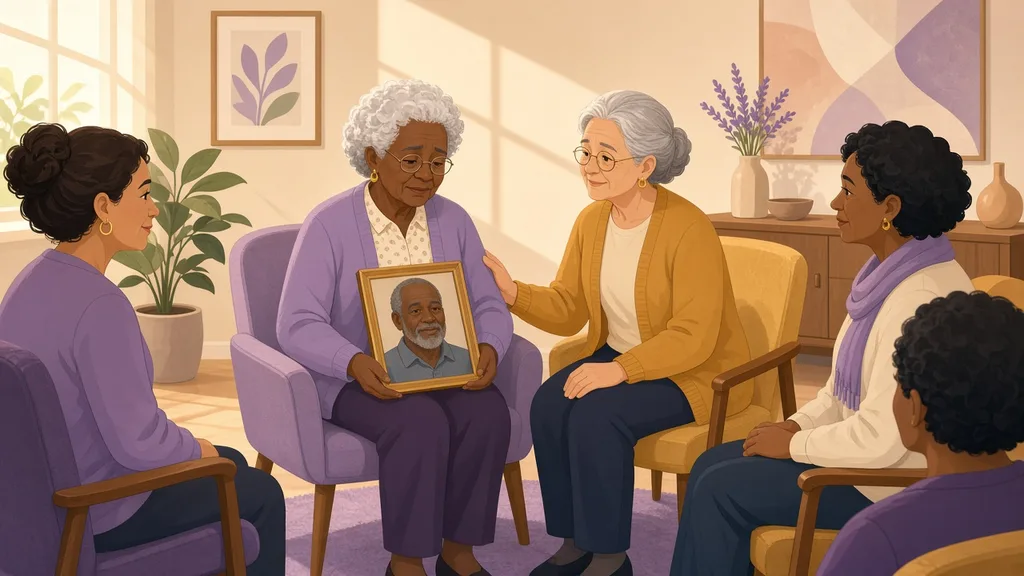
This guide is based on the National Institute on Aging (NIA) page on coping with grief and loss. It explains in detail what grief can feel like and where to find support. If you feel hopeless or think about ending your life, call or text 988 right away.
What grief can feel like
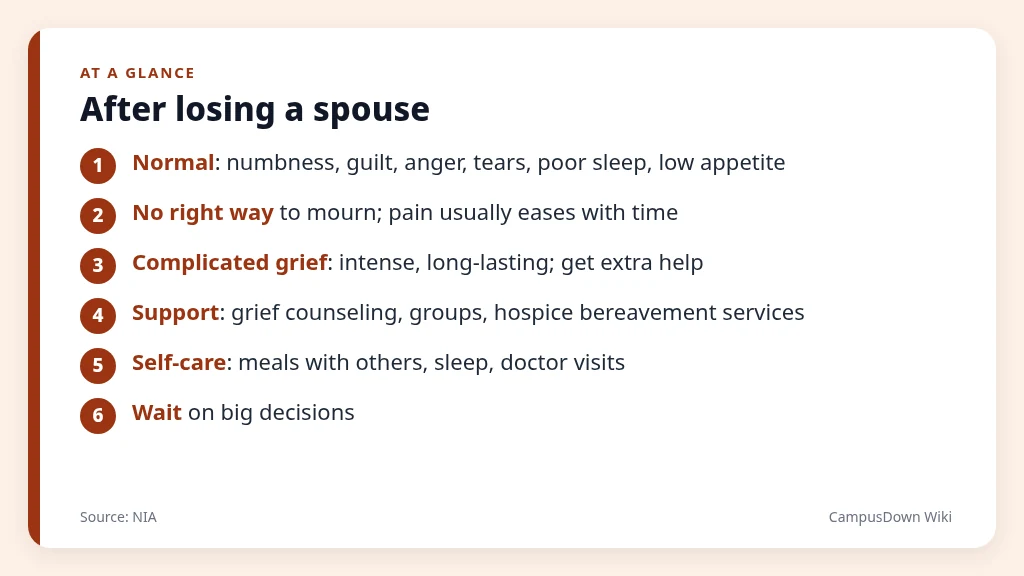
NIA says that after a death you may feel numb, shocked, fearful, guilty for being the one still alive, or even angry at your loved one for leaving. All of these feelings are normal, and there's no right or wrong way to mourn. Grief can bring physical and emotional pain, including:
- Crying easily
- Trouble sleeping
- Little interest in food; watch for unintended weight loss
- Trouble concentrating or making decisions
NIA notes that for most people the intense pain lessens over time, with good days and bad days. Laughing or enjoying a visit may feel surprising or bring guilt, and that's common too.

When grief becomes complicated
For some people, NIA explains, mourning lasts so long or is so distressing it becomes unhealthy. This is complicated grief. Signs include:
- Being unable to accept the loss
- Intense sorrow and emotional pain that doesn't ease
- Trouble resuming your life or planning ahead
- Being preoccupied with the person or how they died
- Feeling life has no meaning or purpose
If sadness makes daily life hard, reach out and learn more about grief counseling. Grief can also overlap with depression, which is treatable.
Get help now if
Call or text 988 if you have thoughts of suicide or self-harm. Tell your doctor if you can't sleep, eat or manage daily tasks.
Where to find support
- Grief counseling: talk therapy with a grief counselor or therapist.
- Support groups: ask local hospitals, senior centers, nursing homes, faith groups, funeral homes or your doctor. Some groups are for specific losses.
- Hospice bereavement support: hospice teams offer grief support to families they served, and NIA says you can ask hospice workers for bereavement support even if hospice wasn't used. Learn about hospice in the Medicare hospice benefit.
- Online groups and counseling from home.
- Library books on grief.
- Lower-cost help: ask about sliding-fee scales, community health centers or your state mental health agency.
Taking care of yourself
NIA suggests:
- Exercise, eat healthy food and sleep; avoid heavy drinking and smoking.
- Plan meals with others; eating alone can feel too quiet. Even the radio helps.
- Talk with friends and accept offers of help and company.
- Return to favorite activities or volunteer; see loneliness in older adults.
- Lean on your faith community if you have one.
- Keep doctor visits and mention trouble with daily tasks.
If you were your spouse's caregiver, exhaustion may linger; see caregiver burnout.
New tasks and big decisions
Many couples split jobs: one paid the bills, the other cooked. NIA says learning new tasks takes time; ask nearby family and friends, or local organizations, for help. NIA also advises postponing major decisions, such as selling your home, until you're thinking more clearly. When you're ready, sort belongings into keep, give away and "not sure" piles.
Example scenario: the empty chair
- Who
- Rosalie, 77, a retired church choir director in Savannah, Georgia, lost her husband, Lionel, to lung cancer after 52 years of marriage. Hospice had cared for him at home for his last two months.
- What happened
- Three months later she barely slept, left meals half-eaten, and couldn't open the bills Lionel had always paid. Her son urged her to sell the house and move closer to him.
- How it felt
- She felt hollow and guilty for surviving, angry at Lionel for leaving, and ashamed of being angry.
- What they did
- She called the hospice and joined its bereavement group, which met Thursdays. Her doctor checked her health and screened for depression. A neighbor's daughter walked her through online banking, and Rosalie told her son she'd wait a year on the house.
- How it turned out
- The pain didn't vanish, but by spring she was singing again at church and had lunch with two women from the group every week. She said hearing others say "me too" made her feel human again.
This is an illustrative example, not a real patient or a review.
Rosalie's story is an illustrative example. Reach out for support if grief feels too heavy.
Most-asked questions about losing a spouse
What is it like losing a spouse in your 70s?
Many people face grief alongside new tasks, loneliness and health changes. NIA says the feelings are normal and the intense pain usually lessens.
Why people ask: "losing a spouse in your 70s" is #2 for "losing a spouse" (US autocomplete, November 2026).
Where can I find a losing a spouse support group?
Ask hospitals, senior centers, faith groups, funeral homes, hospice organizations or your doctor. Online groups are also available.
Why people ask: "losing a spouse support group" is #6 for "losing a spouse" (US, November 2026).
How do I cope with grief after losing a husband?
Allow your feelings, stay connected, eat and sleep as well as you can, keep doctor visits, and consider counseling or a support group.
Why people ask: "grief after losing a husband" is #3 for "grief after losing a spouse" (US, November 2026).
Are there stages of grief after losing a spouse?
NIA says there's no right or wrong way to mourn. Feelings can come and go, with good and bad days.
Why people ask: "stages of grief after losing a spouse" is #8 for "grief after losing a spouse" (US, November 2026).
How long does a widow grieve?
There's no set timeline. NIA says intense pain lessens for most people, but grief that stays intense and disrupts life may be complicated grief.
Why people ask: "how long does a widow grieve" is #9 for "widow grief" (US, November 2026).
Related on CampusDown
To learn more about when sadness needs treatment, read depression in older adults.
Frequently asked questions
- Is it normal to feel angry at my spouse for dying?
- Yes. NIA lists anger as a normal grief reaction.
- Can I get hospice grief support if hospice wasn't involved?
- NIA says you can ask hospice workers for bereavement support even if hospice wasn't used.
- Should I sell my house soon after my spouse dies?
- NIA suggests postponing major decisions until you're feeling better, if you can.
Grief after losing a spouse is love with nowhere to go. Let yourself feel it, lean on others, look after your body, wait on big decisions, and get extra help if grief stays overwhelming.
Browse more guides like this in the Senior Health and Medicare hub.
This article is for general education and does not replace advice from your own doctor, nurse or pharmacist.