
Have Dad's pants started bunching at the waist, or does Mom's wedding ring now spin on her finger? Losing weight without trying isn't a normal part of aging. NIA says it can be a sign of a serious medical problem, and it deserves a doctor's attention, even when the person says they "just aren't hungry."
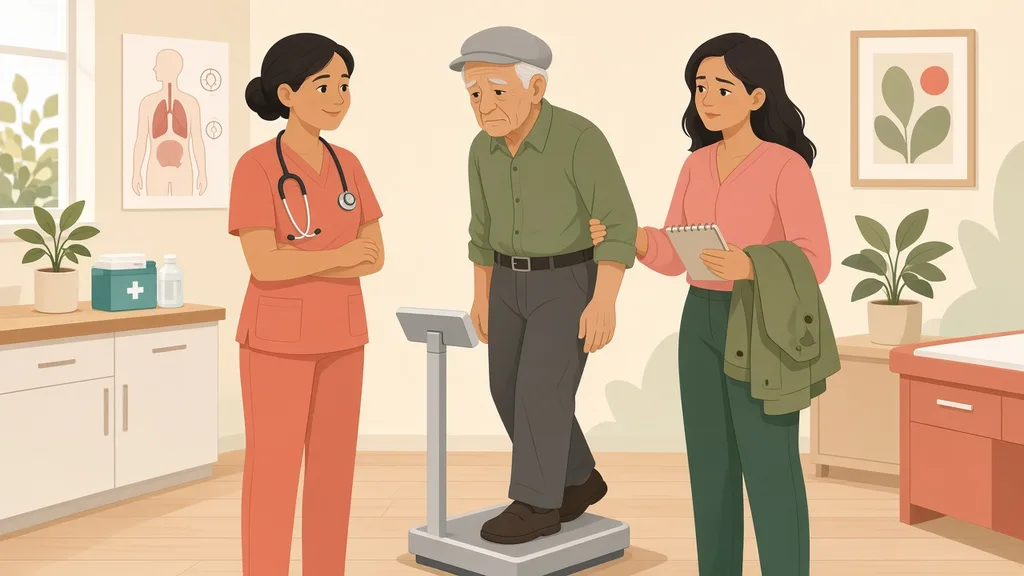
This guide is based on the National Institute on Aging (NIA) pages on healthy weight and eating roadblocks and the facts in the American Academy of Family Physicians (AAFP) 2021 review on unintentional weight loss in older adults. It explains in detail when to worry and what doctors look for. Only a clinician can find the cause.
When weight loss matters
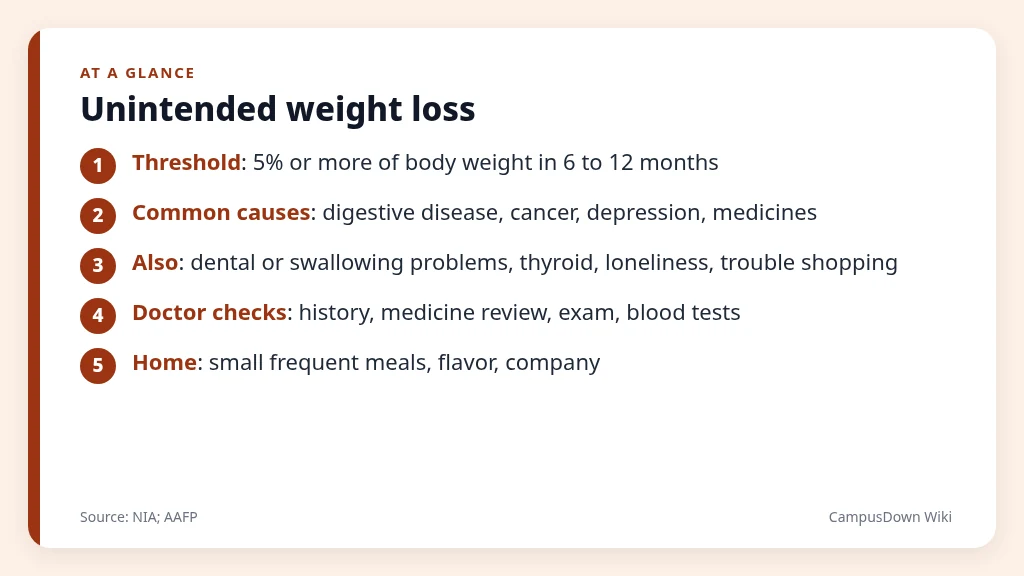
The AAFP review defines unintentional weight loss in adults over 65 as 5% or more of body weight within 6 to 12 months, which is linked to higher illness and death and should prompt evaluation. That's about 8 pounds for someone who weighed 160.
No scale history? Doctors also use changes in clothing size or what a relative has noticed. NIA adds that rapid weight loss without trying needs a health professional.

Common causes
NIA notes sudden weight loss can signal cancer, digestive disorders or some neurological diseases. The AAFP review reports that after evaluation, the most common groups are:
- Non-cancer digestive problems, such as ulcers, swallowing or dental problems
- Cancer, which accounts for up to about a third of cases
- Psychosocial problems, such as depression; see depression in older adults
Other causes include thyroid or other hormone problems, heart, lung and kidney disease, infections, alcohol, and neurological conditions like dementia. In some people no cause is found even after testing, which is why it helps to take a closer look over time.
Everyday factors that cut appetite
NIA lists practical roadblocks:
- Less appetite or feeling full sooner
- Trouble getting to the store or cooking
- Pain when chewing or swallowing, or dental problems
- Forgetting to eat
- Changes in taste and smell, sometimes from medicines; see medicines and dry mouth
- Medicines that reduce appetite; see the Beers Criteria
- Sadness or loneliness; see loneliness in older adults
What the doctor may check
The AAFP review describes an initial evaluation that usually includes:
- A history of eating, mood, symptoms and weight
- A medicine review
- A physical exam, including mouth and teeth
- Blood tests and a urine test, and often a chest X-ray and stool blood test
- More testing guided by findings
If first results are normal, the review supports close follow-up for 3 to 6 months.
Get help now if
Get care promptly for weight loss with blood in the stool or black stools, vomiting, trouble swallowing, a new lump, night sweats, fever, or severe belly pain.
Helping at home
NIA's ideas while you work with the doctor:
- Smaller, more frequent meals and nutrient-rich snacks
- Add healthy fats like peanut butter or avocado
- Boost flavor with herbs, spices, lemon or vinegar rather than extra salt
- Stay active, which may increase appetite
- Eat with others when possible
- Ask about meal delivery or help with shopping
Example scenario: the belt notch
- Who
- Ignacio, 83, a retired upholsterer in Fresno, California, lived alone after his wife died. His daughter, Odette, 52, noticed he'd moved his belt two notches and his favorite jacket hung loose.
- What happened
- He insisted he ate fine, but his fridge held mostly soda and tortillas, and he winced when chewing.
- How it felt
- Odette was frightened it was cancer and felt guilty she hadn't noticed sooner; Ignacio felt embarrassed and didn't want "a fuss."
- What they did
- She wrote down what she'd seen and went with him to his doctor. The doctor compared his chart weight from last year, reviewed his medicines, checked his mouth, ordered blood tests and referred him to a dentist and a depression screening.
- How it turned out
- A cracked tooth and depression after his wife's death turned up; the tests found nothing more serious. With dental work, counseling and Tuesday lunches at a senior center, he regained weight over the next months. Odette said writing down the belt notch made the doctor take it seriously.
This is an illustrative example, not a real patient or a review.
Ignacio's story is an illustrative example. Talk to a doctor about any unintended weight loss.
Most-asked questions about unintended weight loss
What causes unexplained weight loss in an elderly man?
Common causes include digestive problems, cancer, depression, medicines, dental or swallowing trouble and thyroid disease. A doctor's evaluation is needed.
Why people ask: "unexplained weight loss elderly man" is #1 for "unexplained weight loss elderly" (US autocomplete, November 2026).
What causes unexplained weight loss in an elderly woman?
The same range of causes applies. Track how much weight was lost and over what time, and see a doctor.
Why people ask: "unexplained weight loss elderly woman" is #2 for "unexplained weight loss elderly" (US, November 2026).
When is sudden weight loss in the elderly serious?
NIA says sudden unintended weight loss can signal a serious problem. Losing 5% or more in 6 to 12 months should prompt evaluation.
Why people ask: "sudden weight loss elderly" is #4 for "unexplained weight loss elderly" (US, November 2026).
Why would an older adult lose weight with a good appetite?
Possibilities include thyroid problems, diabetes, malabsorption and other conditions. It still needs a doctor's evaluation.
Why people ask: "weight loss in elderly with good appetite" is #6 for "weight loss in elderly" (US, November 2026).
What are the causes of weight loss in the elderly?
Digestive disease, cancer, depression, medicines, dental problems, thyroid disease, dementia, loneliness and trouble shopping or cooking.
Why people ask: "weight loss in elderly causes" is #10 for "weight loss in elderly" (US, November 2026).
Related on CampusDown
To take a closer look at mood and appetite, read depression in older adults.
Frequently asked questions
- How much weight loss is too much for an older adult?
- Losing 5% or more of body weight in 6 to 12 months without trying should prompt evaluation.
- Is weight loss normal with aging?
- Unintended weight loss isn't normal. Talk to a doctor.
- Should I give my parent supplements or shakes?
- Ask the doctor or a dietitian first, so the cause is checked and choices fit their health conditions.
Unintended weight loss is a signal worth following up. Track the change, bring notes and medicines to the doctor, check teeth and mood, and make eating easier and more social at home.
Browse more guides like this in the Senior Health and Medicare hub.
This article is for general education and does not replace advice from your own doctor, nurse or pharmacist.