
Does your mouth feel like cotton by mid-afternoon, and the cracker you ate for lunch is still stuck? Many people assume it's just part of getting older. NIDCR says it isn't. Often, one of the pills in your cabinet is behind it.
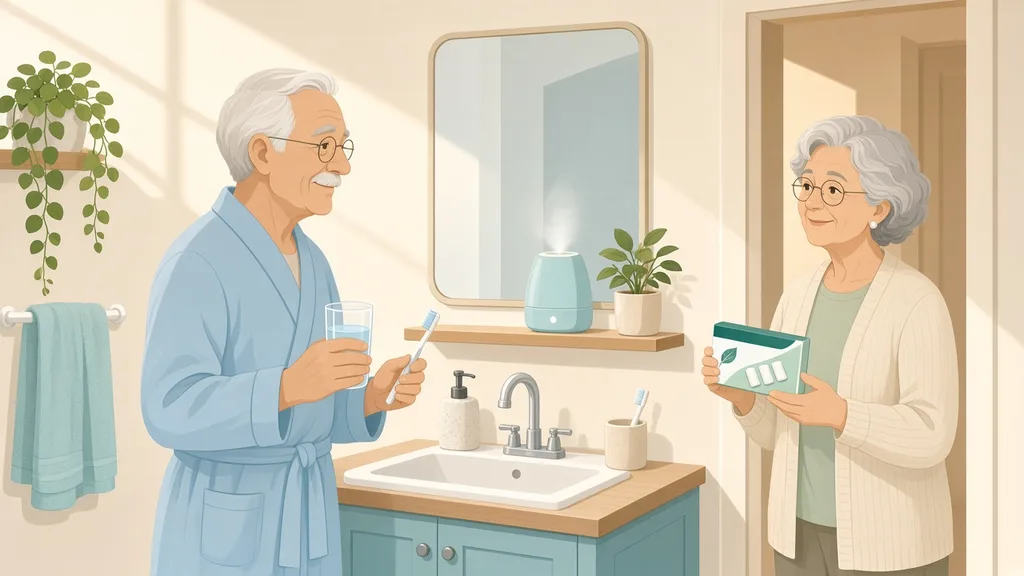
This guide is based on the National Institute of Dental and Craniofacial Research (NIDCR)'s "Dry Mouth" page and MedlinePlus drug information for pilocarpine. It explains in detail what you can do. Never stop a medicine on your own. Talk with your doctor, dentist or pharmacist.
Why saliva matters
NIDCR says saliva moistens and breaks down food, washes away food particles, helps with swallowing, and contains calcium and phosphate that help keep teeth strong and fight decay. Dry mouth (xerostomia) is not having enough saliva to keep the mouth wet. When it persists, it can make chewing, swallowing and talking difficult and raises the risk of tooth decay and fungal infections in the mouth.
NIDCR states plainly: dry mouth is not a normal part of aging. If you think you have it, see your dentist or doctor to find out why.

Medicines are a leading cause
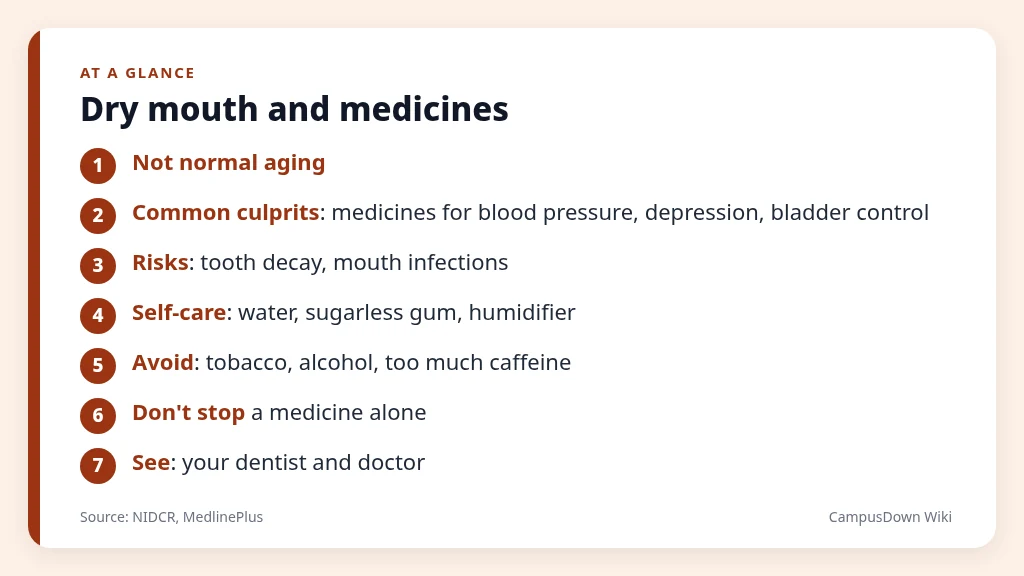
NIDCR says hundreds of medicines can cause the salivary glands to make less saliva. For example, medicines for high blood pressure, depression and bladder-control issues often cause dry mouth. Other causes it lists:
- Diseases: Sjögren's disease, HIV/AIDS and diabetes.
- Radiation therapy to the head or neck.
- Chemotherapy and immunotherapy, which can thicken saliva.
- Nerve damage from head or neck injury.
Our anticholinergic drugs guide explains one group of medicines that dries the mouth and can affect memory, and polypharmacy and the Beers criteria covers how clinicians review medicine lists. Ask for a brown bag medication review with every pill and supplement.
Symptoms to notice
NIDCR lists a sticky, dry feeling, trouble chewing, swallowing, tasting or speaking, a burning or itchy mouth or throat, cracked lips, mouth sores, recurrent infections and bad breath.
What a doctor or dentist can do
NIDCR says they will review your medical history and ask about the medications you take, and may suggest blood tests or a test of how much saliva you make. Depending on the cause, treatment may include:
- Changing medications or adjusting the dosage if a medicine is the cause (a decision only your prescriber makes).
- Saliva substitutes or artificial saliva to reduce stickiness.
- Good oral care at home and regular dental check-ups.
Self-care steps from NIDCR
- Drink plenty of water, and sip water or a sugarless drink with meals.
- Limit caffeine, which can dry the mouth.
- Chew sugarless gum or suck sugarless hard candy; some contain xylitol, which may help prevent cavities.
- Be aware that spicy or salty foods may burn a dry mouth.
- Avoid tobacco and alcohol.
- Use a humidifier at night.
If you use CPAP, see CPAP dry mouth. If you're on an inhaler, ask your pharmacist about rinsing your mouth; the same advice appears in our spacer guide.
Prescription options: pilocarpine as an example
MedlinePlus says pilocarpine is used to treat dry mouth caused by radiotherapy in head and neck cancer and dry mouth in Sjögren's syndrome, and it works by increasing the amount of saliva. Follow the label and your doctor's instructions for how much and how often. The label says to tell your doctor if you have asthma, glaucoma, acute iritis, COPD, kidney stones, gallstones, or heart, liver or gallbladder disease. Side effects listed include sweating, nausea, runny nose, diarrhea, flushing, frequent urination, dizziness, headache and swelling of the hands, feet or ankles. Call your doctor right away for changes in vision or a fast or slow heartbeat, and drink plenty of water because sweating can cause dehydration.
Get help now if
Don't stop a blood pressure, antidepressant or bladder medicine because your mouth is dry. Sudden changes can cause harm. Ask your prescriber if there's an alternative or a different dose.
Dental care and Medicare
Because dry mouth raises cavity risk, regular dental visits matter. Original Medicare generally doesn't cover routine dental care; see Medicare hearing, dental and vision coverage for what's covered and what options exist.
Example scenario: the pill behind the dry mouth
- Who
- Gregor, 72, a retired bus mechanic in Duluth, Minnesota, found his mouth so dry at night that he woke with his tongue stuck to his teeth. His wife, Marcella, 70, kept finding half-empty water glasses beside the bed.
- What happened
- His dentist found two new cavities at a checkup, though he had brushed every day. Eating a sandwich had become a chore.
- How it felt
- Gregor felt embarrassed about bad breath and stopped talking much at church. Marcella felt frustrated that he'd waved it off as "just getting old."
- What they did
- At his next visit, the dentist asked about his medicines. Gregor brought every bottle to his doctor and pharmacist, who spotted a bladder medicine that commonly dries the mouth. His doctor discussed alternatives and a safe plan; Gregor didn't stop it himself. In the meantime he sipped water, chewed sugarless gum and used a bedroom humidifier, with fluoride and cleaning advice from his dentist.
- How it turned out
- Gregor said he started singing again at church. Marcella said she poured fewer water glasses down the sink.
This is an illustrative example, not a real patient or a review.
Gregor's story is an illustrative example. Treatment depends on the cause and the person's medicines.
Most-asked questions about dry mouth and medications
What medications cause dry mouth?
NIDCR says hundreds do, including many for high blood pressure, depression and bladder control. Ask your pharmacist about each of your medicines.
Why people ask: "dry mouth medications causes" is #3 for "dry mouth medications" (US autocomplete, November 2026).
What are the OTC dry mouth options?
NIDCR mentions saliva substitutes or artificial saliva, sugarless gum or candy, and water. Ask your dentist or pharmacist what suits you.
Why people ask: "dry mouth medications otc" is #4 for "dry mouth medications" (US autocomplete, November 2026).
Which medicines treat dry mouth from Sjögren's syndrome?
MedlinePlus says pilocarpine is prescribed for dry mouth in Sjögren's syndrome. Whether it's right for you is a doctor's decision.
Why people ask: "dry mouth medications for sjogren's syndrome" is #2 for "dry mouth medications" (US autocomplete, November 2026).
Can pilocarpine help dry mouth?
It increases saliva and is prescribed for dry mouth from head and neck radiation and Sjögren's, with side effects such as sweating. See the label and your doctor.
Why people ask: "dry mouth medication pilocarpine" is #7 for "dry mouth medications" (US autocomplete, November 2026).
What is the treatment for dry mouth in the elderly?
See a dentist or doctor to find the cause. Treatment may include changing medicines, saliva substitutes, water, sugarless gum and good dental care.
Why people ask: "dry mouth elderly treatment" is #1 for "dry mouth elderly" (US autocomplete, November 2026).
Are dry mouth swabs good for the elderly?
NIDCR mentions artificial saliva and other special products that keep the mouth moist. Ask your dentist what fits.
Why people ask: "dry mouth swabs for elderly" is #10 for "dry mouth elderly" (US autocomplete, November 2026).
Related on CampusDown
You can learn more about depression in older adults, since some antidepressants dry the mouth, and take a closer look at the brown bag review before your next visit.
Frequently asked questions
- Is dry mouth just part of aging?
- No. NIDCR says it isn't a normal part of aging.
- Can dry mouth cause cavities?
- Yes. NIDCR says saliva helps protect teeth, and dry mouth raises cavity and fungal infection risk.
- Should I stop the medicine that dries my mouth?
- No. Check it for yourself with your prescriber, who may adjust the plan.
- Which doctor should I see?
- Start with your dentist or primary care doctor.
Dry mouth has causes, and a medicine is one of the most common. Bring your list to your doctor, dentist and pharmacist, use NIDCR's self-care steps in the meantime, and keep up with dental visits.
Browse more guides like this in the Senior Health and Medicare hub.
This article is for general education and does not replace advice from your own doctor, nurse or pharmacist.