
When did your parent last have a real conversation with someone outside the family? After a spouse dies, friends move away or the car keys go, days can pass in silence. Loneliness isn't just sad; NIA links it to real health risks. The good news is that connection can be rebuilt, one small step at a time.
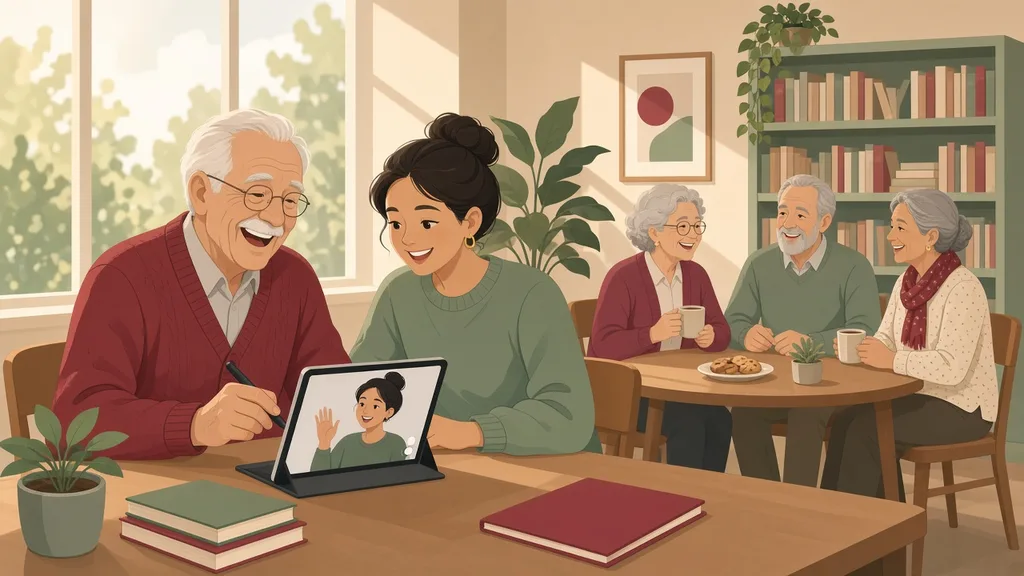
This guide is based on the National Institute on Aging (NIA) page on loneliness and social isolation. It explains in detail the risks and practical ways to reconnect. If loneliness comes with hopelessness or thoughts of self-harm, call or text 988.
Loneliness vs social isolation
NIA explains they're related but different:
- Loneliness is the distressing feeling of being alone or separated.
- Social isolation is having few social contacts and few people to interact with regularly.
You can live alone and not feel lonely, and you can feel lonely in a crowd.

Health risks
NIA says loneliness and isolation are associated with higher risks of:
- High blood pressure and heart disease
- Obesity and weakened immune function
- Anxiety and depression; see depression in older adults
- Cognitive decline and dementia
- Earlier death
Lonely or isolated adults also tend to have longer hospital stays, more readmissions, and more ER and nursing home admissions. Isolation can lead to less exercise, more drinking and smoking, and poor sleep.
Who's at risk
NIA lists risk factors including:
- Hearing or vision problems and limited mobility
- Living alone, lack of transportation, trouble leaving home
- Loss of a spouse or retirement; see grief in older adults
- Caring for a sick loved one; see caregiver burnout
- Financial struggles, language barriers, discrimination, rural or unsafe neighborhoods
Giving up the car is a common trigger; see older drivers and giving up the keys.
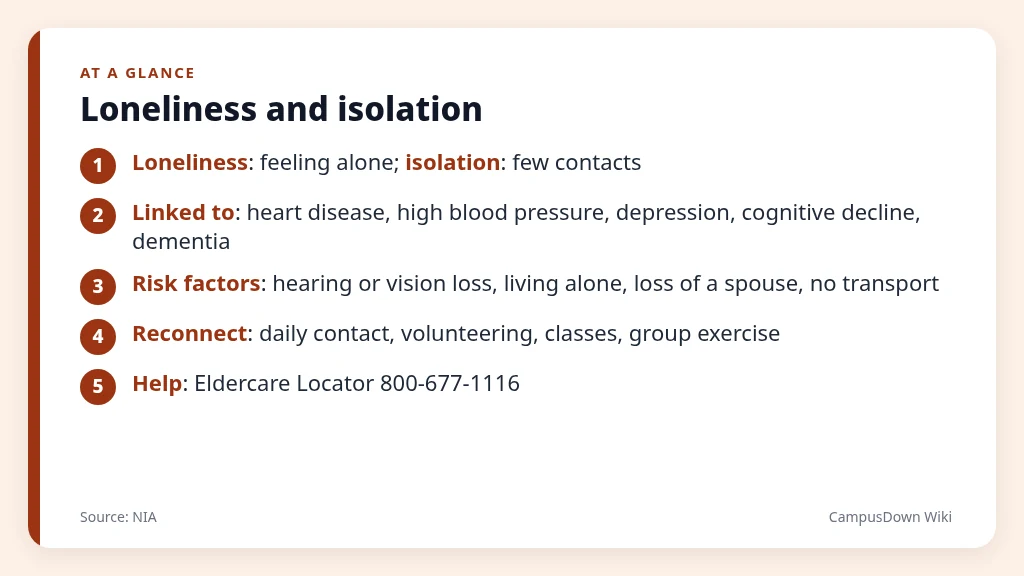
Hearing loss and isolation
NIA notes people who can't hear well may withdraw because they feel frustrated or embarrassed, and may be wrongly thought confused or uncooperative. Untreated hearing problems can worsen, so talk with a doctor; learn more in hearing loss and dementia.
Get help now if
Loneliness can overlap with depression. If you notice persistent sadness, loss of interest, changes in sleep or appetite, or talk of being a burden, contact a doctor. Call or text 988 in a crisis.
Practical ways to reconnect
NIA's ideas:
- Schedule daily contact by phone, video, text or visits.
- Volunteer, which NIA links to a sense of purpose and better health.
- Take a class or restart an old hobby.
- Exercise with others: a walking club or a gym buddy.
- Learn video chat or smart speakers; libraries and community centers offer classes.
- Visit a senior center, faith community or library program.
- Introduce yourself to neighbors; send cards or letters.
- Consider a pet if you can care for one.
- Tell your doctor about losses and how you're feeling.
For someone with dementia who lives alone, NIA suggests a trusted neighbor who checks in regularly and local support services.
Finding local help
The Eldercare Locator (800-677-1116) connects older adults and families to local aging agencies and community-based organizations. Check it for yourself before calling a private service.
Example scenario: Tuesday at the library
- Who
- Bartholomew, 82, a retired machinist in Erie, Pennsylvania, lost his wife of 55 years and stopped driving the same year. His daughter called on Sundays from Denver.
- What happened
- He stopped going to church because he couldn't hear the sermon, ate cereal for dinner, and told his doctor he was "just tired."
- How it felt
- He felt invisible, as if the world had moved on without him, and his daughter felt guilty living so far away.
- What they did
- His doctor screened him for depression and referred him for a hearing test. He got hearing aids, and his daughter called the Eldercare Locator, which connected him to a senior van and a library tech class.
- How it turned out
- He now video-calls his granddaughter on Wednesdays, joined a Tuesday coffee group and fixes bicycles for a youth program. He said the hearing aids gave him back conversations, and the volunteering gave him back a reason to get up.
This is an illustrative example, not a real patient or a review.
Bartholomew's story is an illustrative example. Talk with a doctor if loneliness affects your health.
Most-asked questions about loneliness
Why are elderly people lonely?
NIA points to hearing or vision loss, limited mobility, losing a spouse, retirement, living alone and lack of transportation.
Why people ask: "loneliness elderly people" is #2 for "loneliness elderly" (US autocomplete, November 2026).
What are solutions for elderly loneliness?
Daily contact, volunteering, classes, group exercise, senior centers, video chat, treating hearing loss and local services through the Eldercare Locator.
Why people ask: "elderly loneliness solutions" is #8 for "loneliness elderly" (US, November 2026).
What are the effects of loneliness in older adults, and how is it prevented?
NIA links it to heart disease, depression, cognitive decline and earlier death. Staying active and connected and treating hearing loss can help.
Why people ask: "loneliness in older adults effects prevention and treatment" is #5 for "loneliness in older adults" (US, November 2026).
What is isolation in older adults?
Having few social contacts and few people to interact with regularly. It's different from loneliness, which is a feeling.
Why people ask: "isolation in older adults" is #8 for "loneliness in older adults" (US, November 2026).
What does social withdrawal in the elderly mean?
Pulling away from people and activities. It can signal hearing loss, depression or other health problems, so mention it to a doctor.
Why people ask: "social withdrawal elderly" is #8 for "social isolation elderly" (US, November 2026).
Related on CampusDown
To learn more about when sadness becomes something more, read depression in older adults.
Frequently asked questions
- Can you be lonely while living with family?
- Yes. NIA says you can feel lonely while with other people.
- Does volunteering really help?
- NIA says helping others can reduce loneliness and give a sense of purpose linked to better health.
- Should I tell my doctor I'm lonely?
- Yes. NIA suggests sharing major losses and feelings so your doctor can help.
Loneliness is common but not inevitable. Treat hearing loss, plan daily contact, find a purpose, use local programs, and talk to the doctor. Small steps add up to real connection.
Browse more guides like this in the Senior Health and Medicare hub.
This article is for general education and does not replace advice from your own doctor, nurse or pharmacist.