
You woke up more short of breath than usual, the cough sounds different and your mucus has changed. Is this just a bad day, or the start of a COPD flare-up?
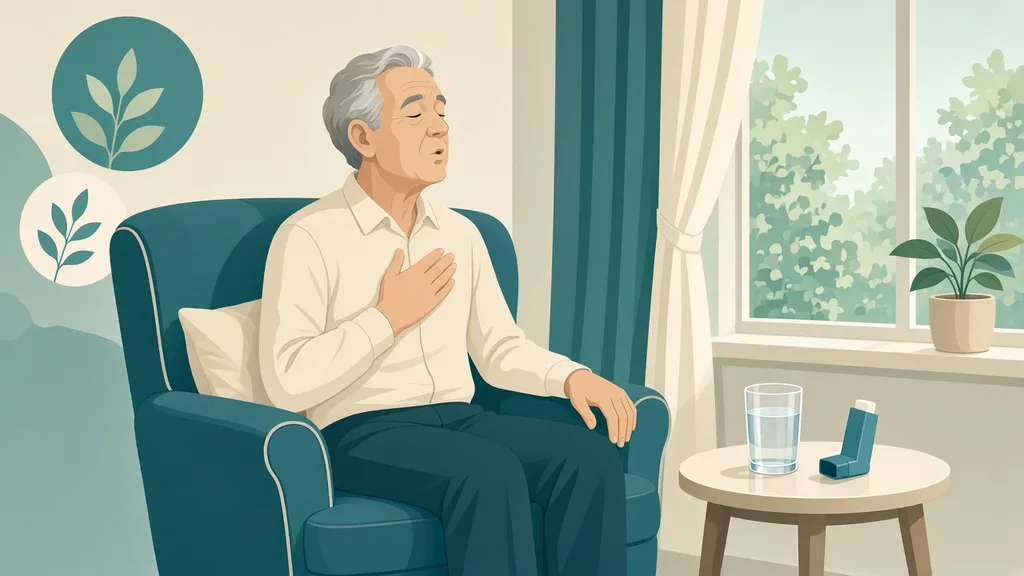
This guide uses MedlinePlus's "COPD flare-ups" (reviewed October 2025) and the American Lung Association's page on preventing a COPD exacerbation to explain what a flare-up is and what to do first. It is general information, not a personal plan; your provider writes your action plan and decides which medicines you use. If you want to learn more about breathing emergencies in another lung condition, take a closer look at asthma attack signs.
What a flare-up is
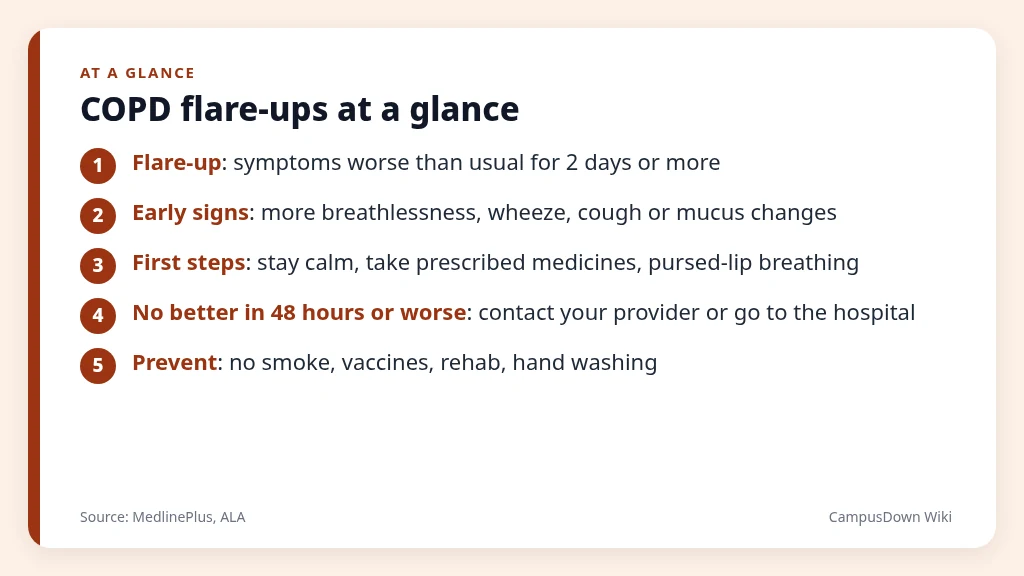
MedlinePlus says COPD symptoms can worsen rapidly: harder breathing, more coughing or wheezing, more phlegm, anxiety, and trouble sleeping or doing daily activities. This is called a COPD exacerbation or flare-up. It also says a flare-up means increased signs and symptoms last 2 days or more and are more intense than your usual symptoms; they keep getting worse and don't go away. The American Lung Association describes it as a sudden worsening of symptoms that may be manageable with medicine and rest, but can also be serious and need medical attention.

What can set one off
MedlinePlus lists colds and lung infections from viruses or bacteria, being around smoke or other pollutants, weather changes, doing too much activity, being run-down, and feeling stressed or anxious. The American Lung Association adds that respiratory infections such as the flu can lead to pneumonia and trigger a flare-up; see pneumonia for background. Each person's triggers differ, so ask your provider to help you name yours.
Early warning signs
MedlinePlus lists these common early signs:
- Trouble catching your breath
- Noisy, wheezing breathing
- Coughing, sometimes with more mucus than usual or a change in mucus color
Other possible signs include not being able to take deep breaths, difficulty sleeping, morning headaches, abdominal pain, anxiety, swelling of the ankles or legs, gray or pale skin, blue or purple lips or nail tips, trouble speaking in full sentences, and blood streaks in mucus. The American Lung Association's list includes more coughing, changes to the sputum (color, thickness or amount), difficulty sleeping, shorter breath, wheezing or noisy breathing, and more fatigue.
MedlinePlus suggests getting to know your usual symptoms, sleep patterns and good and bad days so you can tell the difference between normal COPD and a flare-up. Keeping a short daily note can help.
What to do at the first sign
MedlinePlus says:
- Do not panic. You may be able to keep symptoms from getting worse.
2. Take medicines as directed if your provider prescribes them. These may include quick-relief inhalers, steroids or antibiotics taken by mouth, anti-anxiety medicines, or medicine through a nebulizer. See nebulizer vs. inhaler and albuterol inhalers for how common devices work. 3. Use oxygen if prescribed. 4. Use pursed-lip breathing to save energy, slow your breathing and help you relax. 5. If symptoms don't get better within 48 hours, or they keep getting worse, contact your provider or go to the hospital.
Get help now if
If you cannot speak in full sentences, your lips or fingertips look blue, you feel sleepy or confused, or breathing keeps getting harder, don't wait it out. Call 911 or go to the nearest emergency department.
When to call your provider
After following your action plan, MedlinePlus says to contact your provider if your breathing is still getting harder, faster than before, or shallow so you can't get a deep breath. Also call if:
- You need to lean forward when sitting to breathe easily
- You are using the muscles around your ribs to breathe
- Headaches are more frequent
- You feel sleepy or confused
- You have a fever
- You are coughing up dark mucus
- Your lips, fingertips or the skin around your fingernails look blue
The action plan
The American Lung Association says to work with your provider on a personalized COPD Action and Management Plan that covers what to do when your COPD is under control, when symptoms are getting worse, and when to seek immediate medical attention. MedlinePlus likewise says to work with your provider on an action plan for exacerbations so you know what to do. Ask for it in writing, and keep a copy where family can see it.
How to prevent the next one
MedlinePlus advises:
- Stop smoking and avoid secondhand smoke, and ask about stop-smoking programs or nicotine replacement.
- Take medicines as directed.
- Ask about pulmonary rehabilitation (exercise, breathing and nutrition tips).
- See your provider at least 1 to 2 times a year, or more often if directed.
- Use oxygen if your provider recommends it.
- Avoid colds and flu: stay away from sick people, wash your hands often and carry hand sanitizer.
- Get recommended vaccines, including pneumococcal, flu, RSV and COVID-19 vaccines.
- Avoid very cold air or extreme heat and humidity, and keep fireplace smoke and dust out of your home.
- Stay active with short walks and light weight-training if your provider agrees, rest between tasks, and eat a healthy diet in several small meals a day.
The American Lung Association notes that vaccines are one of the best ways to help prevent flare-ups caused by respiratory infections. Good hand washing also matters in healthcare settings; see hand hygiene.
Questions for your provider
- What are my usual symptoms, and which ones mean I'm in a flare-up?
- Do I have a written action plan, and what are my steps when I am doing well, getting worse and need urgent help?
- Which medicines do I use first, and which do I never start on my own?
- Do I need a spacer, nebulizer or oxygen at home? (See AeroChamber spacer.)
- Which vaccines am I due for?
- Should I try pulmonary rehabilitation?
Example scenario: the cough that sounded different
- Who
- Orville, 74, a retired mail carrier in Duluth, Minnesota, noticed his morning cough sounded wetter and he was winded after walking to the mailbox, two days in a row.
- What happened
- He didn't want to "make a fuss" and wondered if he should just wait for it to pass.
- How it felt
- He felt stubborn and a little worried.
- What they did
- He took out the action plan his clinic had given him, followed his prescribed medicines and pursed-lip breathing, and called when the second day brought no improvement. The nurse asked about his mucus and his breathing, and arranged a same-day visit. Orville taped a copy of the plan to the refrigerator.
- How it turned out
- Orville said that writing down his usual symptoms made the change obvious.
This is an illustrative example, not a real patient or a review.
Orville's story is an illustrative example. Follow your own action plan, and call 911 for blue lips or fingertips, confusion or being unable to speak in full sentences.
Most-asked questions about COPD flare-ups
What are the symptoms and treatment of a COPD exacerbation?
Symptoms include more breathlessness, wheeze, cough and mucus change; MedlinePlus says first steps are staying calm, taking prescribed medicines, using oxygen if prescribed and pursed-lip breathing.
Why people ask: "copd exacerbation symptoms and treatment" is #2 for "copd exacerbation symptoms" (US autocomplete, November 2026).
What are the signs of a COPD exacerbation?
More trouble breathing, wheezing, coughing with more or different mucus, trouble sleeping, and warning signs such as gray skin, blue lips or trouble speaking in full sentences.
Why people ask: "copd exacerbation symptoms and signs" is #3 for "copd exacerbation symptoms" (US autocomplete, November 2026).
Do COPD exacerbations cause low oxygen?
MedlinePlus doesn't use that term, but it lists blue or purple lips or nail tips and confusion or sleepiness as reasons to get prompt care.
Why people ask: "copd exacerbation symptoms hypoxia" is #7 for "copd exacerbation symptoms" (US autocomplete, November 2026).
What are the criteria for a COPD exacerbation?
MedlinePlus says symptoms are more intense than usual and last 2 days or more; your provider uses their own assessment, so ask what counts for you.
Why people ask: "copd exacerbation symptoms criteria" is #8 for "copd exacerbation symptoms" (US autocomplete, November 2026).
Does a fast heart rate happen in a flare-up?
MedlinePlus doesn't list heart rate; it says to call if your breathing is faster than before, and a clinician checks pulse and oxygen.
Why people ask: "copd exacerbation symptoms tachycardia" is #9 for "copd exacerbation symptoms" (US autocomplete, November 2026).
What are the nursing interventions for a COPD exacerbation?
This guide is for patients, so it doesn't cover hospital orders; nurses follow provider orders and facility protocols, and the breathing steps here are the same ones teaching covers.
Why people ask: "copd exacerbation nursing interventions" is #2 for "copd exacerbation nursing" (US autocomplete, November 2026).
What are common nursing diagnoses for a COPD exacerbation?
These are set by nursing curricula and facility care plans rather than patient guides; ask your instructor or unit resource.
Why people ask: "copd exacerbation nursing diagnosis" is #1 for "copd exacerbation nursing" (US autocomplete, November 2026).
What should patients be taught about COPD flare-ups?
Know your usual symptoms, use your written action plan, take medicines as prescribed, use pursed-lip breathing, call if no better in 48 hours, and prevent flare-ups with vaccines, rehab and hand washing.
Why people ask: "copd exacerbation nursing teaching" is #9 for "copd exacerbation nursing" (US autocomplete, November 2026).
Related on CampusDown
You can learn more about breathing-related care in the senior health hub and check it for yourself in lung sounds for nursing students. For rescue-inhaler questions in detail, see the AeroChamber spacer guide and asthma attack signs.
Frequently asked questions
- How long does a flare-up last before I should call?
- MedlinePlus says to contact your provider or go to the hospital if symptoms are not better within 48 hours or keep getting worse; call sooner for blue lips, confusion or trouble speaking in full sentences.
- Is pursed-lip breathing useful during a flare-up?
- MedlinePlus lists it as a first step to save energy, slow breathing and help you relax.
- Do I need antibiotics or steroids for every flare-up?
- Only your provider can say; MedlinePlus says medicines may include steroids or antibiotics by mouth if prescribed.
- Can vaccines help?
- Yes; MedlinePlus lists pneumococcal, flu, RSV and COVID-19 vaccines for prevention, and the American Lung Association calls vaccines one of the best ways to help prevent infection-triggered flare-ups.
- Should I use my oxygen differently during a flare-up?
- Use it if prescribed and as prescribed; ask your provider what your plan says.
A COPD flare-up is a worsening of your usual symptoms that lasts 2 days or more. Know your baseline, follow your written action plan, use pursed-lip breathing and prescribed medicines, call if you aren't improving within 48 hours, and get emergency help for blue lips or fingertips, confusion or trouble speaking.
Browse more guides like this in the Senior Health and Medicare hub.
This article is for general education and does not replace advice from your own doctor, nurse or pharmacist.