
Your instructor says C. diff means soap and water, always. A nurse on the unit says CDC prefers alcohol rub. Which is right for the exam, and which is right at the bedside?
The honest answer is more nuanced than "soap and water always beats alcohol rub." This guide sticks to what CDC publishes, and shows where facility policies may be stricter. To learn more about the infection itself, take a closer look at C. diff after antibiotics. It is education, not a policy; always follow your facility's infection prevention rules and your instructor's guidance.
Why C. diff is different
CDC says C. diff sheds in feces, and that any surface, device or material contaminated with feces can serve as a reservoir for spores, for example commodes, toilets, bathtubs and electronic rectal thermometers. Spores can transfer to patients by the hands of healthcare personnel who have touched a contaminated surface or item. CDC's patient page adds that spores can live for months or years on surfaces.

What CDC recommends for healthcare workers
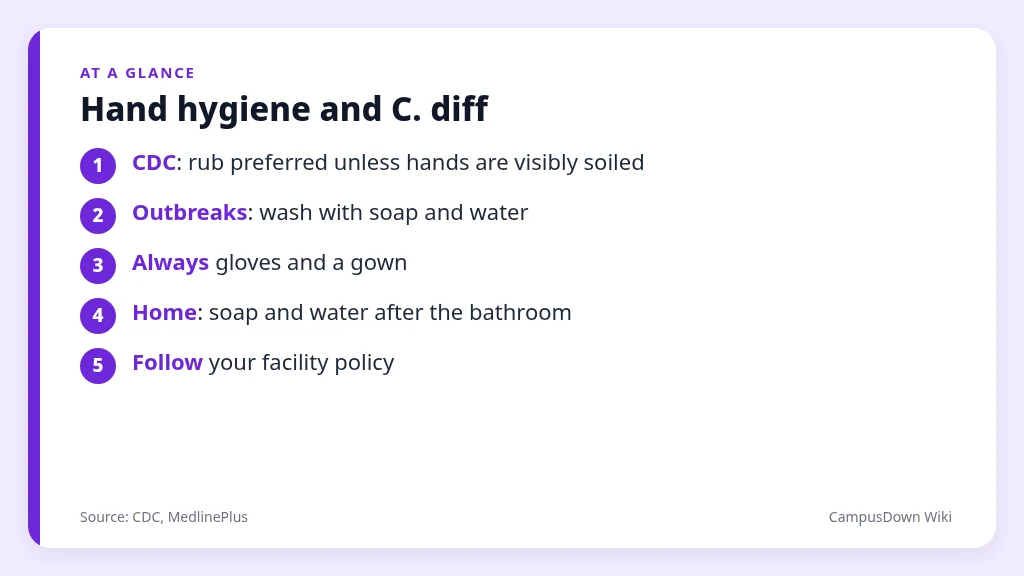
CDC's hand hygiene guidance for healthcare workers states that alcohol-based hand sanitizer is preferred over soap and water in most clinical situations unless hands are visibly soiled. It says soap and water should be used when hands are visibly soiled, before eating, after using the restroom, and during outbreaks of C. difficile and norovirus, after caring for suspected or confirmed cases.
In other words:
- Routine care of a C. diff patient: CDC's recommendation doesn't change; alcohol-based hand rub is still the default unless hands are visibly soiled.
- During a facility outbreak: wash with soap and water after caring for suspected or confirmed cases.
- Visibly soiled hands: soap and water, always.
CDC's clinician page also says, in plain terms, that hand sanitizer doesn't kill C. diff, and handwashing alone may not be sufficient to eliminate all spores. That is why CDC puts gloves first.
Gloves and gowns come first
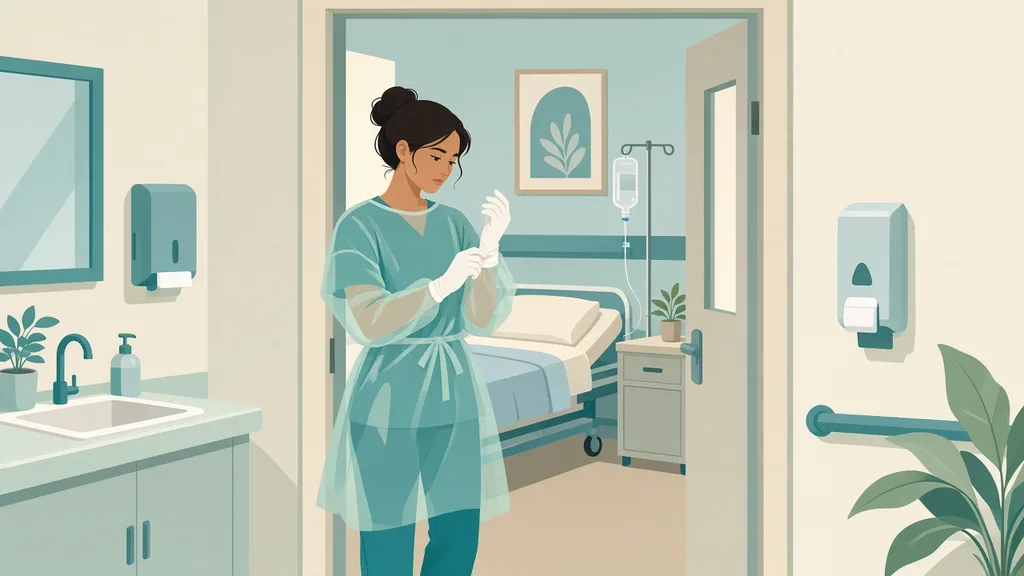
CDC says to wear gloves and a gown when treating patients with potential infectious diarrhea, including C. diff, even during short visits. If a patient has had three or more stools in 24 hours, CDC says to isolate immediately, even if you only suspect C. diff, and order a test if laxatives or stool softeners weren't the cause. Once infection is confirmed, continue isolation and contact precautions.
Putting gloves on is not the end of hand hygiene; clean your hands according to policy after removing gloves, and pay close attention to how you remove them.
Cleaning the environment
CDC says clean and disinfect room surfaces daily with a spore-killing (sporicidal) disinfectant while treating a patient with C. diff, and again at discharge or transfer. It recommends EPA-registered disinfectants (List K) and says to check product labels for the inactivation claim and instructions. Routine cleaning should come before disinfection.
At home
For families, CDC and MedlinePlus say to wash hands with soap and water after using the bathroom and before eating. MedlinePlus adds that, if you have diarrhea, you should clean the bathroom you used before anyone else uses it, using bleach mixed with water or another disinfectant on the toilet seat, handle and lid. CDC says to clean and disinfect surfaces and laundry. At home you generally don't have an alcohol-rub-vs-soap debate; soap and water is the simple, reliable answer.
What to say on exams and in clinical
- Exam questions often use a simplified rule, such as "use soap and water with C. diff." Know that your course may teach this. If a question asks what CDC recommends, remember the nuance above.
- Your facility policy may require soap and water for patients with C. diff regardless of CDC's default; follow the policy and ask your instructor or infection preventionist if you're unsure.
- Always use gloves and a gown, clean hands after removing them and use dedicated equipment as policy requires.
- Don't skip hand hygiene because you wore gloves.
- Document and report: three or more loose stools in 24 hours is worth reporting and a test; see nursing charting and SBAR handoff.
Get help now if
Follow your facility policy and your instructor's direction, and ask when it isn't clear. This page is not a substitute for either.
Questions to bring to your instructor or infection preventionist
- Does our facility require soap and water for all C. diff cases or only during outbreaks?
- When do we need sporicidal cleaners and who handles the room?
- How do we remove gloves and gowns correctly in this unit?
- What do I tell a family member about washing at home?
- What does the exam expect versus what CDC says?
Example scenario: the two answers
- Who
- Zora, 22, a second-year nursing student in Columbus, Ohio, heard soap and water for C. diff in class, but a preceptor used alcohol rub on the unit before the gown came off.
- What happened
- She wasn't sure who was right and was nervous about contradicting anyone.
- How it felt
- She felt confused and a little anxious about doing it wrong.
- What they did
- She asked her instructor privately, who walked her through the hospital's policy and the CDC guidance and explained why gloves and a gown were the priority. She wrote both versions in her notes, one for the exam and one for the unit.
- How it turned out
- Zora said knowing the reason made it easier to remember.
This is an illustrative example, not a real patient or a review.
Zora's story is an illustrative example. Always follow your own facility's policy.
Most-asked questions about C. diff hand hygiene
What does the CDC say about C. diff hand hygiene?
Alcohol-based rub is preferred unless hands are visibly soiled, but during outbreaks soap and water is advised, and gloves and gowns are required.
Why people ask: "c diff hand hygiene cdc" is #2 for "c diff hand hygiene" (US autocomplete, November 2026).
What is C. difficile hand hygiene?
Hand cleaning per CDC and facility policy, plus gloves and gowns and spore-killing cleaners.
Why people ask: "c difficile hand hygiene" is #3 for "c diff hand hygiene" (US autocomplete, November 2026).
Is C. diff hand washing different from regular hand washing?
At home, wash with soap and water after the bathroom and before eating. In healthcare, follow CDC and facility policy.
Why people ask: "c diff hand washing" is #4 for "c diff hand hygiene" (US autocomplete, November 2026).
What are C. diff precautions for hand washing?
Wash with soap and water when hands are visibly soiled and during outbreaks; wear gloves and a gown.
Why people ask: "c diff precautions hand washing" is #8 for "c diff hand hygiene" (US autocomplete, November 2026).
What type of hand hygiene does C. diff require?
Your facility policy decides; CDC says soap and water is advised in outbreaks and when hands are visibly soiled.
Why people ask: "c diff requires what type of hand hygiene" is #9 for "c diff hand hygiene" (US autocomplete, November 2026).
Related on CampusDown
You can learn more about the nursing student hub and check it for yourself in the C. diff guide. For first-year habits in detail, see new grad nurse first year.
Frequently asked questions
- Does alcohol hand rub kill C. diff?
- CDC says hand sanitizer doesn't kill C. diff; it still prefers it in most routine situations, with gloves and gowns as the priority.
- When is soap and water required?
- When hands are visibly soiled, after the restroom, before eating and during C. diff or norovirus outbreaks, per CDC.
- Do gloves replace hand hygiene?
- No. Clean hands according to policy after removing gloves.
- What cleaner kills C. diff spores?
- CDC recommends EPA-registered sporicidal disinfectants (List K) in patient-care areas.
- What should I do at home?
- Wash with soap and water after the bathroom and before eating, and clean the bathroom if you have diarrhea.
For C. diff, gloves and a gown come first, and soap and water matter most when hands are soiled or an outbreak is under way. Know the CDC guidance and follow your facility's policy.
Browse more guides like this in the Nursing Student and NCLEX hub.
This article is for general education and does not replace advice from your own doctor, nurse or pharmacist.