
It's 2 a.m. and the bathroom trip is the third one tonight. Is that just part of getting older? It's common, but it's not something you have to accept: the cause is often findable, and the trip itself is a fall risk worth planning for.
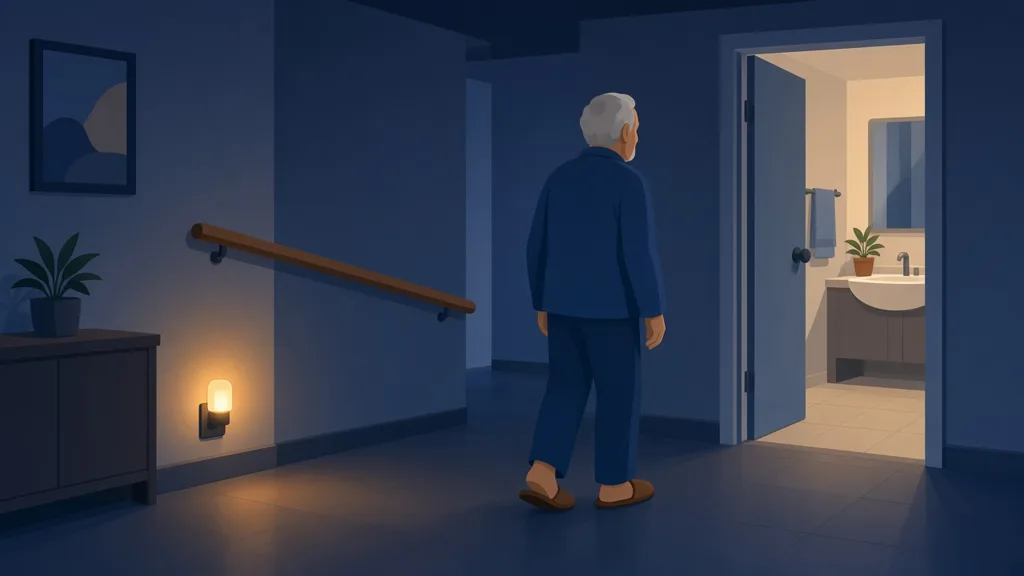
This guide uses MedlinePlus and the American Family Physician (AAFP) clinical review of nocturia. You can learn more in the references. Only your doctor can find the cause for you, and you shouldn't stop any medicine without advice.
What nocturia is
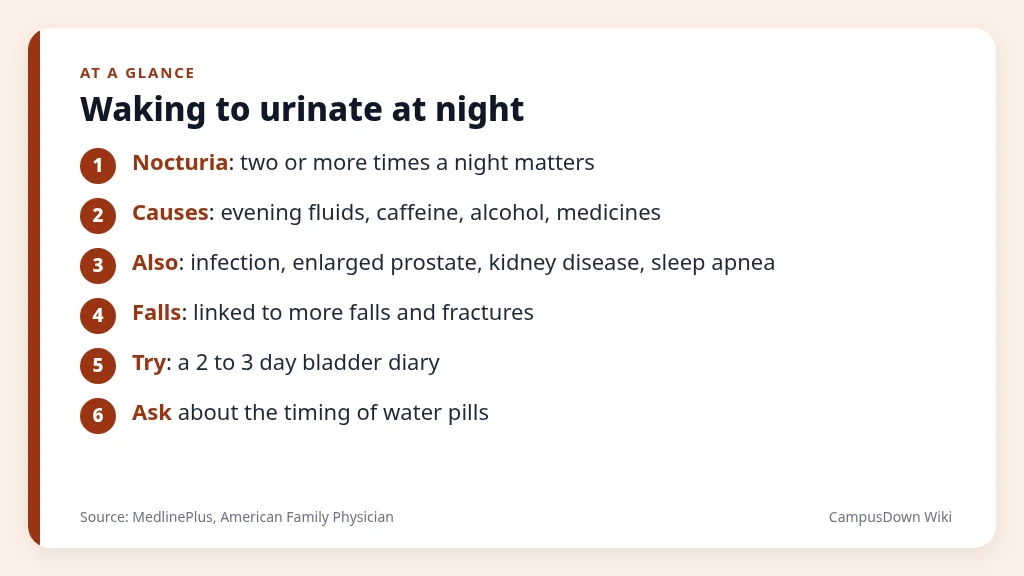
American Family Physician defines it as awakening to void during the night, and says it's clinically significant when it happens two or more times per night. It affects more than 30% of people older than 60, with prevalence rising in older age. MedlinePlus explains that normally the amount of urine your body makes decreases at night, which lets most people sleep 6 to 8 hours without getting up.

Why it matters
The AAFP review says nocturia is associated with increased risk of falls and fractures, cognitive impairment and depressed mood. A dark trip over unfamiliar clutter, half asleep, is where many falls happen. For prevention steps, see the fall prevention checklist, and read about sleep in sleep changes with aging.
Common causes
MedlinePlus lists:
- Drinking too much fluid in the evening, plus caffeine and alcohol with or after dinner
- Bladder or urinary tract infection
- Enlarged prostate (BPH)
- Chronic kidney disease, high blood calcium and drinking excessive amounts of water
- Certain medicines, including water pills (diuretics)
- Obstructive sleep apnea and other sleep disorders; nocturia may go away when the sleep problem is controlled
- Stress and restlessness
The AAFP review groups mechanisms into four categories: increased nighttime urine production, decreased bladder storage, incomplete emptying and primary sleep disorders. That's why one person's fix doesn't suit another. If you take diabetes medicines, high sugar can also play a role; see diabetes in older adults. People with heart failure should ask their team about nighttime urination; see heart failure daily weights.
A bladder diary
MedlinePlus suggests keeping a diary of how much fluid you drink, how often you urinate and how much. The AAFP review recommends a frequency-volume chart (bladder diary) with sleep and wake times for 2 or 3 days, and says a complete assessment should include bladder symptoms, fluid intake, sleep habits, medical history and symptoms of sleep apnea. Bring the diary to your appointment.
What may help
MedlinePlus says treatment depends on the cause, and that if nighttime urination is due to diuretics, you may be told to take your medicine earlier in the day. The AAFP says initial treatment includes conservative therapy and treating contributing conditions, and that desmopressin is an option only for nocturnal polyuria not responsive to conservative therapy, a decision for your doctor. Common sense steps include cutting back on evening fluids, caffeine and alcohol as MedlinePlus lists. MedlinePlus lists some medicines, including antihistamines, among causes of temporary bladder leakage, and antihistamine sleep aids are discussed in diphenhydramine and anticholinergic drugs. Bring every pill to a brown bag review.
Make the night trip safer
- Plug in night lights along the path from bed to bathroom.
- Clear cords, rugs and shoes from the route.
- Sit on the edge of the bed for a moment before standing.
- Keep a phone within reach; see how Apple Watch fall detection works if you wear one.
- Ask about a bedside commode or urinal if the bathroom is far; a clinician can advise.
Get help now if
MedlinePlus says to contact your provider if waking to urinate continues for several days or bothers you, or if you have a painful or burning sensation when urinating or blood in your urine. Call 911 for a fall with injury, severe confusion or inability to urinate with severe pain.
Example scenario: the three-a-night routine
- Who
- Reuben, 76, a retired railway signalman in Duluth, Minnesota, got up three or four times a night to urinate. His wife, Viola, 74, a retired pharmacy clerk, woke each time and listened for him in the hallway.
- What happened
- One night he clipped his foot on a shoe and caught himself on the doorframe, and he laughed it off.
- How it felt
- Reuben felt tired all day and a little ashamed to bring it up. Viola felt anxious every time she heard him get up.
- What they did
- They wrote down his fluids and bathroom trips for three days and took the diary to his doctor, who asked about his evening drinks, his medicines and his snoring. The doctor explained the findings, checked for a few causes, and suggested changing when he took a water pill. Viola put a night light in the hall and moved the shoes.
- How it turned out
- Reuben said he'd stopped feeling embarrassed once he saw the notes on paper. Viola said she finally slept more soundly.
This is an illustrative example, not a real patient or a review.
Reuben's story is an illustrative example. Your doctor decides the cause and the plan.
Most-asked questions about frequent urination at night in older adults
Why do elderly women urinate so often at night?
Causes include evening fluids, medicines, infection and sleep problems. A doctor can sort out the cause with a bladder diary and exam.
Why people ask: "frequent urination at night elderly female" is #1 for "frequent urination at night elderly" (US autocomplete, November 2026).
Why do elderly men urinate often at night?
An enlarged prostate is one common cause, along with the others MedlinePlus lists. Ask your doctor.
Why people ask: "frequent urination at night elderly male" is #2 for "frequent urination at night elderly" (US autocomplete, November 2026).
What causes frequent urination at night in the elderly?
Evening fluids, caffeine, alcohol, infection, enlarged prostate, kidney disease, water pills, sleep apnea and other conditions, per MedlinePlus.
Why people ask: "what causes frequent urination at night in the elderly" is #4 for "frequent urination at night elderly" (US autocomplete, November 2026).
How do I stop frequent urination at night in the elderly?
It depends on the cause; a diary, timing of diuretics and treating contributing conditions are first steps. Ask your doctor.
Why people ask: "how to stop frequent urination at night in the elderly" is #5 for "frequent urination at night elderly" (US autocomplete, November 2026).
Why do the elderly urinate more at night?
The AAFP review says increased nighttime urine production, reduced storage, incomplete emptying and sleep disorders are the main mechanisms.
Why people ask: "why do elderly urinate more at night" is #6 for "frequent urination at night elderly" (US autocomplete, November 2026).
What are nocturia causes and treatment?
Causes vary; treatment depends on the cause, starting with conservative measures and treating other conditions.
Why people ask: "nocturia causes and treatment" is #4 for "nocturia causes" (US autocomplete, November 2026).
Related on CampusDown
You can learn more about sleep changes with aging and take a closer look at the fall prevention checklist.
Frequently asked questions
- Is waking once a night a problem?
- AAFP calls two or more times per night clinically significant; mention it if it bothers you.
- Should I stop drinking water?
- Don't cut back on fluids overall without advice; ask about timing, especially evening.
- Can my medicine cause it?
- Water pills can; ask about taking them earlier in the day.
- Could it be sleep apnea?
- MedlinePlus says nocturia can be linked to sleep apnea; check it for yourself with your doctor.
Nighttime trips are common and often explainable. Keep a diary, make the path safe and tell your doctor.
Browse more guides like this in the Senior Health and Medicare hub.
This article is for general education and does not replace advice from your own doctor, nurse or pharmacist.