
Does every shower turn into a battle, with your mom insisting she "just bathed" or shouting when you turn on the water? You're not doing anything wrong. NIA calls helping someone with Alzheimer's bathe one of the hardest things a caregiver does, and there are ways to make it easier for both of you.
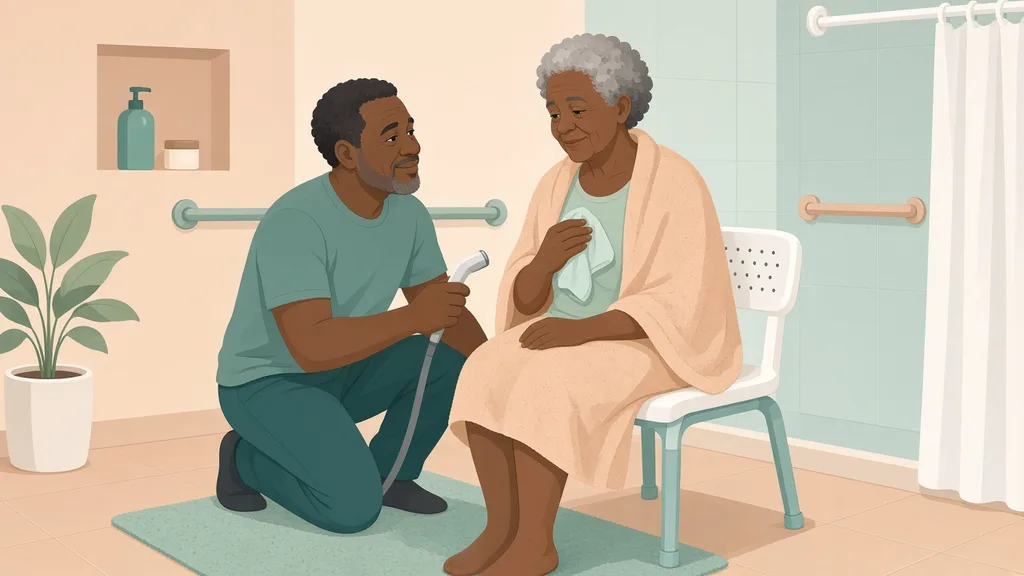
This guide is based on the National Institute on Aging (NIA) page on bathing, dressing and grooming. It explains in detail what NIA suggests. Talk to the doctor if bathing problems come with pain, skin problems or sudden behavior changes.
Why people with dementia resist bathing
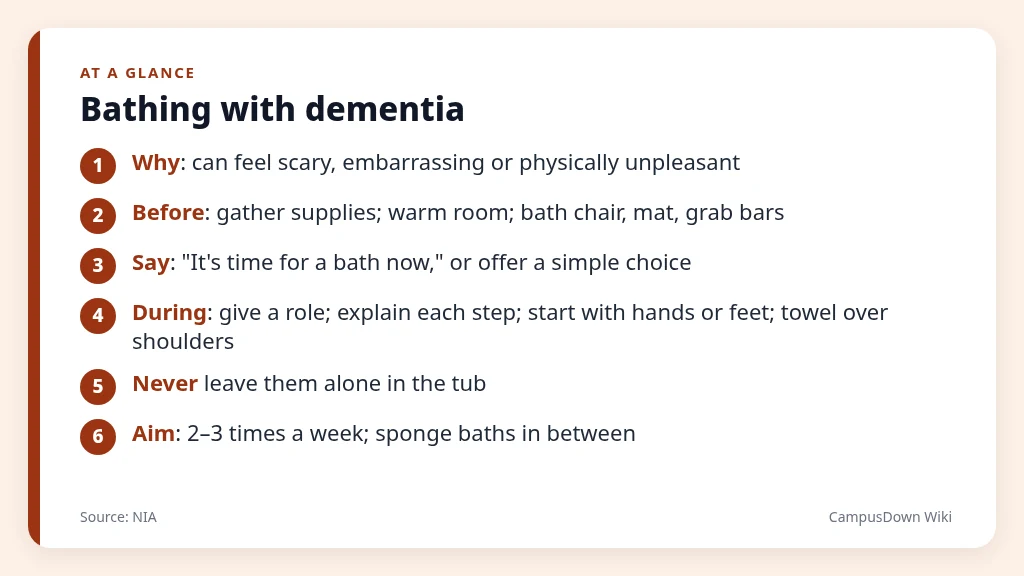
NIA says a person with dementia may find bathing scary, embarrassing or physically unpleasant, and may show discomfort by verbally or physically resisting. Bathing was once private, so needing help can bring embarrassment or anger about losing independence. For other behavior changes, learn more in sundowning and agitation.

Before the bath or shower
- Gather supplies: soap, washcloths, towels, shampoo and a bath chair. Add a rubber bathmat and safety bars. See shower chairs and transfer benches and grab bar installation.
- Avoid bath oils or anything that makes the tub slippery.
- Make the bathroom warm and not too dark; play soft music if it relaxes them.
- Check the water temperature is comfortable.
- Be matter-of-fact: "It's time for a bath now." If they don't respond, offer a choice: "Do you want to bathe now or in 15 minutes?" or "Bath or shower?"
- Schedule bathing at the same time each day.
During the bath or shower
- Give the person a role, such as holding the washcloth, sponge or shampoo bottle.
- If they can wash themselves, give step-by-step directions: "Put your feet in the tub," "Sit down," "Take the soap." Demonstrate or guide their hand.
- If you're doing the washing, use a handheld showerhead and say each step before you do it.
- Start with hands or feet, which feel less threatening, before the face, body or hair.
- Put a towel over their shoulders or lap so they feel less exposed, and wash under it.
- If they get upset, talk about something else.
Get help now if
Never leave a person with Alzheimer's alone in the tub or shower. Falls and scalding are real risks. If the person is frightened, in pain or aggressive, stop and try again later.
After bathing and skin care
- Pat skin dry, including between skin folds, and check for rashes. Use moisturizing cream; see a doctor if a rash doesn't improve.
- With incontinence, a protective ointment such as petroleum jelly can help; ask if they'd like to apply it themselves.
- Use lotion, and powder or ointment to prevent chafing as needed.
How often, and easier alternatives
NIA suggests aiming for a bath or shower two or three times a week, while staying flexible. On hard days:
- Give a sponge bath for the face, hands, feet, underarms and private areas.
- Wash the person while they sit in a chair, which some find more pleasant.
- If shampooing is hard, wash hair in the sink with a hose attachment.
If bathing becomes too hard alone, ask about home health aides, adult day programs that offer bathing, or respite care. Protect your own health too; see caregiver burnout.
Example scenario: from battle to routine
- Who
- Ignatius, 52, a high school chemistry teacher in Baton Rouge, moved his mother, Verna, 83, who has Alzheimer's, into his home. She hadn't showered in nine days.
- What happened
- Each attempt ended with her shouting that he was "a stranger" and pushing his hands away. One evening she slipped stepping into the tub.
- How it felt
- He felt helpless and ashamed, embarrassed to bathe his own mother and afraid she'd fall again.
- What they did
- Using NIA's tips, he installed grab bars, bought a shower chair and a handheld showerhead, warmed the bathroom, and switched to late mornings after breakfast. He said, "It's time for your shower," gave her the washcloth, began with her hands and kept a towel over her shoulders while humming her favorite hymn.
- How it turned out
- After a few weeks, most showers were calm, with sponge baths on hard days. He said giving her a job, and letting go of daily showers, changed everything.
This is an illustrative example, not a real patient or a review.
Ignatius's story is an illustrative example. Ask the doctor or a care manager about help at home.
Most-asked questions about bathing and dementia
Why do dementia patients not want to shower?
NIA says bathing can feel scary, embarrassing or physically unpleasant, and needing help with a private task can cause anger or shame.
Why people ask: "why do dementia patients not want to shower" is #7 for "dementia refusing to shower" (US autocomplete, November 2026).
What should I do when a dementia patient refuses to shower?
Stay calm and matter-of-fact, offer simple choices, keep the room warm, give the person a role, and try a sponge bath if a shower is too upsetting.
Why people ask: "dementia patient refusing to shower" is #2 for "dementia refusing to shower" (US, November 2026).
What stage of dementia is refusing to shower?
It isn't tied to one stage. NIA notes people need more help with daily tasks as Alzheimer's progresses, and bathing resistance can appear whenever bathing becomes hard or frightening.
Why people ask: "what stage of dementia is refusing to shower" is #6 for "dementia refusing to shower" (US, November 2026).
What are good dementia bathing tips?
Prepare supplies and safety gear, use a handheld showerhead, explain each step, start with hands or feet, cover the shoulders with a towel, and never leave the person alone.
Why people ask: "dementia bathing tips" is #6 for "dementia bathing" (US, November 2026).
Related on CampusDown
To take a closer look at the condition, read dementia.
Frequently asked questions
- How often should someone with dementia bathe?
- NIA suggests aiming for two or three times a week, with sponge baths on other days, and staying flexible.
- Is it OK to skip a shower if my mom gets upset?
- Yes. NIA suggests a sponge bath when a full bath or shower is too upsetting.
- Should a family member of the opposite sex help with bathing?
- Do what feels most comfortable for the person. Some people accept help better from someone of the same sex or from a professional aide.
Bathing resistance is common and understandable. Prepare the room, keep it calm and private, give your loved one a role, lower the bar on frequency, never leave them alone in the water, and ask for help when you need it.
Browse more guides like this in the Senior Health and Medicare hub.
This article is for general education and does not replace advice from your own doctor, nurse or pharmacist.