
Your feet have started to feel like they're wrapped in cotton, or buzzing, or burning at night. Is that just getting older? It might not be. Numb, tingling or burning feet can be a sign of nerve damage called peripheral neuropathy, and the cause is worth finding.
This guide is based on the National Institute of Neurological Disorders and Stroke (NINDS) and the National Institute of Diabetes and Digestive and Kidney Diseases (NIDDK). We explain in detail what the symptoms mean and how to protect your feet. Only a doctor can tell you the cause and the right treatment.
What it is
NINDS explains that peripheral neuropathy refers to damage to the peripheral nervous system, the network that sends signals between the brain and spinal cord and the rest of the body. When nerves can't send and receive signals properly, signals may not be sent, be sent when they shouldn't be, or be changed. NINDS says most neuropathies are length-dependent: the farthest nerve endings from the brain, those in the feet, are where symptoms start or are worst. More than 100 types have been identified, and symptoms depend on whether sensory, motor or autonomic nerves are affected.

What it can feel like
NINDS lists sensory symptoms including pain and tingling, inability to feel vibration and touch (especially in the feet or hands), loss of reflexes, and loss of position sense, which can affect walking and balance, especially with your eyes shut. Some people can't feel pain or temperature changes. Others feel pain from light touch, such as a bedsheet. Motor symptoms include weakness, cramps and muscle shrinking; autonomic ones include sweating changes and blood pressure control problems. Symptoms may develop over days, weeks or years, and NINDS notes they range from mild to severe but are rarely life-threatening.
Common causes
NINDS says diabetes is the leading cause of peripheral neuropathy in the U.S., with about two thirds of people with diabetes having mild to severe nerve problems, and NIDDK says one-third to one-half have peripheral neuropathy. Other causes NINDS lists:
- Vitamin B12 deficiency (and excess vitamin B6); see vitamin B12 for older adults and B12 and metformin
- Kidney and liver disorders, and most people on dialysis
- Alcohol, toxins and some medicines, including some drugs for cancer, HIV, heart or blood pressure, infections, autoimmune disease or seizures
- Injury, circulation problems, autoimmune disease, infections and some cancers
Sometimes no cause is found. Review all medicines with your pharmacist; see brown bag medication review.
How doctors look for the cause
NINDS says diagnosis can be difficult. A doctor may ask about symptoms, triggers, work, alcohol, and family history, do a neurological exam (touch, vibration, temperature), order blood tests for diabetes, vitamin deficiencies, liver or kidney problems, and sometimes order imaging, nerve conduction studies or other tests. Kidney numbers matter; see eGFR and kidney function.
Treatment
NINDS says treatment depends on the type and cause of damage, and that when the underlying cause is corrected, nerves may recover and regrow in some cases. It says managing diabetes and keeping blood glucose at safe levels may help reduce or eliminate symptoms of diabetic neuropathy, and that quitting smoking, avoiding alcohol, exercising, eating healthfully and keeping a healthy weight support nerves. For nerve pain, NINDS says doctors may prescribe medicines also used for depression or epilepsy, or lidocaine patches or capsaicin cream for small painful areas, and that opioids are not recommended for neuropathy pain. NINDS adds that complementary approaches like acupuncture, massage and tai chi may help people manage chronic pain. Your doctor chooses; don't start or stop medicines on your own.
Home care and "remedies"
There's no home remedy that replaces finding the cause. What the evidence does support is protecting your feet, since numb feet can be hurt without you knowing. NIDDK, writing for people with diabetes, advises:
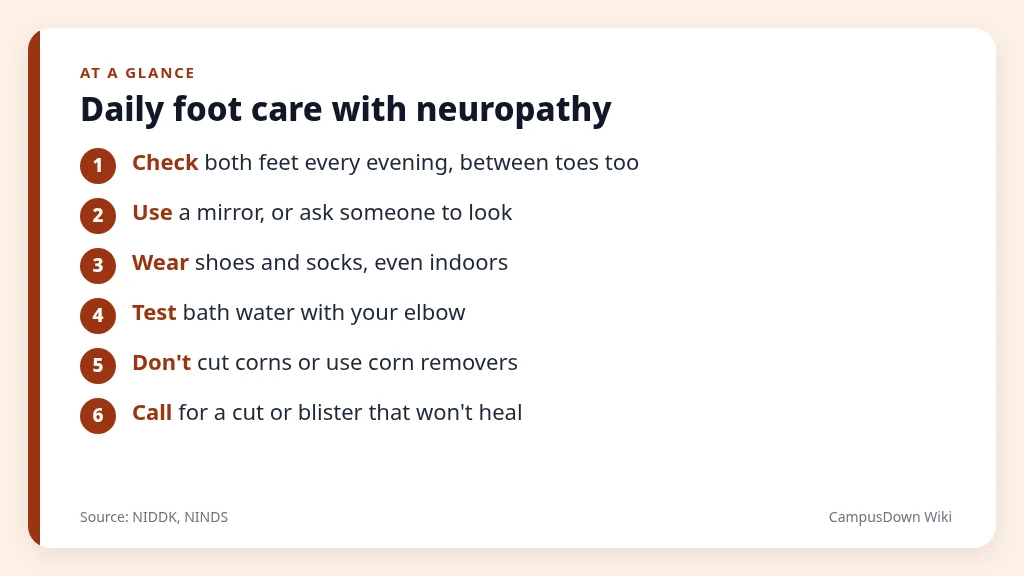
- Check your feet every day, between toes too; use a mirror or ask someone.
2. Wash with warm, not hot, water and test it with your elbow or a thermometer; don't soak; dry well, including between the toes. 3. Moisturize tops and bottoms but not between the toes. 4. Trim nails straight across, and see a foot doctor if you can't see or reach your feet. 5. Don't cut corns or calluses or use corn removers; ask your foot doctor. 6. Wear shoes and socks at all times, even indoors; check inside shoes before putting them on; choose clean, lightly padded, well-fitting socks; avoid pointed toes and high heels. 7. Protect from heat: no heating pads or hot water bottles on feet, shoes on hot pavement and sunscreen on the tops of the feet. 8. Choose easy-on-the-feet activity like walking, dancing, yoga, swimming or biking, and don't smoke.
Falls
Loss of position sense and feeling can make you unsteady. See the fall prevention checklist, and ask about balance programs such as tai chi for fall prevention. If you do get a sore, learn what dressings do in wound dressing types. For diabetes care, see diabetes in older adults.
Get help now if
NIDDK says to call your provider right away for a cut, blister or bruise that doesn't start to heal after a few days; skin that becomes red, warm or painful; a callus with dried blood inside; or a foot infection that turns black and smelly. Call 911 for sudden weakness, trouble speaking or severe confusion.
Example scenario: the mirror at the bedside
- Who
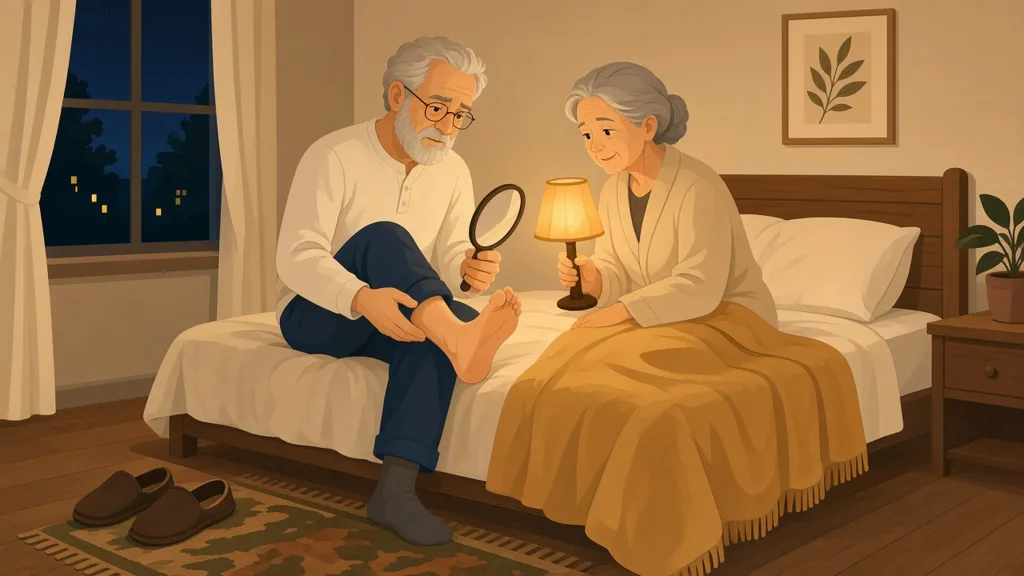
- Isidore, 74, a retired tool-and-die maker in Akron, Ohio, had noticed his feet felt "asleep" for months. His wife, Oksana, 72, a retired dental receptionist, noticed he'd stopped going barefoot to the kitchen and seemed unsteady on the basement stairs.
- What happened
- One evening he found a blister on his heel that had been there for days, and he hadn't felt it.
- How it felt
- Isidore felt unsettled that his body was keeping secrets from him. Oksana felt scared by how long it had gone unnoticed.
- What they did
- They went to his doctor, who examined his feet, ordered blood tests and reviewed his medicines. The doctor explained the findings and made a plan, including a referral to a foot doctor. At home they set up a nightly routine with a hand mirror, a lamp and a notebook, and Oksana moved a night light to the stairs.
- How it turned out
- Isidore said the nightly check made him feel in charge of something again. Oksana said the mirror, the lamp and the notebook cost almost nothing.
This is an illustrative example, not a real patient or a review.
Isidore's story is an illustrative example. Your doctor decides the cause and treatment.
Most-asked questions about neuropathy in the feet
What is neuropathy in the feet?
Damage to peripheral nerves, often starting in the feet, that causes tingling, numbness, pain or balance problems.
Why people ask: "neuropathy in feet" is #1 for "neuropathy in feet" (US autocomplete, November 2026).
What are neuropathy in the feet symptoms?
Pain and tingling, loss of feeling and vibration sense, and loss of position sense, per NINDS.
Why people ask: "neuropathy in feet symptoms" is #2 for "neuropathy in feet" (US autocomplete, November 2026).
How is neuropathy in the feet treated?
Treatment depends on the cause. Managing diabetes, correcting deficiencies and pain medicines may be part of it. Your doctor decides.
Why people ask: "neuropathy in feet treatment" is #3 for "neuropathy in feet" (US autocomplete, November 2026).
What can I do at home for neuropathy in my feet?
Daily foot checks, proper shoes and socks, safe water temperature and healthy habits protect you. A doctor should find the cause.
Why people ask: "neuropathy in feet treatment at home" is #4 for "neuropathy in feet" (US autocomplete, November 2026).
What causes neuropathy in the feet?
Diabetes is the leading cause in the U.S.; others include B12 deficiency, kidney disease, alcohol, some medicines and injury.
Why people ask: "neuropathy in feet causes" is #6 for "neuropathy in feet" (US autocomplete, November 2026).
Are there exercises for peripheral neuropathy in the feet?
NINDS says exercise supports healthier nerves; NIDDK suggests easy-on-the-feet activity like walking or swimming. Ask your doctor what's safe.
Why people ask: "peripheral neuropathy feet exercises" is #5 for "peripheral neuropathy feet" (US autocomplete, November 2026).
Why do neuropathic feet burn?
Damaged nerves can send signals when they shouldn't, which can feel like burning. Tell your doctor, who can look for the cause.
Why people ask: "peripheral neuropathy feet burning" is #7 for "peripheral neuropathy feet" (US autocomplete, November 2026).
Are there home remedies for neuropathy in the feet?
None replaces finding the cause. Foot protection helps; ask your doctor about anything you try.
Why people ask: "peripheral neuropathy feet home remedies" is #8 for "peripheral neuropathy feet" (US autocomplete, November 2026).
Related on CampusDown
You can learn more about fall prevention and take a closer look at B12 and metformin.
Frequently asked questions
- Is numb feet just aging?
- Not always; get checked for causes such as diabetes or B12 deficiency.
- Can neuropathy go away?
- NINDS says nerves may recover when the underlying cause is corrected, in some cases.
- Should I soak my feet?
- NIDDK says don't soak, since skin gets too dry.
- Which doctor should I see?
- Start with your primary doctor; they may refer you to a neurologist or foot doctor. Check it for yourself at each visit by asking for a foot exam.
Numb or tingling feet deserve a workup, and numb feet deserve daily protection. Check them every evening and tell your doctor what you find.
Browse more guides like this in the Senior Health and Medicare hub.
This article is for general education and does not replace advice from your own doctor, nurse or pharmacist.