
Would you recognize a scam if the caller knew your grandson's name? Scammers are polished, convincing and fast. They count on surprise and fear. The best defense is knowing their scripts before the phone rings.
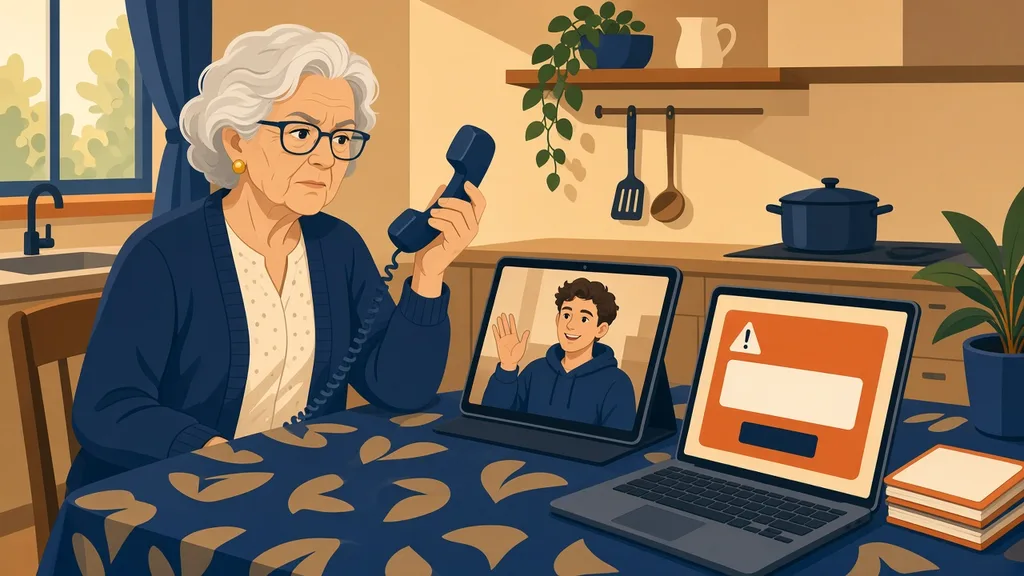
This guide is based on the National Institute on Aging (NIA) page on scams targeting older adults and Medicare.gov's page on reporting fraud. It explains in detail the red flags and where to report. If you think you've been scammed, don't be ashamed; it can happen to anyone.
Common scams aimed at older adults
NIA lists:
- Government impostor scams: someone posing as a Medicare representative asking for account information
- Prize, sweepstakes and lottery scams: you must pay or share account information to "claim" winnings
- Computer tech support scams: a pop-up or caller says your computer has a problem and wants payment to fix it
- The grandparent scam: a caller pretends to be a grandchild or relative in distress

Medicare fraud red flags
Medicare.gov says:
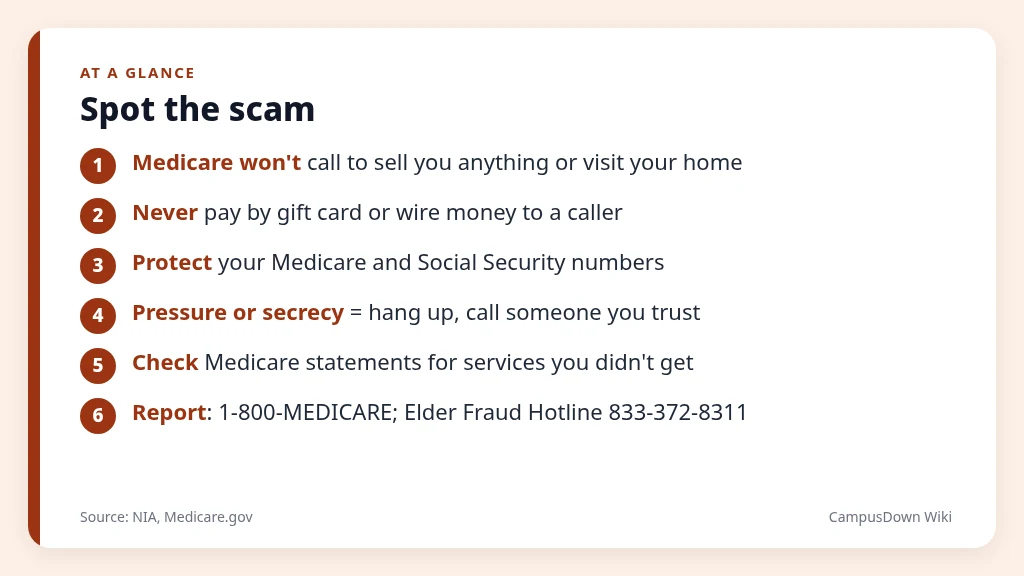
- Medicare will never call you to sell you anything or visit you at your home.
- Medicare calls asking for personal information only in limited situations, such as returning your call.
- Don't give your Medicare or Social Security number to anyone except your doctor or people who should have it, like your insurer or your State Health Insurance Assistance Program (SHIP).
- Don't accept money or gifts for "free" medical care.
- Don't let anyone except your doctor or Medicare providers review your records or recommend services.
- Don't join a health or drug plan over the phone unless you called for help.
If your card is lost or stolen, see replacing your Medicare card. Real home health starts with your own provider's order; see Medicare home health.
How to protect yourself
NIA advises:
- Don't share sensitive information (SSN, bank or card numbers, PINs, passwords) by phone, email, text or social media.
- Check bills and statements for charges you didn't authorize.
- Keep security software updated and use multifactor authentication.
- Never wire money to strangers or pay with gift cards over the phone; once sent, there's usually no way to get it back.
- If someone threatens or pressures you, slow down, hang up and talk to someone you trust.
Medicare.gov also suggests comparing your calendar with Medicare statements and creating a Medicare.gov account to view claims as soon as they're processed.
Get help now if
A real grandchild in trouble can wait five minutes while you call them or their parents on a number you already have. Scammers can't.
Where to report
- Medicare fraud: 1-800-MEDICARE (1-800-633-4227) or online
- Medicare Advantage or drug plan fraud: I-MEDIC at 1-877-7SAFERX (1-877-772-3379)
- National Elder Fraud Hotline: 833-FRAUD-11 (833-372-8311)
- FTC: ReportFraud.ftc.gov
- Your local police or state attorney general
NIA notes scammers target older adults partly because they're less likely to report. Reporting helps others too, so take a closer look at the options above. If a family member is pressuring an older adult for money, see signs of elder abuse.
Example scenario: the call about Caspian
- Who
- Beatrix, 81, a retired kindergarten teacher in Toledo, Ohio, lived alone since her husband died. One evening a sobbing young man called: "Grandma, it's me. I'm in jail. Please don't tell Mom." A second man, claiming to be a lawyer, said she needed to buy gift cards for bail, fast.
- What happened
- The voice sounded close enough to her grandson Caspian, a college student, and the caller knew his name.
- How it felt
- Her heart was pounding; she grabbed her purse and car keys, terrified he'd be hurt.
- What they did
- At the pharmacy, a cashier asked why she was buying so many gift cards and suggested she call Caspian directly. He answered from his dorm, confused and fine. She called the National Elder Fraud Hotline and filed a report with the FTC.
- How it turned out
- She lost nothing. She shared the story at her church's coffee hour, and two other women admitted they'd gotten the same call. Beatrix said she felt foolish for a day, then proud for warning others.
This is an illustrative example, not a real patient or a review.
Beatrix's story is an illustrative example. If you've lost money, report it right away.
Most-asked questions about scams
What are current scams targeting seniors?
NIA lists government and Medicare impostors, prize and lottery scams, tech support scams and grandparent scams.
Why people ask: "current scams targeting seniors" is #7 for "scams targeting seniors" (US autocomplete, November 2026).
What are common financial scams targeting seniors?
Requests to wire money, buy gift cards or share bank details, often with urgency or threats.
Why people ask: "financial scams targeting seniors" is #10 for "scams targeting seniors" (US, November 2026).
How do Medicare scam calls work?
A caller poses as Medicare to get your Medicare number or sell something. Medicare won't call to sell you anything; hang up.
Why people ask: "medicare scams calls" is #3 for "medicare scams" (US, November 2026).
Are calls from Medicare legitimate?
Rarely. Medicare.gov says it calls for personal information only in limited situations, like returning your call.
Why people ask: "are calls from medicare legitimate" is #9 for "medicare scams" (US, November 2026).
What should I know about a grandparent scam alert?
Callers pose as a grandchild in trouble and ask for secrecy and fast payment. Hang up and call your grandchild or family on a known number.
Why people ask: "grandparent scam alert" is #4 for "grandparent scam" (US, November 2026).
What should I do about a tech support scam pop-up?
Don't call the number or pay. NIA says these scams claim your computer has a problem to get payment.
Why people ask: "tech support scam pop up" is #9 for "tech support scam" (US, November 2026).
Related on CampusDown
Isolation makes people more vulnerable; to learn more, read loneliness in older adults. Your yearly Medicare wellness visit happens with your own provider.
Frequently asked questions
- Will Medicare call me about a new card?
- Medicare.gov says Medicare won't call to sell you anything and calls for personal information only in limited situations. Check it for yourself by calling 1-800-MEDICARE.
- Can I get money back from a gift card scam?
- NIA says once you share gift card numbers there's usually no way to get money back. Report it right away anyway.
- Who do I call if I think I was scammed?
- The National Elder Fraud Hotline at 833-372-8311, 1-800-MEDICARE for Medicare fraud, local police or the FTC.
Scammers rely on fear, urgency and secrecy. Slow down, hang up, call someone you trust, guard your Medicare number, check your statements and report fraud.
Browse more guides like this in the Senior Health and Medicare hub.
This article is for general education and does not replace advice from your own doctor, nurse or pharmacist.