
What if the bruises, the unpaid bills, or the "new friend" who's always around aren't what they seem? Elder abuse is more common than most people think, and it's often hidden by the person being hurt. Knowing the signs and who to call can protect someone you love.
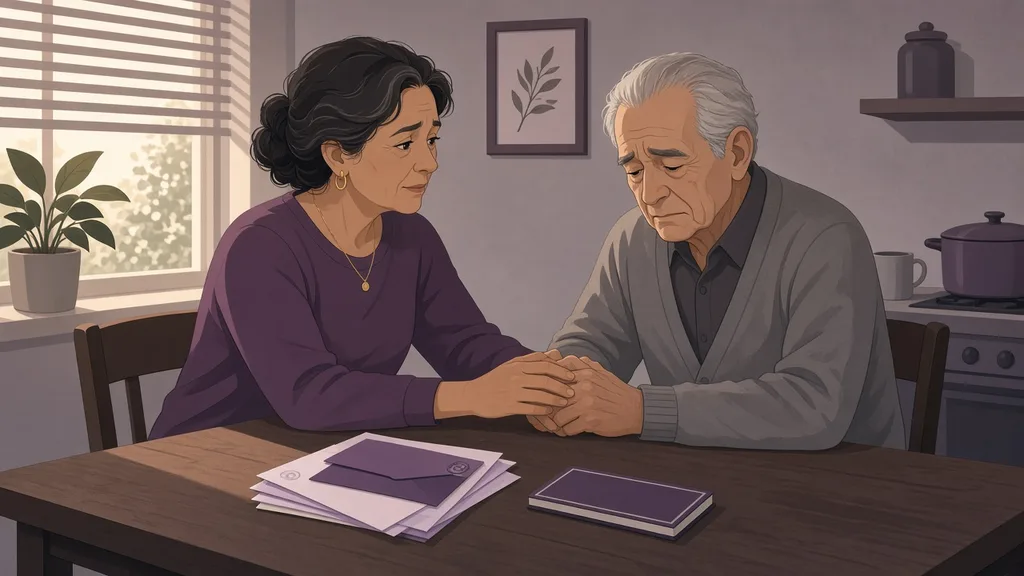
This guide is based on the National Institute on Aging (NIA) page on elder abuse. It explains in detail the types, signs and where to report. If someone is in immediate danger, call 911.
What elder abuse is
NIA says hundreds of thousands of adults over 60 are abused, neglected or financially exploited each year. It can happen at home, in a relative's home, in assisted living or in a nursing home, and the abuser may be a family member, friend, caregiver, health care worker or stranger.

Types of abuse
| Type | Examples (NIA) |
|---|---|
| Physical | Hitting, pushing, slapping; restraining or locking someone in |
| Emotional | Yelling, threats, hurtful words, ignoring, isolating from friends and family |
| Neglect | Not meeting needs; withholding food, medicine or health care |
| Abandonment | Leaving someone who needs help without a plan for care |
| Sexual | Forcing an older adult to watch or take part in sexual acts |
| Financial | Forged checks, taking benefits, using cards without permission, changing a will, account or deed |
NIA also describes financial neglect (ignoring bills, rent or taxes), financial exploitation through pressure or deception, and health care fraud like billing for care never given. For scams by strangers, see elder scams and Medicare fraud.
Who is most at risk
Most victims are women, but men are abused too. People who are isolated, have disabilities, memory problems or dementia, or depend on others for bathing, dressing and medicines are more vulnerable.
Warning signs
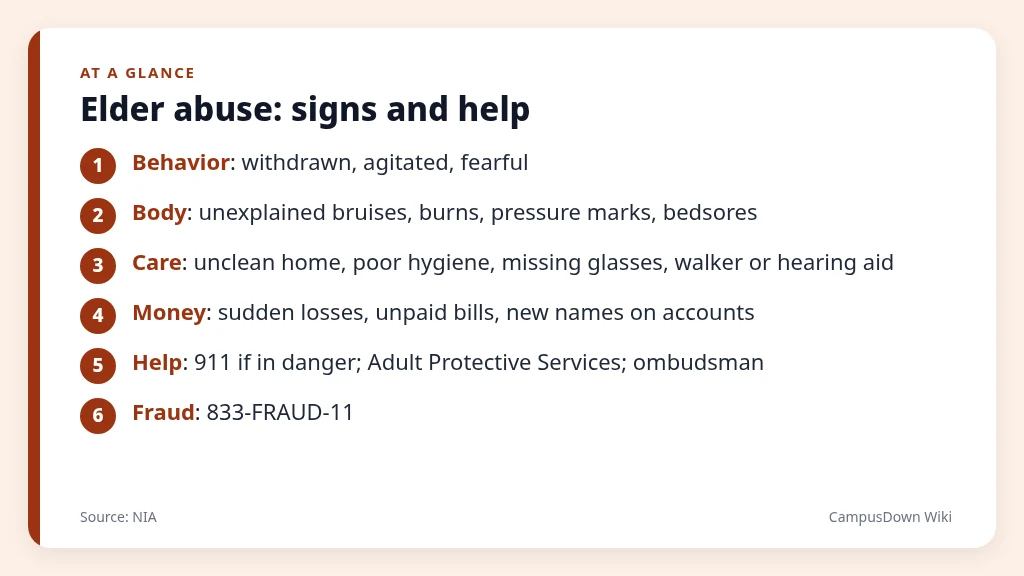
NIA says an older person may be a victim if they:
- Become withdrawn, agitated or violent, or show signs of trauma like rocking
- Have unexplained bruises, burns, cuts, scars or pressure marks
- Develop preventable problems like bedsores; see pressure sores
- Live in unsafe or unclean conditions
- Look unkempt: unwashed hair, dirty clothes, poor dental care
- Are missing glasses, a walker, dentures or hearing aids
- Have sudden financial losses or unpaid bills despite enough money
Watch for patterns, and seek help if you're worried.
Get help now if
You don't have to prove abuse to report it. NIA says professionals will investigate. If someone is in immediate danger, call 911.
How to help
- Talk privately: say you're worried, and offer to go with them to get help.
- Report what you see. Many older adults are too ashamed or afraid to report it themselves. Most states require doctors and lawyers to report.
- From far away: ask a neighbor to drop by unannounced, stay in regular contact, and talk to their doctor, home health agency or a geriatric care manager.
- In facilities, compare quality data in nursing home star ratings.
Who to call
- 911 for immediate danger
- Adult Protective Services (APS) in your state; the National Adult Protective Services Association lists state numbers (202-370-6292)
- National Center on Elder Abuse: 855-500-3537
- Long-term care ombudsman for nursing homes and assisted living (202-332-2275)
- National Elder Fraud Hotline: 833-FRAUD-11 (833-372-8311)
- Eldercare Locator: 800-677-1116
When caregiver stress is part of the problem
NIA notes a stressed caregiver may not realize they're becoming neglectful. If you're a caregiver who feels at the edge, take a closer look at caregiver burnout and respite care and ask for help now.
Example scenario: the new friend
- Who
- Lucinda, 58, a middle school counselor in Albuquerque, called her father, Evander, 83, every Sunday. A widower with early memory problems, he'd recently mentioned a "nice young man" from church who helped with errands.
- What happened
- On a visit, she found unopened past-due notices, a car loan in her father's name for a truck she'd never seen, and thousands of dollars in checks to the helper. Evander had also stopped wearing his hearing aids, saying they were "lost."
- How it felt
- Lucinda was furious and heartbroken, and Evander was ashamed, begging her not to "get the boy in trouble."
- What they did
- She talked with him alone, reassured him it wasn't his fault, and called Adult Protective Services and the bank's fraud team. An APS caseworker visited, and the family met with an elder law attorney about a financial power of attorney.
- How it turned out
- The bank froze the account and police opened a case. Evander got new hearing aids and joined a senior center lunch group. Lucinda said reporting felt like betraying him, but it gave him back his safety.
This is an illustrative example, not a real patient or a review.
Lucinda's story is an illustrative example. If you suspect abuse, report it.
Most-asked questions about elder abuse
What are the signs and symptoms of elder abuse?
Withdrawal or agitation, unexplained injuries, bedsores, unsafe or unclean conditions, poor hygiene, missing aids like glasses, and sudden money problems.
Why people ask: "elder abuse signs and symptoms" is #2 for "elder abuse signs" (US autocomplete, November 2026).
What are the types of elder abuse?
Physical, emotional, sexual and financial abuse, neglect and abandonment.
Why people ask: "elder abuse signs and types" is #4 for "elder abuse signs" (US, November 2026).
What are the signs of elder financial abuse?
Sudden losses, unpaid bills despite enough money, new names on accounts or deeds, unusual checks or withdrawals, and missing belongings.
Why people ask: "elder financial abuse signs" is #5 for "elder abuse signs" (US, November 2026).
Is there an elder abuse hotline?
Call 911 for danger. Otherwise contact Adult Protective Services, the National Center on Elder Abuse (855-500-3537) or the National Elder Fraud Hotline (833-372-8311).
Why people ask: "elder abuse hotline" is #2 for "elder abuse" (US, November 2026).
Can family members commit elder financial abuse?
Yes. NIA says abusers can be family members, friends, caregivers or strangers.
Why people ask: "elder financial abuse by family members" is #7 for "elder financial abuse" (US, November 2026).
Related on CampusDown
To learn more about scams that target older adults, read elder scams and Medicare fraud.
Frequently asked questions
- Do I need proof to report elder abuse?
- No. NIA says you don't need to prove it; professionals will investigate.
- What if my parent doesn't want me to report?
- Many victims feel ashamed or afraid. Reassure them, and still contact APS or 911 if they're at risk.
- Who handles nursing home complaints?
- A long-term care ombudsman advocates for residents, and APS or state agencies can investigate.
Elder abuse thrives on silence. Learn the signs, talk privately, report concerns to APS or 911, and support caregivers before stress turns into neglect.
Browse more guides like this in the Senior Health and Medicare hub.
This article is for general education and does not replace advice from your own doctor, nurse or pharmacist.