
Where did you put your glasses this time? Slower recall and the occasional lost set of keys are common as we age. The good news: a few habits and simple tools can make daily life smoother, and they're easy to start today.
This guide is based on the National Institute on Aging (NIA) page on memory problems, forgetfulness and aging. It covers in detail which tips help and when forgetfulness deserves a doctor's visit. Talk to your doctor if you notice memory changes.
What's normal forgetfulness?
NIA says many older adults don't remember information as well or as quickly as they once did. Occasionally misplacing things or forgetting to pay a bill is usually mild, age-related forgetfulness, not a serious problem.
| Normal aging | Possible dementia |
|---|---|
| A bad decision once in a while | Poor judgment much of the time |
| Missing a monthly payment | Problems handling monthly bills |
| Forgetting the day, remembering later | Losing track of the date or season |
| Sometimes forgetting a word | Trouble having a conversation |
| Losing things from time to time | Misplacing things often and can't find them |
Source: NIA. To learn more, see early signs of dementia and mild cognitive impairment.

NIA's tips for forgetfulness
- Learn a new skill.
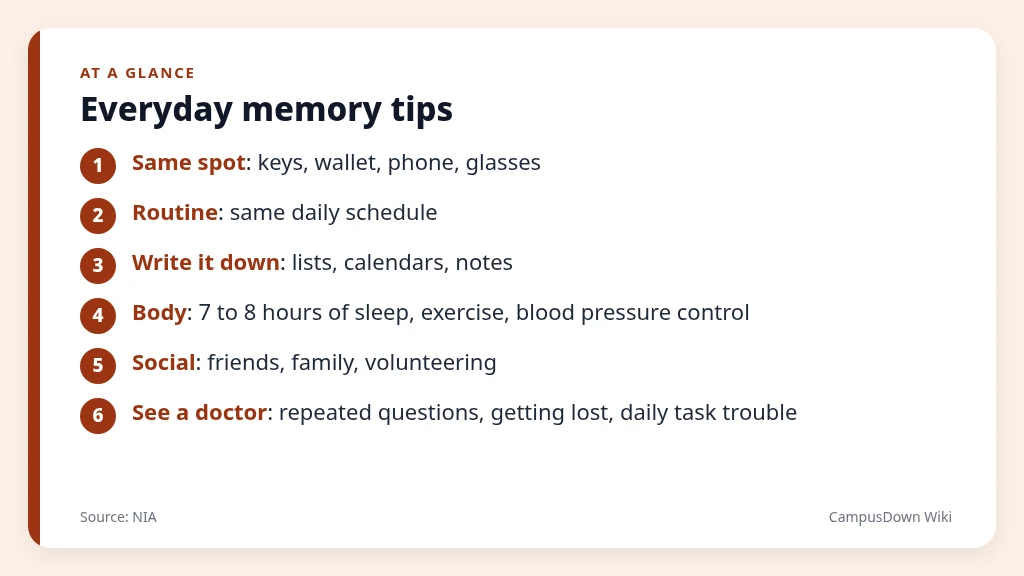
- Follow a daily routine.
- Plan tasks, make to-do lists and use calendars and notes.
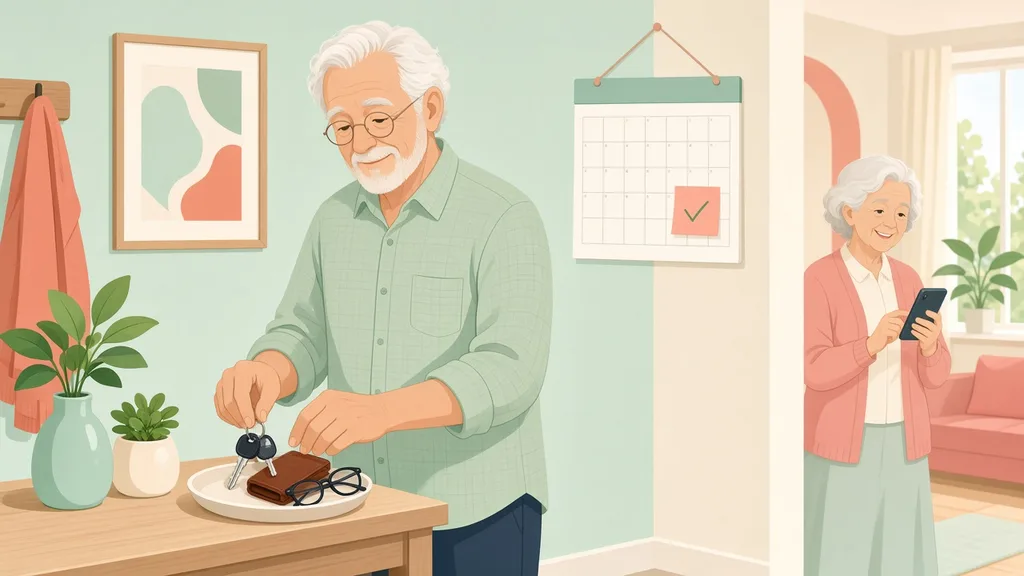
- Keep your wallet or purse, keys, phone and glasses in the same place each day.
- Stay involved in activities that help mind and body; volunteer.
- Spend time with friends and family.
- Sleep seven to eight hours a night.
- Exercise and eat well.
- Prevent or control high blood pressure.
- Avoid or limit alcohol.
- Get help if you feel depressed for weeks at a time.
Memory aid tools that support these habits
These everyday tools put NIA's "write it down" and "same place" advice into practice:
- Wall calendar or whiteboard by the kitchen for appointments.
- Phone reminders: the iPhone Reminders app or Google Calendar on Android can alert you at a set time.
- Smart speakers: an Amazon Echo can set spoken reminders ("Alexa, remind me...").
- Item trackers: Apple AirTag or Tile attached to keys or a wallet can help find them with a phone app; AirTag can play a sound through the Find My app on iPhone.
- Pill organizers or automatic dispensers: see pill organizer tips and the Hero pill dispenser.
- A "launch pad" dish or hook by the door.
Choose one or two tools and build them into your routine; too many gadgets can add confusion.
What else can affect memory?
NIA lists causes beyond aging, many treatable:
- Medication side effects; see anticholinergic drugs and memory
- Depression, anxiety or stress, including grief; see grief after losing a spouse
- Sleep problems
- Thyroid, kidney or liver problems
- Low vitamin B12; see B12 in older adults
- Alcohol or drug misuse, head injury, poor nutrition
NIA says memory problems from stress usually improve as the stress fades; if they persist after a few weeks, talk with your doctor.
Get help now if
Sudden confusion over hours or days is not normal forgetfulness. It can signal infection, a medicine problem or delirium. Call a doctor right away.
When to see a doctor
NIA signs include:
- Asking the same questions over and over
- Getting lost in familiar places
- Trouble following recipes or directions
- More confusion about time, people and places
- Not taking care of yourself: eating poorly, not bathing or acting unsafely
Example scenario: the dish by the door
- Who
- Torvald, 74, a retired ferry mechanic in Bellingham, Washington, kept losing his keys and once missed his cardiology appointment. His wife, Antonia, 71, was tired of the morning searches.
- What happened
- He was sure it was the start of Alzheimer's, like his older brother.
- How it felt
- The fear made him snap at Antonia and stop playing cards with friends, which made everything worse.
- What they did
- Antonia nudged him to see his doctor, who reviewed his medicines and asked about sleep and mood. His tests were normal for his age. He started using a dish by the door, a Tile on his key ring, phone reminders for appointments and a kitchen whiteboard, and went back to card night.
- How it turned out
- The morning searches mostly stopped, and he hasn't missed an appointment since. He said the relief of hearing "this is normal aging" mattered as much as the tools.
This is an illustrative example, not a real patient or a review.
Torvald's story is an illustrative example. Ask your doctor about any memory worries.
Most-asked questions about memory aids
What are the best memory tools for elderly people?
Simple ones you'll use daily: a calendar, lists, a set spot for items, phone or smart speaker reminders, item trackers and pill organizers.
Why people ask: "memory tools for elderly" is #3 for "memory aids for elderly" (US autocomplete, November 2026).
What are the best memory aids for elderly adults?
The best aid fits your routine. NIA emphasizes routines, lists, calendars and keeping items in the same place.
Why people ask: "best memory aids for elderly" is #4 for "memory aids for elderly" (US, November 2026).
What are good memory tips for seniors?
NIA suggests a daily routine, lists, learning new skills, social time, sleep, exercise, blood pressure control and limiting alcohol.
Why people ask: "memory tips for seniors" is #6 for "memory aids for elderly" (US, November 2026).
Are there memory aid devices for elderly people?
Yes: phone reminder apps, smart speakers, item trackers like AirTag or Tile, and automatic pill dispensers.
Why people ask: "memory aid devices for elderly" is #4 for "memory help for elderly" (US, November 2026).
What can seniors do to improve memory?
Stay active, social and well-rested, control blood pressure, and get checked for treatable causes like medicine effects, depression or low B12.
Why people ask: "what can seniors do to improve memory" is #6 for "memory help for elderly" (US, November 2026).
Related on CampusDown
To take a closer look at the difference between MCI and dementia, read mild cognitive impairment.
Frequently asked questions
- Is forgetting names normal as I age?
- Often, yes. NIA says sometimes forgetting a word or name is normal; trouble having conversations is not.
- How much sleep helps memory?
- NIA suggests generally seven to eight hours a night.
- Can medicines cause memory problems?
- Yes. NIA lists medication side effects; check it for yourself with a brown-bag review with your pharmacist.
Forgetfulness is common with age. Routines, lists, a set spot for items and a reminder tool or two can help. If memory changes affect daily life, see your doctor.
Browse more guides like this in the Senior Health and Medicare hub.
This article is for general education and does not replace advice from your own doctor, nurse or pharmacist.