
You laugh at a friend's joke and feel a little leak. You cross your arms and avoid jumping on the trampoline with your kids. Is this just something you have to live with?

This guide uses the MedlinePlus encyclopedia article "Urinary incontinence" (reviewed October 1, 2024) and the MedlinePlus article on pelvic floor muscle training exercises (reviewed October 1, 2024). It is general information, not a diagnosis; your provider finds the cause and the right treatment. If you want to learn more about hormone changes that may affect the bladder, take a closer look at menopause.
What urinary incontinence is
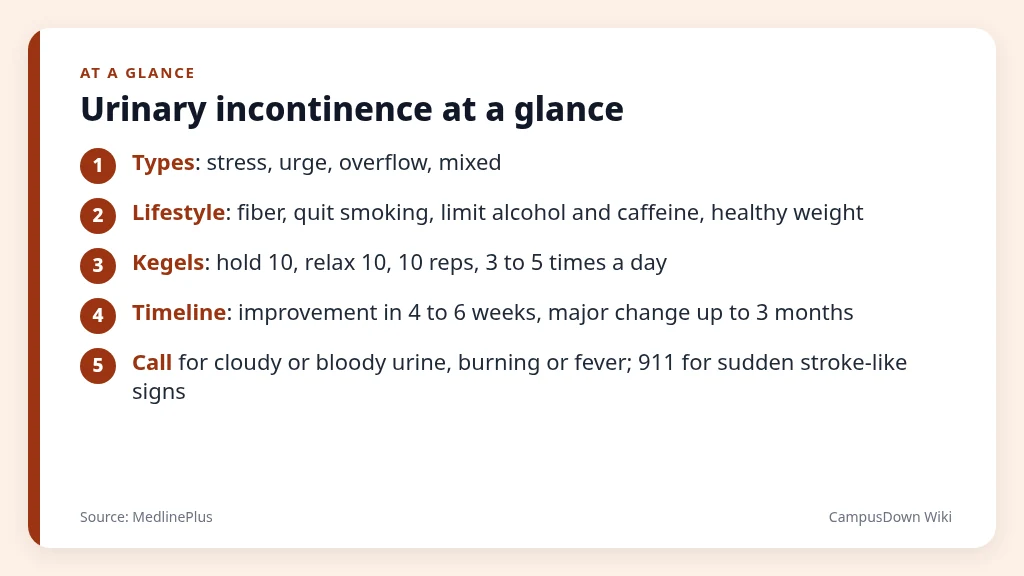
MedlinePlus says urinary incontinence occurs when you are not able to keep urine from leaking out of your urethra. You may leak from time to time, or not be able to hold any urine. The main types:
- Stress incontinence: leaking during activities like coughing, sneezing, laughing or exercise.
- Urge incontinence: a strong, sudden need to urinate; the bladder squeezes and urine leaks before you reach the bathroom.
- Overflow incontinence: the bladder does not empty and the volume exceeds its capacity, leading to dribbling.
- Mixed incontinence: more than one type, usually stress and urge.

Causes
MedlinePlus lists weakness of the pelvic or urethral muscles, brain or nerve problems, blockage or other problems in the urinary system, diabetes, an enlarged prostate in men, and certain medicines. Sudden or temporary causes include bedrest after surgery, certain medicines (such as diuretics, antidepressants, tranquilizers, some cough and cold remedies and antihistamines), mental confusion, pregnancy, prostate infection or inflammation, stool impaction from severe constipation, urinary tract infection and weight gain. Longer-term causes include Alzheimer disease, bladder spasms, nervous system conditions such as multiple sclerosis or stroke, nerve or muscle damage after pelvic radiation, pelvic prolapse in women (which may be caused by pregnancy and delivery) and weakness of the urinary sphincter that can follow prostate surgery in men or surgery to the vagina in women. Ask your provider to review your medicines; see furosemide for a water pill that can affect urination, and constipation in older adults and cystitis.
Lifestyle steps
MedlinePlus says to:
- Keep bowel movements regular and add fiber.
- Quit smoking to reduce coughing and bladder irritation.
- Avoid alcohol and caffeinated drinks such as coffee, which can stimulate your bladder (see alcohol and aging).
- Lose weight if you need to.
- Avoid spicy foods, carbonated drinks and citrus fruits and juices if they irritate your bladder.
- Keep blood sugar under good control if you have diabetes.
- Wear absorbent pads or undergarments for leaks.
Bladder training and Kegel exercises
Bladder retraining helps you gain better control, and Kegel exercises strengthen the pelvic floor muscles. MedlinePlus says many women do not do these exercises correctly, so your provider can show you how.
- Empty your bladder first.
2. Tighten the pelvic floor muscles and hold for a count of 10. 3. Relax completely for a count of 10. 4. Do 10 repetitions, 3 to 5 times a day. Most people notice some improvement after 4 to 6 weeks, and it may take as long as 3 months to see a major change. Don't make a habit of stopping your urine stream mid-flow; use it only to find the right muscles. Over-exercising can cause muscle fatigue and increase leakage, and discomfort in the abdomen or back usually means you're doing them wrong; keep your belly, buttock and thigh muscles relaxed. Biofeedback and physical therapists trained in pelvic floor training can help, and a woman can also use a weighted vaginal cone.
Medical treatments
MedlinePlus says depending on the type, your provider may prescribe one or more medicines that help prevent bladder muscle spasms, relax the bladder and improve bladder function, and will help you manage side effects. Other options include bladder nerve stimulation (electrical pulses to reprogram bladder reflexes), Botox (onabotulinum A toxin) injections for urge incontinence, surgery if other treatments do not work or symptoms are severe and a urinary catheter for overflow incontinence or incomplete emptying. Which treatment you get depends on the cause and type. For older adults, see the senior health hub.
Get help now if
Call 911 or go to an emergency room if you suddenly lose control over urine and also have difficulty talking, walking or speaking, sudden weakness, numbness or tingling in an arm or leg, loss of vision, loss of consciousness or confusion, or loss of bowel control.
When to call your provider
MedlinePlus says to contact your provider for cloudy or bloody urine, dribbling, a frequent or urgent need to urinate, pain or burning when you urinate, trouble starting your stream or fever. Gynecologists and urologists treat incontinence. See blood in the urine.
Questions for your provider
- Which type do I have, and what caused it?
- Could any of my medicines be making it worse?
- Can you show me how to do pelvic floor exercises correctly, or refer me to a pelvic floor physical therapist?
- When would we consider a medicine, a procedure or surgery?
- Which products help with leaks while I work on treatment?
Example scenario: the trampoline
- Who
- Rhoda, 47, a dental hygienist in Columbus, Ohio, leaked a little whenever she laughed hard or sneezed.
- What happened
- She stopped joining her kids at the trampoline park and felt embarrassed and alone.
- How it felt
- She worried it meant something serious and that she would need surgery.
- What they did
- Her provider reviewed her medicines, checked for infection and showed her how to do pelvic floor exercises, and Rhoda practiced three times a day while she tracked her progress. She also cut back on coffee. Rhoda stayed in touch with her provider about her progress.
- How it turned out
- Rhoda said just saying the word "leak" out loud to a professional helped her feel less ashamed.
This is an illustrative example, not a real patient or a review.
Rhoda's story is an illustrative example. Talk with your provider about leaking urine; it is common and treatable options exist.
Most-asked questions about urinary incontinence treatment
What is the treatment for urinary incontinence in elderly men?
MedlinePlus lists lifestyle changes, bladder training, medicines, procedures and surgery, and notes an enlarged prostate as a cause in men; the best option depends on the cause.
Why people ask: "urinary incontinence treatment for elderly male" is #2 for "urinary incontinence treatment" (US autocomplete, November 2026).
What is the treatment for urinary incontinence in the elderly?
The same options apply; check medicines, constipation and infection as causes, and see your provider for tests and a plan.
Why people ask: "urinary incontinence treatment for elderly" is #3 for "urinary incontinence treatment" (US autocomplete, November 2026).
What is the treatment for urinary incontinence in women?
Lifestyle changes, bladder training, pelvic floor exercises, medicines, nerve stimulation, Botox, catheters and surgery depending on type and cause.
Why people ask: "urinary incontinence treatment for women" is #4 for "urinary incontinence treatment" (US autocomplete, November 2026).
What is the treatment for urinary incontinence in elderly women?
The same options; pelvic prolapse, medicines, constipation and infection are listed causes to check.
Why people ask: "urinary incontinence treatment for elderly female" is #6 for "urinary incontinence treatment" (US autocomplete, November 2026).
What is the treatment for urinary incontinence in men?
Pelvic floor exercises are recommended for men with stress incontinence, most often after prostate surgery; other treatments depend on the cause.
Why people ask: "urinary incontinence treatment for men" is #7 for "urinary incontinence treatment" (US autocomplete, November 2026).
Is there medication for urinary incontinence treatment?
Yes; MedlinePlus says providers may prescribe medicines that prevent bladder spasms, relax the bladder and improve bladder function, depending on the type.
Why people ask: "urinary incontinence treatment medication" is #8 for "urinary incontinence treatment" (US autocomplete, November 2026).
What is the treatment for female urinary incontinence?
Lifestyle steps, bladder training, Kegel exercises, medicines, nerve stimulation, Botox for urge incontinence, catheters for overflow and surgery.
Why people ask: "urinary incontinence treatment female" is #10 for "urinary incontinence treatment" (US autocomplete, November 2026).
Is there a list of urinary incontinence medications?
MedlinePlus describes what the medicines do but doesn't name specific drugs, so ask your provider or pharmacist which ones fit your type.
Why people ask: "urinary incontinence medications list" is #2 for "urinary incontinence medication" (US autocomplete, November 2026).
What medication helps urinary incontinence in women?
The encyclopedia article doesn't name drugs; your provider chooses based on your type and cause.
Why people ask: "urinary incontinence medication for women" is #3 for "urinary incontinence medication" (US autocomplete, November 2026).
What medication helps urinary incontinence in men?
The article doesn't name drugs; it lists an enlarged prostate as a cause in men, so discuss it with your provider.
Why people ask: "urinary incontinence medication for men" is #5 for "urinary incontinence medication" (US autocomplete, November 2026).
What are the side effects of urinary incontinence medication?
MedlinePlus says your provider can help you learn how to take these medicines and manage side effects; ask your pharmacist about yours.
Why people ask: "urinary incontinence medication side effects" is #6 for "urinary incontinence medication" (US autocomplete, November 2026).
Is oxybutynin used for urinary incontinence?
The MedlinePlus encyclopedia article doesn't name specific drugs; ask your provider or pharmacist about any medicine you are prescribed.
Why people ask: "urinary incontinence medication oxybutynin" is #8 for "urinary incontinence medication" (US autocomplete, November 2026).
What medication is used for urinary incontinence in the elderly?
The page doesn't name drugs or give age-specific advice; certain medicines can also cause incontinence, so ask for a medicine review.
Why people ask: "urinary incontinence medication for elderly" is #9 for "urinary incontinence medication" (US autocomplete, November 2026).
Is there medicine for urinary incontinence?
Yes, depending on type; the medicines help prevent spasms, relax the bladder and improve function.
Why people ask: "is there medicine for urinary incontinence" is #10 for "urinary incontinence medication" (US autocomplete, November 2026).
Related on CampusDown
You can learn more about the health topics hub and check it for yourself in blood in the urine. For hormone changes in detail, see menopause, and for bowel habits that affect the bladder see constipation in older adults.
Frequently asked questions
- What are the types of urinary incontinence?
- Stress, urge, overflow and mixed.
- How do I do Kegel exercises?
- Empty your bladder, squeeze for a count of 10, relax for 10, repeat 10 times, 3 to 5 times a day.
- How long do Kegels take to work?
- Most people notice some improvement after 4 to 6 weeks, and a major change may take up to 3 months.
- Are there medicines for it?
- Yes, depending on the type; your provider chooses.
- When should I call a provider?
- For cloudy or bloody urine, burning, fever, dribbling or trouble starting your stream; call 911 for sudden stroke-like signs.
Urinary incontinence is common and has several causes and treatments, from fiber, fluids and Kegels to medicines, nerve stimulation and surgery. Talk with your provider, review your medicines and give pelvic floor exercises 4 to 6 weeks, and get emergency help for sudden loss of control with stroke-like signs.
Browse more guides like this in the Senior Health and Medicare hub.
This article is for general education and does not replace advice from your own doctor, nurse or pharmacist.