
You ate a burger at dinner, felt fine, and woke up at 2 a.m. covered in hives with a terrible stomachache. A few weeks earlier you'd pulled a tick off your leg. Could they be connected?

They might be. Alpha-gal syndrome (AGS) is an unusual allergy because the reaction comes hours after eating, which hides the cause. This guide uses three CDC pages on alpha-gal syndrome (the CDC's overview updated January 2026). It is general information, not a diagnosis; a clinician or allergist makes the diagnosis and builds your plan. If you want to learn more about breathing emergencies, take a closer look at asthma attack signs.
What it is
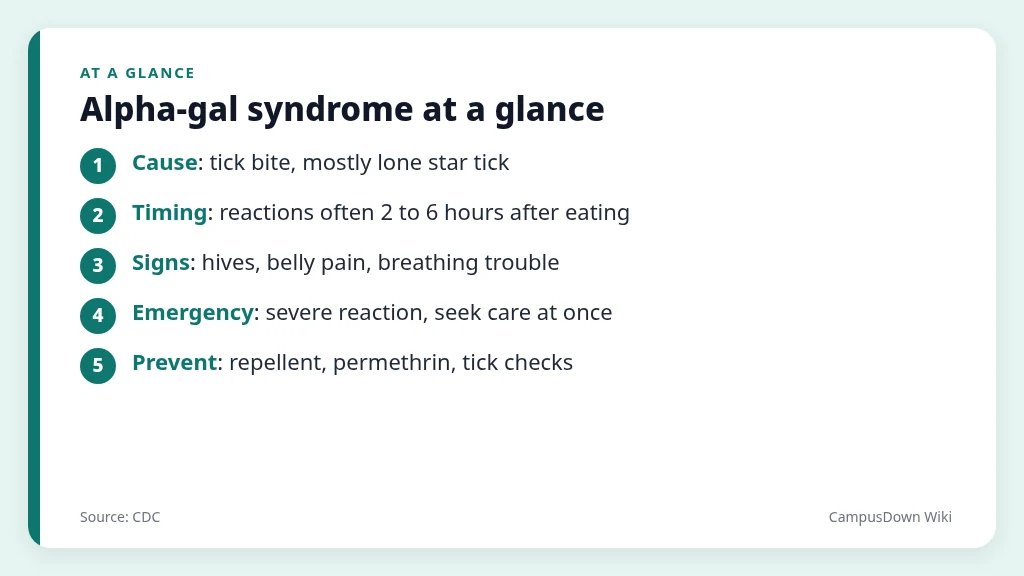
The CDC describes alpha-gal syndrome as a serious, potentially life-threatening allergy and tickborne disease. Alpha-gal is a sugar molecule made by most mammals, such as cows and pigs, but not by people, and it is also found in the saliva of some ticks. When a tick bites, it can pass alpha-gal into the blood, and the immune system may treat it as a threat. After that, symptoms occur after people eat red meat or are exposed to other products made from mammals, which is why AGS is also called red meat allergy or tick bite meat allergy.

Ticks and who is affected
In the US, the CDC says AGS is most often associated with the lone star tick, and a few cases have followed bites from blacklegged and western blacklegged ticks. Most reported cases are in the South, East and Central states where lone star ticks are found. Most cases have been reported in adults, but people of all ages can develop AGS. The CDC says more than 110,000 suspected cases were identified between 2010 and 2022, that the true number is unknown, and that as many as 450,000 people may be affected. Hunters, who spend more time outdoors, are at heightened risk. Not everyone bitten develops AGS, and the reason is not known.
Symptoms and timing
The CDC says symptoms usually appear 2 to 6 hours after eating red meat or dairy, and may also follow products containing alpha-gal such as gelatin-coated medicines. It also says it can take weeks to months after a tick bite for symptoms to start, that reactions range from mild to severe and that they can differ from person to person and from one exposure to the next. Reactions can include:
- Hives or an itchy rash
- Nausea or vomiting
- Severe stomach pain, heartburn or indigestion
- Diarrhea
- Cough, shortness of breath or difficulty breathing
- A drop in blood pressure
- Swelling of the lips, throat, tongue or eyelids
- Dizziness or faintness
- Anaphylaxis, a combination of these affecting several body systems
Get help now if
Seek immediate emergency care for a severe allergic reaction or anaphylaxis: trouble breathing, swelling of the lips or throat, faintness or a combination of symptoms. If you have been prescribed epinephrine, use it as your clinician taught you, and still seek emergency care, as the CDC advises.
Diagnosis
The CDC says a provider diagnoses AGS with a physical exam, a detailed history and a blood test for antibodies your body makes in response to alpha-gal, and may add allergy skin testing for reactions to foods such as pork and beef. If you suspect AGS, talk to your healthcare provider about a plan before your next meal that might trigger a reaction. A timeline of what you ate and when you reacted, plus any tick bites, helps.
What people are told to avoid
The CDC says most providers recommend people with AGS stop eating meat from mammals, such as beef, pork, lamb, venison or rabbit. Some people also need to avoid dairy, gelatin and other products made or cooked with mammal fat, and certain medicines and non-food products. The CDC stresses that people with AGS might not react to every product containing alpha-gal, so work with your provider or allergist to learn which products you should avoid, read food labels carefully, and talk to your provider before taking a new medicine or receiving a vaccine, since a few people with severe AGS may react to ingredients in certain ones. Ask your pharmacist about capsule and tablet ingredients, and bring everything you take to a brown bag medication review. For general medicine questions, see the medicines hub, amoxicillin and acetaminophen.
Managing and how long it lasts
The CDC says AGS should be managed with an allergist or other provider: avoid alpha-gal products, read labels, prevent future tick bites because new bites may reactivate reactions, and learn to recognize anaphylaxis and prepare for a reaction. It also says some people who avoid additional tick bites may be able to tolerate alpha-gal products again, and that this is an individualized medical decision to make with your provider. There are no vaccines to prevent AGS.
Preventing tick bites
The CDC says to:
- use EPA-registered insect repellent with DEET, picaridin, IR3535, oil of lemon eucalyptus, para-menthane-diol or 2-undecanone
- wear clothing and gear treated with 0.5% permethrin
- shower and check your body for ticks after coming indoors
Questions for your clinician or allergist
- Could my symptoms be alpha-gal syndrome, and which test do you recommend?
- Which foods, medicines and other products should I avoid?
- Do I need an epinephrine prescription and a written action plan?
- Should I carry medical identification?
- How will we decide if I can try foods again?
Example scenario: the 2 a.m. hives
- Who
- Octavia, 41, a surveyor in Knoxville, Tennessee, woke twice in one month with hives and cramping several hours after a steak dinner.
- What happened
- She also remembered pulling off a tick weeks earlier.
- How it felt
- She felt confused and alarmed because no meal had ever bothered her before.
- What they did
- She kept a food and symptom diary, saw an allergist, and got tested and a plan, including what to do if a reaction started. She started checking labels and treating her work clothes with permethrin.
- How it turned out
- Octavia said having a plan turned her fear into a checklist.
This is an illustrative example, not a real patient or a review.
Octavia's story is an illustrative example. A clinician or allergist should guide diagnosis and treatment.
Most-asked questions about alpha-gal syndrome
What are the symptoms of alpha-gal syndrome?
Hives, stomach pain, nausea, diarrhea, breathing trouble, swelling, dizziness and anaphylaxis, usually 2 to 6 hours after exposure, per the CDC.
Why people ask: "alpha gal syndrome symptoms" is #2 for "alpha gal syndrome" (US autocomplete, November 2026).
What is the treatment for alpha-gal syndrome?
The CDC says management is avoiding alpha-gal products, preventing tick bites and getting urgent care for reactions, with a plan from your provider.
Why people ask: "alpha gal syndrome treatment" is #4 for "alpha gal syndrome" (US autocomplete, November 2026).
How is alpha-gal syndrome tested?
A physical exam, history and an antibody blood test, with allergy skin testing as a possible addition.
Why people ask: "alpha gal syndrome testing" is #5 for "alpha gal syndrome" (US autocomplete, November 2026).
Which foods should I avoid with alpha-gal syndrome?
Most providers recommend avoiding mammal meat; some people also avoid dairy, gelatin and other products made with mammal fat; your provider will tailor the list.
Why people ask: "alpha gal syndrome foods to avoid" is #8 for "alpha gal syndrome" (US autocomplete, November 2026).
How long does alpha-gal syndrome last?
The CDC says some people who avoid new tick bites may tolerate alpha-gal products again; it is an individual decision with your provider.
Why people ask: "alpha gal syndrome how long does it last" is #10 for "alpha gal syndrome" (US autocomplete, November 2026).
Do symptoms start after a tick bite?
It can take weeks to months after a tick bite for symptoms to begin, per the CDC.
Why people ask: "alpha gal syndrome symptoms after tick bite" is #2 for "alpha gal syndrome symptoms" (US autocomplete, November 2026).
Can children have alpha-gal syndrome?
Most reported cases are in adults, but the CDC says people of all ages can develop it.
Why people ask: "alpha gal syndrome symptoms in kids" is #4 for "alpha gal syndrome symptoms" (US autocomplete, November 2026).
Do symptoms start after eating red meat?
Usually 2 to 6 hours afterward, according to the CDC.
Why people ask: "alpha gal syndrome symptoms after eating red meat" is #7 for "alpha gal syndrome symptoms" (US autocomplete, November 2026).
Is a rash a symptom?
Hives or an itchy rash are common symptoms, per the CDC.
Why people ask: "alpha gal syndrome symptoms rash" is #9 for "alpha gal syndrome symptoms" (US autocomplete, November 2026).
Related on CampusDown
You can learn more about the health topics hub and check it for yourself in the brown bag medication review. For allergic breathing emergencies in detail, see asthma attack signs.
Frequently asked questions
- What causes alpha-gal syndrome?
- A tick bite, most often from a lone star tick in the US, per the CDC.
- How soon do symptoms start after eating?
- Usually 2 to 6 hours, which can hide the cause.
- Can I prevent it?
- Preventing tick bites is the best protection; there is no vaccine.
- When is it an emergency?
- With severe symptoms or anaphylaxis; seek emergency care right away.
- Is it only red meat?
- No; dairy, gelatin and other mammal products can also matter for some people.
Alpha-gal syndrome is a delayed allergy tied to tick bites. Keep a timeline, see an allergist, avoid new tick bites and treat severe reactions as emergencies.
Browse more guides like this in the U.S. Health Topics hub.
This article is for general education and does not replace advice from your own doctor, nurse or pharmacist.