
You slipped on the ice, hit your head, laughed it off and felt fine. Then at 2 a.m. you wake up with a pounding headache. Was that just a bump, or something to worry about?
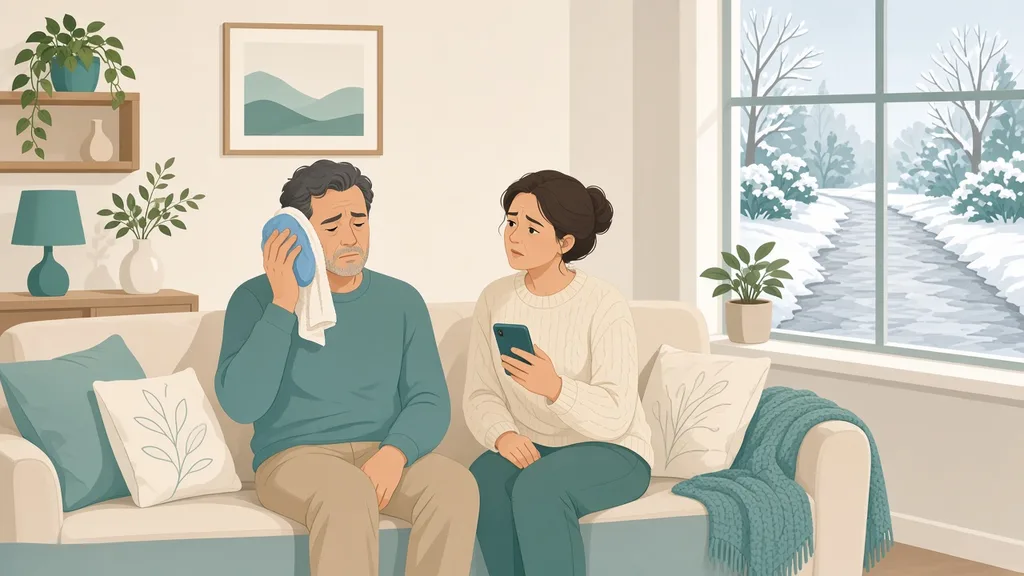
This guide uses MedlinePlus pages on concussion, traumatic brain injury (reviewed October 2025) and head injury first aid (reviewed October 2025). It is general information, not a diagnosis or a substitute for urgent care. If you want to learn more about how clinicians check brain function, take a closer look at the Glasgow Coma Scale.
What a concussion is
MedlinePlus says a concussion is a type of brain injury caused by a hit to the head or body, and causes include sports, falls, being shaken and car accidents. The traumatic brain injury (TBI) page adds that most people with a mild TBI never pass out.

Symptoms
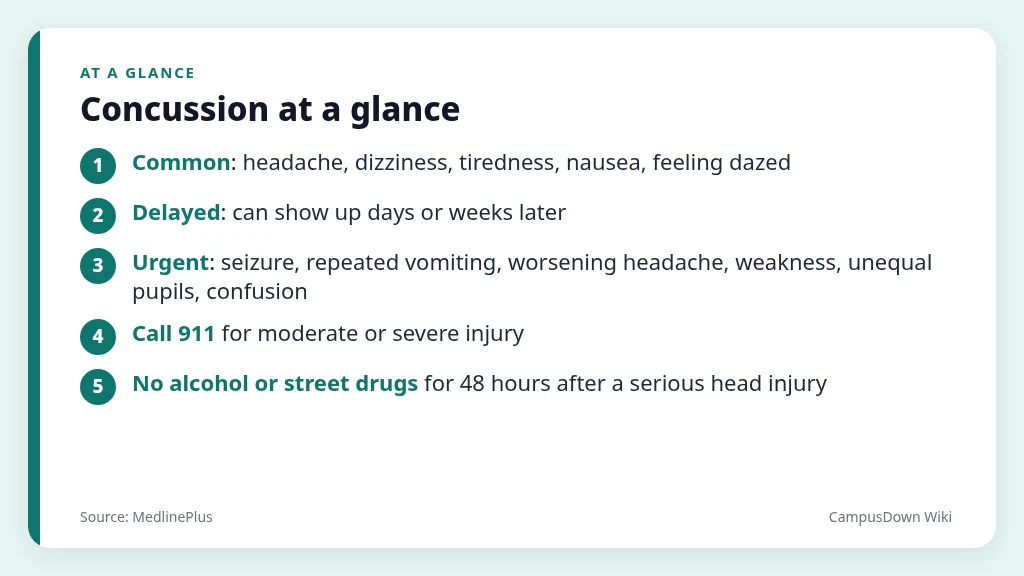
MedlinePlus says concussion symptoms may not start right away and can show up days or weeks later. They can include headache or neck pain, nausea, ringing in the ears, dizziness, tiredness and feeling dazed. The TBI page also lists confusion, trouble concentrating, drowsiness or being hard to wake, memory loss of the event, vomiting, flashing lights or sensitivity to light, "lost time" and sleep changes.
Get help now if
Call 911 for a moderate or severe head injury. Get urgent help right away for a seizure, being very sleepy or hard to wake, repeated vomiting, a headache that gets worse and doesn't go away, weakness, numbness or poor coordination, slurred speech or nonsense speech, confusion that doesn't go away, unequal pupils, symptoms in one eye, trouble walking or balance, or loss of consciousness, even briefly.
First aid (MedlinePlus)
- Don't move the person unless necessary, because of a possible neck or spine injury.
- Put an ice pack wrapped in a towel on swelling.
- Don't drink alcohol or use street drugs within 48 hours of a serious head injury.
- Watch the person: MedlinePlus says symptoms can develop over hours or days, and bleeding around the brain, such as a subdural hematoma, is among the possible problems.
How it is checked
MedlinePlus says clinicians use a physical and neurological exam and sometimes a CT scan or MRI to look for bleeding or swelling. Clinicians may use tools such as the Glasgow Coma Scale to describe alertness, and serious injuries can involve rising pressure (increased intracranial pressure).
Recovery
- MedlinePlus says rest is important, with a slow return to your usual activities as your provider directs.
- TBI recovery can take days to weeks or months; symptoms may include memory and concentration trouble, tiredness, dizziness, noise intolerance and blurry vision.
- The risk of long-term changes is higher after more than one TBI.
Medicines
The pages used here don't address blood thinners or other medicines. If you take any, ask your clinician or pharmacist whether they change what to watch for after a head injury.
Falls and older adults
Falls are a common cause, and a loose rug or dim stairway can be the trigger. See the fall prevention checklist and aging in place home changes.
Questions for your clinician
- Do I need a scan or an exam today?
- Who should stay with me and what should they watch for?
- When can I return to driving, work and exercise?
- Do my medicines change the risk?
- What symptoms mean I should go back?
Example scenario: the icy step
- Who
- Phineas, 68, a retired bus mechanic in Buffalo, New York, slipped on an icy step, hit the back of his head and felt only dizzy.
- What happened
- Hours later he had a worsening headache and vomited twice.
- How it felt
- He felt foolish and didn't want to bother anyone.
- What they did
- His wife recognized the warning signs she had read about and drove him to the emergency department, where he was examined and scanned. He was told to rest, avoid alcohol and return to activities slowly as directed. Phineas now clears the steps and has a hand rail installed.
- How it turned out
- Phineas said he almost stayed home and was glad she didn't let him.
This is an illustrative example, not a real patient or a review.
Phineas's story is an illustrative example. Repeated vomiting, a worsening headache or confusion after a head injury needs prompt medical care.
Most-asked questions about concussion symptoms
What are concussion symptoms in adults?
Headache, dizziness, tiredness, nausea, ringing in the ears and feeling dazed, sometimes delayed by days or weeks.
Why people ask: "concussion symptoms adults" is #4 for "concussion symptoms" (US autocomplete, November 2026).
What are concussion symptoms in the eyes?
MedlinePlus lists flashing lights, light sensitivity, blurry vision and, as emergency signs, symptoms in one eye and unusual eye movements.
Why people ask: "concussion symptoms eyes" is #5 for "concussion symptoms" (US autocomplete, November 2026).
What is the treatment for concussion symptoms?
Rest, then a slow return to activity as your provider directs; emergency signs need urgent care.
Why people ask: "concussion symptoms treatment" is #6 for "concussion symptoms" (US autocomplete, November 2026).
What do pupils look like with a concussion?
MedlinePlus lists unequal pupils as an emergency symptom after head injury; get urgent help.
Why people ask: "concussion symptoms pupils" is #10 for "concussion symptoms" (US autocomplete, November 2026).
What are concussion signs in adults?
Confusion, trouble concentrating, drowsiness, headache, vomiting, memory loss of the event and brief loss of consciousness in some.
Why people ask: "concussion signs in adults" is #3 for "concussion symptoms in adults" (US autocomplete, November 2026).
What is concussion treatment in adults?
Rest and a gradual return to usual activities as directed, plus urgent evaluation if warning signs appear.
Why people ask: "concussion treatment in adults" is #4 for "concussion symptoms in adults" (US autocomplete, November 2026).
What are delayed concussion symptoms in adults?
MedlinePlus says symptoms may not start right away and can appear days or weeks later.
Why people ask: "delayed concussion symptoms in adults" is #6 for "concussion symptoms in adults" (US autocomplete, November 2026).
What are concussion symptoms in older adults?
The sources here don't separate older adults; ask your clinician whether age or medicines change what to watch for.
Why people ask: "concussion symptoms in older adults" is #7 for "concussion symptoms in adults" (US autocomplete, November 2026).
What are severe concussion symptoms in adults?
Seizures, repeated vomiting, a worsening headache, weakness or numbness, slurred speech, unequal pupils and loss of consciousness; call 911 for a moderate or severe injury.
Why people ask: "severe concussion symptoms in adults" is #8 for "concussion symptoms in adults" (US autocomplete, November 2026).
What are mild concussion symptoms in adults?
Headache, dizziness, nausea, tiredness, feeling dazed and trouble concentrating; still tell a clinician and watch for changes.
Why people ask: "mild concussion symptoms in adults" is #9 for "concussion symptoms in adults" (US autocomplete, November 2026).
Related on CampusDown
You can learn more about the senior health hub and check it for yourself in the Glasgow Coma Scale. For falls in detail, see the fall prevention checklist, and for sudden confusion see delirium in hospital.
Frequently asked questions
- Do I have to pass out to have a concussion?
- No; MedlinePlus says most people with a mild TBI never pass out.
- Can symptoms start later?
- Yes; days or even weeks later.
- When is it an emergency?
- Seizure, repeated vomiting, worsening headache, weakness, confusion, slurred speech, unequal pupils or loss of consciousness.
- Should I drink alcohol afterward?
- MedlinePlus says avoid alcohol and street drugs for 48 hours after a serious head injury.
- Do blood thinners matter?
- The sources here don't say; ask your clinician or pharmacist.
A concussion can start quietly. Know the common symptoms, watch for delayed ones, get urgent help for the warning signs, skip alcohol for 48 hours after a serious injury, and return to activity slowly as your provider directs.
Browse more guides like this in the U.S. Health Topics hub.
This article is for general education and does not replace advice from your own doctor, nurse or pharmacist.