
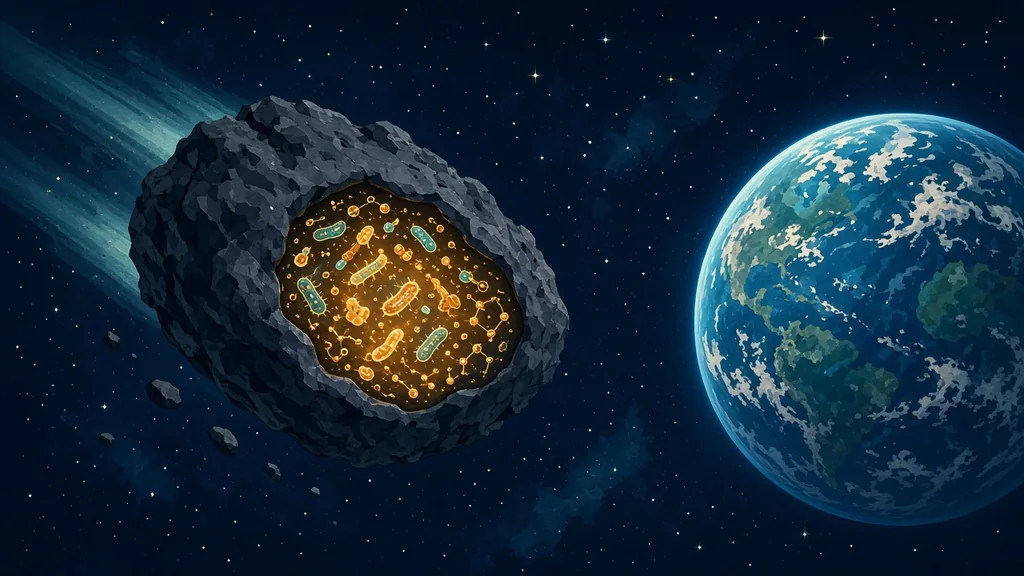
What if the first seeds of life on Earth arrived on a rock from space? That is the idea behind panspermia, from the Greek words for "all" and "seed." It suggests that life, or the chemical ingredients for it, can travel between planets and even star systems on meteorites, comets and dust.
Definition
Panspermia holds that life is spread through the universe rather than starting fresh on each planet. Swedish scientist Svante Arrhenius gave the idea its modern name in 1908. Versions include lithopanspermia, in which microbes ride inside rocks blasted off one planet and land on another; radiopanspermia, in which spores are pushed by starlight; and "pseudo-panspermia," the milder claim that organic building blocks, not living cells, were delivered from space. Panspermia does not explain how life began in the first place. It only moves the question elsewhere.
Key idea
The strong version, that living organisms seeded Earth, remains unproven. The weak version, that space rocks deliver organic molecules, is supported by meteorite and asteroid evidence.

Directed panspermia
In 1973 Francis Crick and Leslie Orgel published a paper in the journal Icarus proposing "directed panspermia," the idea that an advanced civilization might have deliberately sent microorganisms to other worlds. Orgel later said he was less serious about the claim than Crick, and most scientists treat it as speculation.
US cases
- When and where
- August 1996, NASA, Houston and Washington, D.C.
- What happened
- A team led by NASA scientists including David McKay announced that a Martian meteorite found in Antarctica may contain traces of ancient microbial life. The claim made headlines worldwide and prompted President Bill Clinton to make a televised statement.
- Why it matters
- Most scientists later concluded the features could form without life, but the case showed that rocks really do travel between Mars and Earth, a key requirement for lithopanspermia.
- When and where
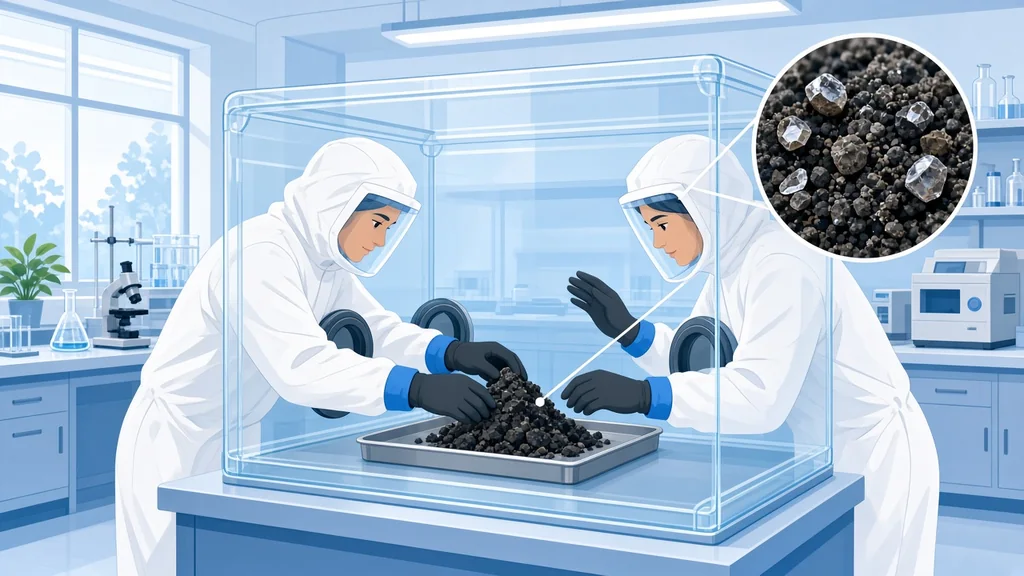
- Returned September 24, 2023, Utah; findings reported January 2025
- What happened
- NASA's OSIRIS-REx mission brought back pristine material from the near-Earth asteroid Bennu. Scientists identified all five nucleobases used in DNA and RNA and 14 of the 20 amino acids that make up proteins in Earth life, though Bennu's amino acids had mixed handedness.
- Why it matters
- The results support the idea that asteroids could have delivered life's raw ingredients to early Earth, without showing that life itself came from space.
Criticisms
- Shifts the question: it does not explain how life began, only where.
- Hard journey: radiation, vacuum and the heat of impact make surviving interplanetary travel very difficult.
- Lack of evidence: no confirmed living organism or fossil from space has been found.
Related concepts
Panspermia is an alternative or complement to abiogenesis, the origin of life from non-living chemistry. It touches the factors in the Drake equation and arguments about the Great Filter, since life spreading between worlds would change the odds of finding it. Whatever its origin, life on Earth runs on the same central dogma of molecular biology and has changed through evolution.
Frequently asked questions
- What is panspermia in simple terms?
- It is the idea that life, or the ingredients for life, can travel through space on rocks or dust and land on other planets.
- Is panspermia proven?
- No. Organic building blocks have been found in meteorites and asteroid samples, but no living organism from space has been confirmed.
- What is directed panspermia?
- A speculative idea from Francis Crick and Leslie Orgel that an intelligent civilization might have intentionally sent life to other planets.