
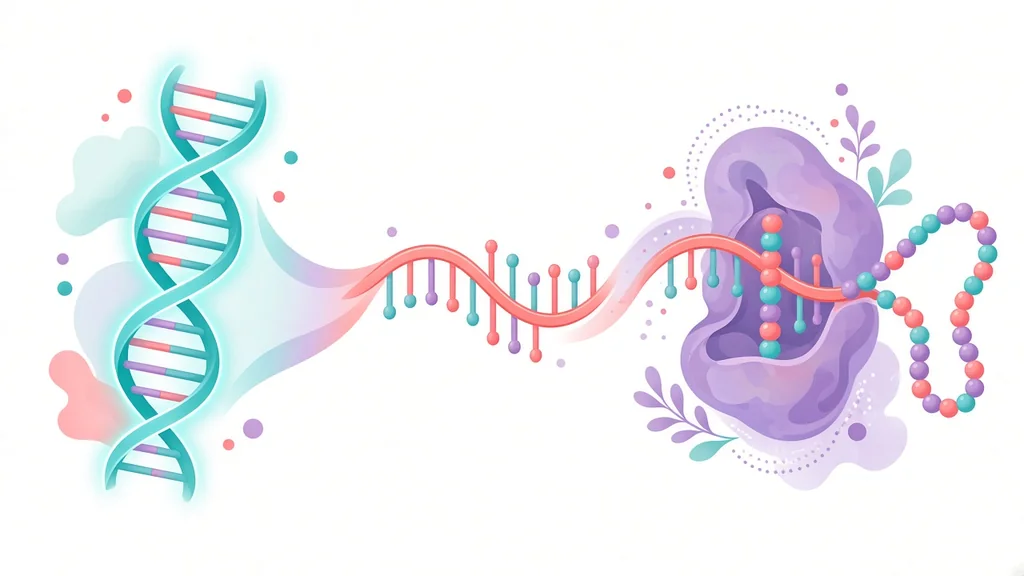
How does a string of chemical letters in your DNA become the proteins that build muscle, fight infection and digest food? The central dogma of molecular biology is the classic answer: information is copied from DNA into RNA, and RNA is read to build proteins.
What Crick actually said
Francis Crick first stated the central dogma in 1957 and published it in 1958. His version was narrower than the slogan most students learn. It says that once sequential information has passed into protein, it cannot get out again: protein cannot be used to make DNA, RNA or other protein with the same sequence. Crick restated the idea in Nature in 1970.
The simpler "DNA → RNA → protein" form comes from James Watson's 1965 textbook Molecular Biology of the Gene. Watson's two-step version has since been contradicted by known exceptions, while Crick's original statement remains valid.
Key idea
The dogma is about which way sequence information can move, not about every chemical process in a cell. Information can go from RNA back to DNA, but not from protein back to nucleic acid.

Known additional transfers
- Reverse transcription: RNA → DNA, used by retroviruses such as HIV and in telomere synthesis.
- RNA replication: RNA → RNA, used by many viruses.
- Prions: misfolded proteins that pass on a shape, not a sequence; some scientists argue they challenge the dogma, while others say they do not.
US cases
- When and where
- 1970, University of Wisconsin–Madison and MIT
- What happened
- Howard Temin at Wisconsin, working with Rous sarcoma virus, and David Baltimore at MIT, working with murine leukemia virus and Rous sarcoma virus, independently found an enzyme that copies RNA into DNA.
- Why it matters
- The finding showed that Watson's one-way slogan was too simple, explained how retroviruses insert themselves into host DNA, and earned Temin and Baltimore a share of the 1975 Nobel Prize in Physiology or Medicine with Renato Dulbecco. Reverse transcriptase later became a target of HIV drugs and a basic lab tool.
- When and where
- Research from 2005 at the University of Pennsylvania; FDA emergency authorizations December 2020
- What happened
- Katalin Karikó and Drew Weissman at Penn found that modified nucleosides keep synthetic messenger RNA from triggering harmful inflammation. In December 2020 the FDA authorized the Pfizer–BioNTech and Moderna COVID-19 vaccines for emergency use; on August 23, 2021, Pfizer–BioNTech's became the first COVID-19 vaccine fully approved by the FDA.
- Why it matters
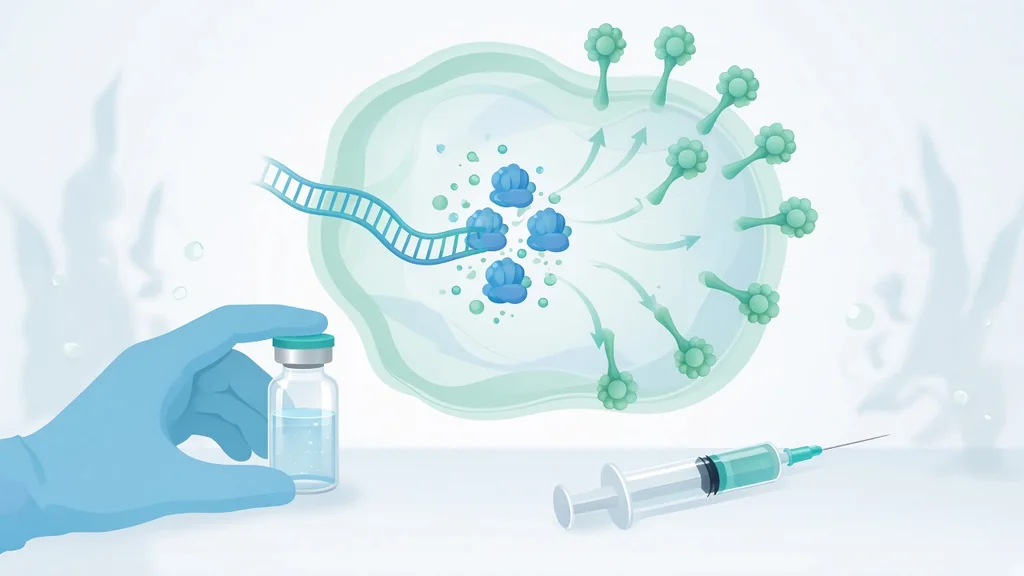
- The vaccines deliver mRNA that cells translate into a viral spike protein, a direct use of the RNA → protein step. Karikó and Weissman received the 2023 Nobel Prize in Physiology or Medicine.
Criticisms
- Misleading name: Crick later said he used "dogma" without knowing it implied an unquestionable belief.
- Oversimplified teaching: the textbook slogan hides reverse transcription, RNA genes and regulatory RNA.
- Epigenetics and prions: some argue that heritable changes outside DNA sequence weaken the dogma's central role, though they do not reverse protein-to-sequence flow.
Related concepts
The gene-centered view of evolution in selfish gene theory rests on DNA as the carrier of heredity. How the first self-copying molecules arose is the subject of abiogenesis and panspermia. Protein synthesis triggered by brain activity is part of how memories are stored, as described in Hebbian theory.
Study material (Korean): 「이중나선 독후감 - 제임스 왓슨의 DNA 구조 발견 과정과 느낀 점」
Frequently asked questions
- What is the central dogma in simple terms?
- Genetic information is copied from DNA to RNA and then used to build proteins, and it cannot flow back from protein to DNA or RNA.
- Is the central dogma still true?
- Crick's original rule, that information cannot flow out of protein, still holds. The simpler DNA → RNA → protein slogan has known exceptions such as reverse transcription.
- How do mRNA vaccines relate to the central dogma?
- They deliver messenger RNA that the body's ribosomes translate into a protein, using the RNA-to-protein step without changing DNA.