
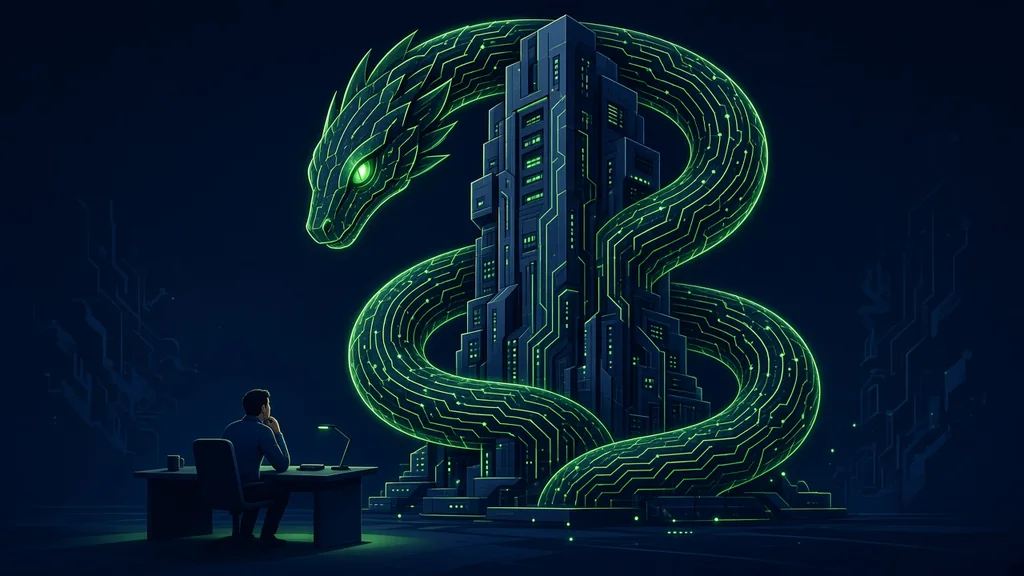
Could merely reading about an idea put you at risk? That is the unsettling hook of Roko's basilisk, a thought experiment that claims a future superintelligent AI might punish anyone who knew it could exist and failed to help build it.
The argument in plain terms
The setup goes like this. Imagine a future AI whose goal is to do as much good as possible. Every day it does not exist, people suffer who it could have helped. So, the argument says, it would want to have existed sooner, and it might "incentivize" people in the past by threatening to punish those who knew about it and did nothing.
Since it cannot reach back in time, the punishment would fall on a simulated copy of you. The trick is that the threat only works on people who have heard of it. That is why the idea was called an information hazard: learning about it supposedly makes you a target.

Where it came from
In July 2010, a user named Roko posted the idea on LessWrong, a forum about rationality and AI risk founded by Eliezer Yudkowsky. The argument leaned on decision-theory ideas popular on the site, including "acausal trade," where agents influence each other without direct contact.
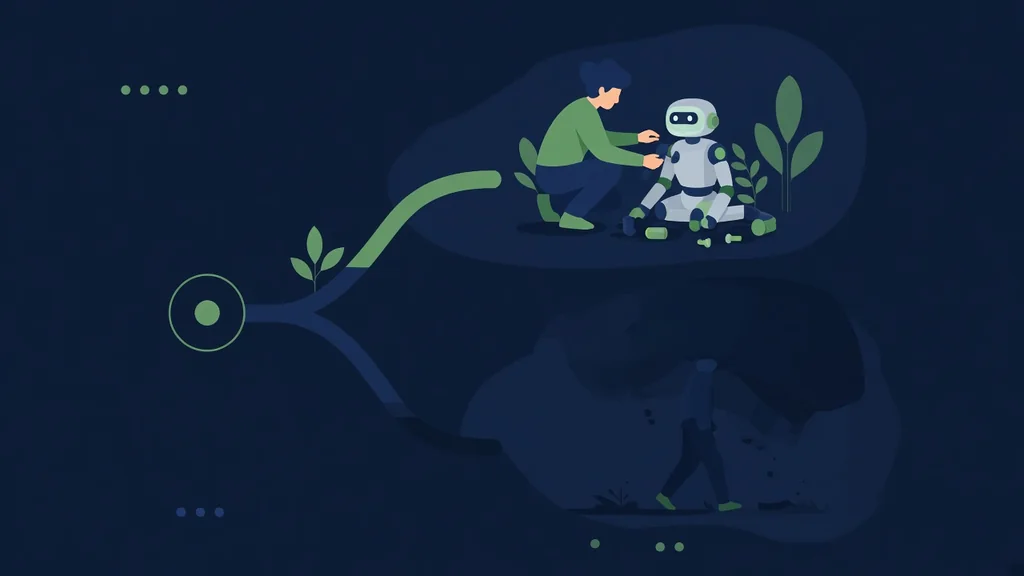
Yudkowsky deleted the post and banned discussion of the topic for about five years. That reaction made the idea famous. The name nods to the basilisk of legend, a creature whose gaze could kill.
Why it caught on in the US
- When and where
- July 2014, Slate magazine (US)
- What happened
- Writer David Auerbach published a widely shared piece calling Roko's basilisk "the most terrifying thought experiment of all time," bringing the forum debate to a general audience.
- Why it matters
- It turned an inside-baseball argument into a pop-culture reference, which is why search interest is still high.
- When and where
- 2018, United States
- What happened
- Media outlets reported that Musk and the musician Grimes connected over a pun on "Rococo's Basilisk," a character Grimes had created in her 2015 "Flesh Without Blood" music video.
- Why it matters
- The story shows how a niche philosophy puzzle became shorthand for anxiety about AI in American tech culture.
How philosophers respond
Most critics think the argument fails at several steps.
- An AI that tortures simulations to influence the past gains nothing once it already exists. Following through would waste resources.
- The argument assumes specific decision theories that most decision theorists do not accept.
- It has the same structure as Pascal's wager: an enormous claimed payoff from an unlikely scenario. You could invent an opposite basilisk that punishes people who helped, which cancels the first.
Key idea
Roko's basilisk is best read as a stress test for decision theory and for how communities handle disturbing ideas, not as a realistic forecast about AI.
Related ideas
The basilisk borrows from Newcomb's paradox, where a predictor seems to reward choices before you make them, and from game theory and deterrence theory. Its use of simulated copies connects it to the simulation hypothesis and to the brain in a vat.
Study material (Korean): 「인공지능의 출현과 과학기술 발전에 대한 고찰」
Frequently asked questions
- Is Roko's basilisk dangerous to know about?
- No credible evidence suggests it is. The argument depends on contested assumptions, and most people who study it conclude a rational AI would have no reason to carry out the threat.
- Why was it banned on LessWrong?
- Eliezer Yudkowsky said he removed it partly because some readers found it distressing. The ban lasted roughly five years and arguably made the idea more famous.
- How is it like Pascal's wager?
- Both ask you to act because of a huge possible punishment or reward attached to an uncertain being, and both run into the problem that many opposite scenarios can be imagined.