
Key points
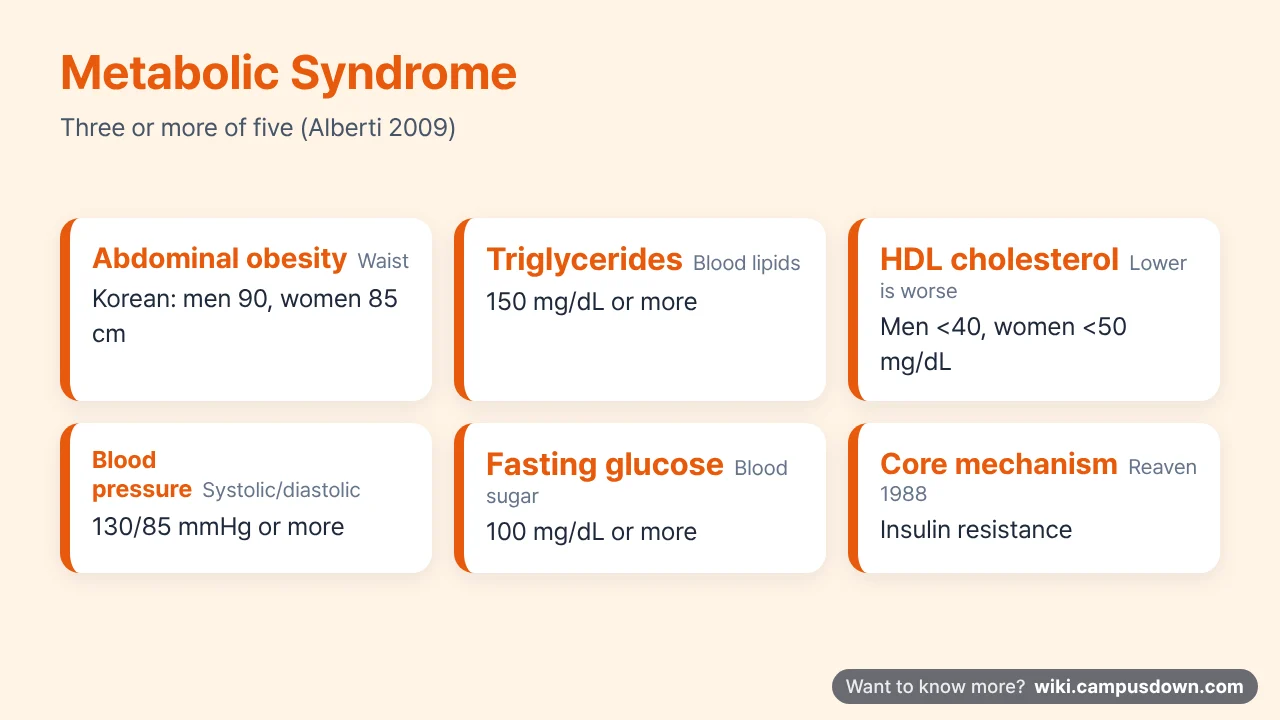
- Metabolic syndrome is the presence of three or more of abdominal obesity, high triglycerides, low HDL cholesterol, raised blood pressure and raised fasting glucose (Alberti et al., 2009).
- Waist cut-offs differ by population; for Korean adults 90 cm for men and 85 cm for women are used (Lee et al., 2007).
- Reaven (1988) described this cluster of risk factors, centred on insulin resistance, as 'Syndrome X'.
- Metabolic syndrome raises the risk of type 2 diabetes and cardiovascular disease (NHS).
- If you are overweight, losing 3% to 5% of your weight can help manage some risk factors (NHLBI).

What is metabolic syndrome?
Metabolic syndrome is having three or more of abdominal obesity, high triglycerides, low HDL cholesterol, high blood pressure and high fasting blood sugar at the same time. It is less a single disease than a cluster of risk factors for type 2 diabetes and heart and blood vessel disease. It often has no symptoms and is found through tests (NHS).
Diagnostic criteria
The harmonized criteria agreed by several international organizations in 2009 require three or more of the following (Alberti et al., 2009). Diagnosis and treatment decisions belong to a clinician.
| Component | Criterion |
|---|---|
| Abdominal obesity | Population-specific waist circumference (Korean adults: 90 cm men, 85 cm women; Lee et al., 2007) |
| Triglycerides | 150 mg/dL or higher, or on treatment |
| HDL cholesterol | Below 40 mg/dL in men or 50 mg/dL in women, or on treatment |
| Blood pressure | Systolic 130 or diastolic 85 mmHg or higher, or on treatment |
| Fasting glucose | 100 mg/dL or higher, or on treatment |
Causes and mechanisms
The US National Heart, Lung, and Blood Institute (NHLBI) names weight, especially abdominal fat, as a major cause. Fat cells release free fatty acids that promote insulin resistance; insulin resistance raises blood pressure and triglycerides and lowers HDL cholesterol. Extra fat cells also increase inflammation. Reaven (1988) first described this cluster, centred on insulin resistance, as 'Syndrome X'.
Risks and prevention
Metabolic syndrome increases the chance of cardiovascular disease and type 2 diabetes, and may also raise the risk of non-alcoholic fatty liver disease, osteoarthritis and gout (NHS).
- Weight: if overweight, losing 3% to 5% of your weight can help manage some risk factors (NHLBI).
- Exercise: at least 150 minutes of moderate to intense exercise a week, spread over 4 or 5 days (NHS).
- Diet: less saturated fat, more fruit, vegetables and whole grains (NHS).
- Smoking and sitting: stop smoking and avoid sitting for long periods (NHS).
- Medicines: if lifestyle change is not enough, a clinician may consider treatment for blood pressure, glucose or cholesterol.
Frequently asked questions
What are the criteria for metabolic syndrome?
Three or more of: abdominal obesity, triglycerides of 150 mg/dL or more, HDL below 40 mg/dL (men) or 50 mg/dL (women), blood pressure of 130/85 mmHg or more, fasting glucose of 100 mg/dL or more (Alberti et al., 2009).
What waist size is used for Korean adults?
90 cm for men and 85 cm for women (Lee et al., 2007).
Does it cause symptoms?
Often not; it is found through blood pressure, blood tests and waist measurement (NHS).
Why does it matter?
It raises the risk of type 2 diabetes and cardiovascular disease (NHS).
How can it be prevented?
Weight management, at least 150 minutes of exercise a week, less saturated fat and not smoking. Discuss diagnosis and treatment with a clinician.
See also: Alzheimer's Disease Pathology and the Amyloid Hypothesis, Aerobic and Anaerobic Exercise Metabolism, Cushing's Syndrome, Hypothyroidism, Fatty Liver Disease, Diabetes
References
- Alberti, K. G. M. M., et al. (2009). Harmonizing the metabolic syndrome. Circulation, 120(16), 1640-1645. https://doi.org/10.1161/CIRCULATIONAHA.109.192644
- Grundy, S. M., et al. (2005). Diagnosis and management of the metabolic syndrome: An AHA/NHLBI scientific statement. Circulation, 112(17), 2735-2752.
- Reaven, G. M. (1988). Role of insulin resistance in human disease. Diabetes, 37(12), 1595-1607. https://doi.org/10.2337/diab.37.12.1595
- Grundy, S. M., Cleeman, J. I., Daniels, S. R., et al. (2005). Diagnosis and management of the metabolic syndrome: An AHA/NHLBI scientific statement. Circulation, 112(17), 2735–2752.
- Eckel, R. H., Grundy, S. M., & Zimmet, P. Z. (2005). The metabolic syndrome. The Lancet, 365(9468), 1415–1428.
- National Heart, Lung, and Blood Institute. Metabolic Syndrome: Causes and Risk Factors; Diagnosis; Treatment. https://www.nhlbi.nih.gov/health/metabolic-syndrome
- NHS. Metabolic syndrome. https://www.nhs.uk/conditions/metabolic-syndrome/
- Lee, S. Y., Park, H. S., Kim, D. J., et al. (2007). Appropriate waist circumference cutoff points for central obesity in Korean adults. Diabetes Research and Clinical Practice, 75(1), 72-80. https://doi.org/10.1016/j.diabres.2006.04.013