
Your throat feels like swallowing glass, and you wonder whether you need a strep test. Or is it just another virus?
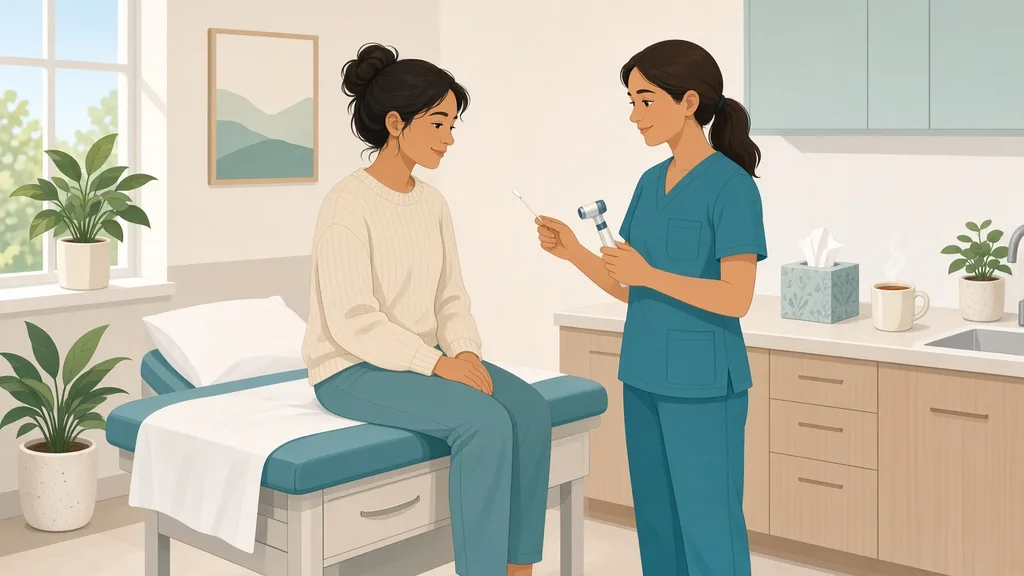
This guide uses the CDC page "About Strep Throat" (dated January 15, 2026). It is general information, not a diagnosis; only a test by a healthcare provider can show whether you have strep. If you want to learn more about related throat conditions, take a closer look at tonsillitis.
What strep throat is
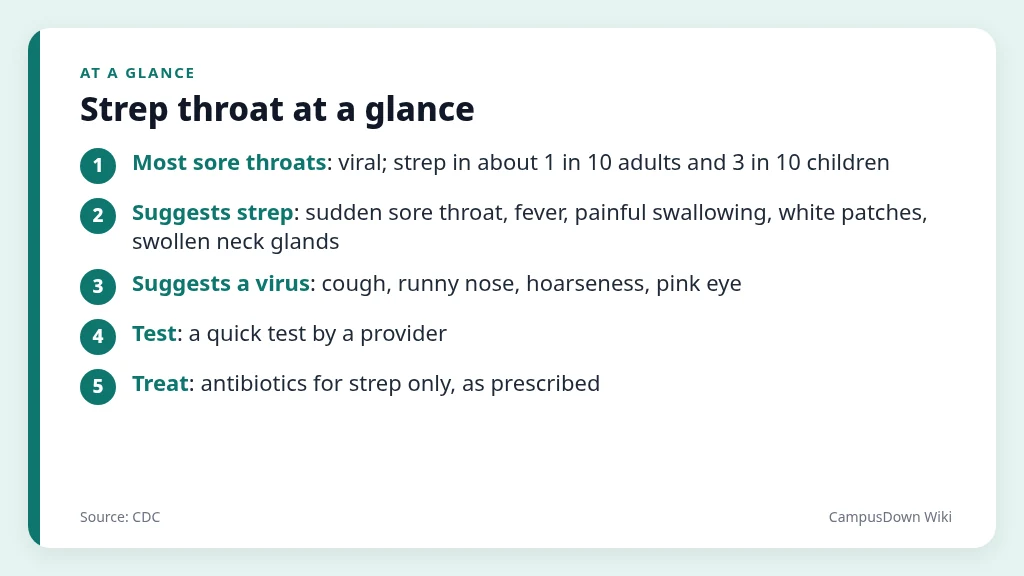
CDC says strep throat is a bacterial infection in the throat and tonsils, caused by group A Streptococcus bacteria that are contagious. It says viruses cause most sore throats; only around 1 in 10 adults and 3 in 10 children with a sore throat have strep throat.

Symptoms that suggest strep
CDC says it usually takes 2 to 5 days after exposure to become ill, and common symptoms may include:
- Fever and pain when swallowing.
- Red and swollen tonsils.
- A sore throat that started very quickly and may look red.
- Swollen lymph nodes in the front of the neck (see swollen lymph nodes).
- Tiny, red spots on the roof of the mouth (petechiae).
- White patches or streaks of pus on the tonsils.
Less common symptoms, especially in children, may include headache, nausea or vomiting, a rash (scarlet fever) and stomach pain.
Symptoms that suggest a virus
CDC says cough, runny nose, hoarseness (a breathy, raspy or strained voice) and conjunctivitis (pink eye) suggest a virus, not strep throat, is the cause of a sore throat. Because many viruses cause sore throat, see influenza for another common illness with sore throat.
Testing and treatment
CDC says healthcare providers can do a quick test to see if a sore throat is strep throat and may use several types of tests; they treat strep throat with antibiotics, which can help people with strep feel better faster. Antibiotics don't help a viral sore throat, and your clinician chooses which antibiotic is right for you; see antibiotic resistance for why unnecessary antibiotics are a problem. Ask a pharmacist how to take any prescription.
Who gets strep throat
CDC says strep throat is more common in children than adults, most common in children 5 through 15 and rare in children under 3. Close contact with someone who has strep throat is the most common risk factor; it also lists parents of school-age children, adults often in contact with children and crowded settings such as daycare, schools, correctional facilities, shelters and military training facilities.
Complications
CDC says complications can occur if the bacteria spread to other parts of the body, including abscesses around the tonsils or in the neck, ear infections, sinus infections, post-streptococcal glomerulonephritis (a kidney disease) and rheumatic fever (a disease affecting the heart, joints, brain and skin).
Carriers
CDC says some people can test positive for group A strep bacteria but have no symptoms, and it addresses whether they are contagious or need antibiotics on its page. Ask your clinician if this applies to you.
Prevention
CDC advises washing hands often with soap and water, not sharing cups, utensils and bites of food with people who are sick, washing cups, utensils and plates after a sick person uses them, covering coughs and sneezes, keeping wounds clean and bandaged, and seeking health care if you think you have a group A strep infection.
When to talk to a clinician
CDC says speak with a healthcare provider if you have concerns about strep throat. Seek care sooner for trouble breathing, trouble swallowing saliva or a sore throat with a high fever; the page doesn't list these specifically, so ask your clinician which symptoms need urgent attention.
Questions for your doctor
- Do my symptoms need a strep test?
- If the test is negative, what could be causing my sore throat?
- If I need antibiotics, how should I take them and for how long?
- When can I return to work or school?
Example scenario: the sudden sore throat
- Who
- Viviana, 37, a pharmacy technician in Charlotte, North Carolina, woke up with a very sore throat, fever and pain when swallowing.
- What happened
- Her toddler had a runny nose, but she had no cough.
- How it felt
- She worried she would miss work and wanted antibiotics right away.
- What they did
- She went to urgent care, where a quick test was done, and was told antibiotics are for strep, not for viral illness. Viviana was given a plan based on the result and told to call if she was getting worse.
- How it turned out
- Viviana said she was glad she checked instead of guessing.
This is an illustrative example, not a real patient or a review.
Viviana's story is an illustrative example. Your own test result and clinician decide your treatment.
Most-asked questions about strep throat
What are strep throat symptoms in adults?
Fever, painful swallowing, red swollen tonsils, a sudden sore throat, swollen neck glands, red spots on the roof of the mouth and white patches on the tonsils; only about 1 in 10 adults with a sore throat have strep.
Why people ask: "strep throat symptoms in adults" is #2 for "strep throat symptoms" (US autocomplete, November 2026).
Can you have strep throat symptoms without tonsils?
The page describes tonsil symptoms and also lists sore throat, fever, painful swallowing and neck lymph nodes; it doesn't address people without tonsils, so ask your clinician.
Why people ask: "strep throat symptoms without tonsils" is #5 for "strep throat symptoms" (US autocomplete, November 2026).
What are strep throat symptoms and treatment?
Symptoms are above; providers treat strep throat with antibiotics, which can help people feel better faster.
Why people ask: "strep throat symptoms and treatment" is #7 for "strep throat symptoms" (US autocomplete, November 2026).
Are there photos of strep throat versus a sore throat?
CDC's page shows images of swelling, redness and white patches and of a healthy throat; photos can't replace a test.
Why people ask: "strep throat vs sore throat photos" is #2 for "strep throat vs sore throat" (US autocomplete, November 2026).
How do strep throat and sore throat symptoms compare?
Strep often starts quickly with fever, white patches and neck glands; cough, runny nose and hoarseness point to a virus.
Why people ask: "strep throat vs sore throat symptoms" is #3 for "strep throat vs sore throat" (US autocomplete, November 2026).
How is strep throat different from tonsillitis?
CDC describes strep as an infection of the throat and tonsils; the page doesn't compare it with tonsillitis, so ask your clinician.
Why people ask: "strep throat vs sore throat vs tonsillitis" is #4 for "strep throat vs sore throat" (US autocomplete, November 2026).
How do I tell strep from a sore throat caused by a cold?
A cough, runny nose, hoarseness or pink eye suggests a virus; a quick test by a provider confirms strep.
Why people ask: "strep throat vs sore throat from cold" is #6 for "strep throat vs sore throat" (US autocomplete, November 2026).
Is a sore throat from drainage strep?
The page doesn't cover postnasal drainage; a runny nose points to a virus, and a test can check for strep.
Why people ask: "strep throat vs sore throat from drainage" is #7 for "strep throat vs sore throat" (US autocomplete, November 2026).
How do you tell strep from a sore throat with no tonsils?
The page doesn't address this; ask your clinician about testing.
Why people ask: "strep throat vs sore throat no tonsils" is #8 for "strep throat vs sore throat" (US autocomplete, November 2026).
Do adults often have strep versus a viral sore throat?
CDC says only around 1 in 10 adults with a sore throat have strep; viruses cause most.
Why people ask: "strep throat vs sore throat in adults" is #9 for "strep throat vs sore throat" (US autocomplete, November 2026).
Related on CampusDown
You can learn more about the health topics hub and check it for yourself in tonsillitis. For antibiotics in detail, see amoxicillin-clavulanate and azithromycin.
Frequently asked questions
- What is strep throat?
- A bacterial infection of the throat and tonsils caused by group A Streptococcus.
- Is every sore throat strep?
- No; around 1 in 10 adults and 3 in 10 children with a sore throat have strep, and viruses cause most.
- What suggests a virus?
- Cough, runny nose, hoarseness or pink eye.
- How is strep diagnosed and treated?
- A provider does a quick test or other tests and treats strep with antibiotics.
- What complications can follow?
- Tonsil or neck abscesses, ear and sinus infections, kidney disease and rheumatic fever.
Most sore throats are viral, and strep throat tends to start suddenly with fever, painful swallowing, swollen tonsils with white patches and swollen neck glands. Because only a test can tell the difference, see a provider, take antibiotics only if prescribed, and ask which symptoms need urgent care.
Browse more guides like this in the U.S. Health Topics hub.
This article is for general education and does not replace advice from your own doctor, nurse or pharmacist.