
You've had a "cold" for two weeks, and now you cough so hard you throw up and can't sleep. Is this still a cold, or something else?
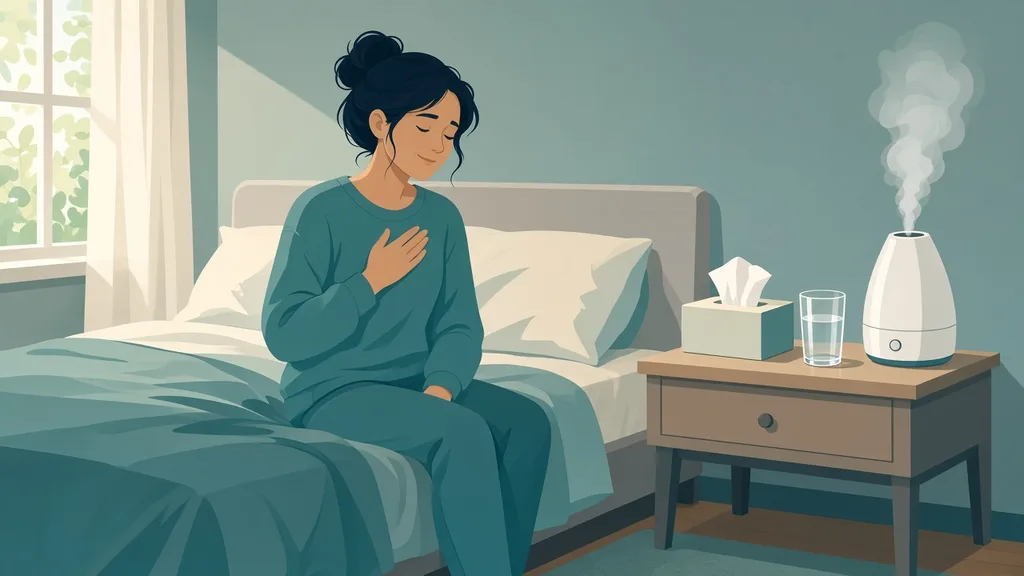
This guide uses the CDC page "Symptoms of Whooping Cough" (December 2, 2025) and the MedlinePlus encyclopedia article on pertussis (reviewed July 1, 2025). It is general information, not a diagnosis; a clinician must test and decide on treatment. If you want to learn more about other causes of lingering cough, take a closer look at pneumonia.
What whooping cough is
MedlinePlus says pertussis (whooping cough) is a highly contagious bacterial disease that causes uncontrollable, violent coughing, and the coughing can make it hard to breathe. It is caused by Bordetella pertussis bacteria and spreads through droplets when an infected person sneezes or coughs. CDC says it usually takes 5 to 10 days for symptoms to appear after exposure, and sometimes up to 3 weeks.

Early symptoms
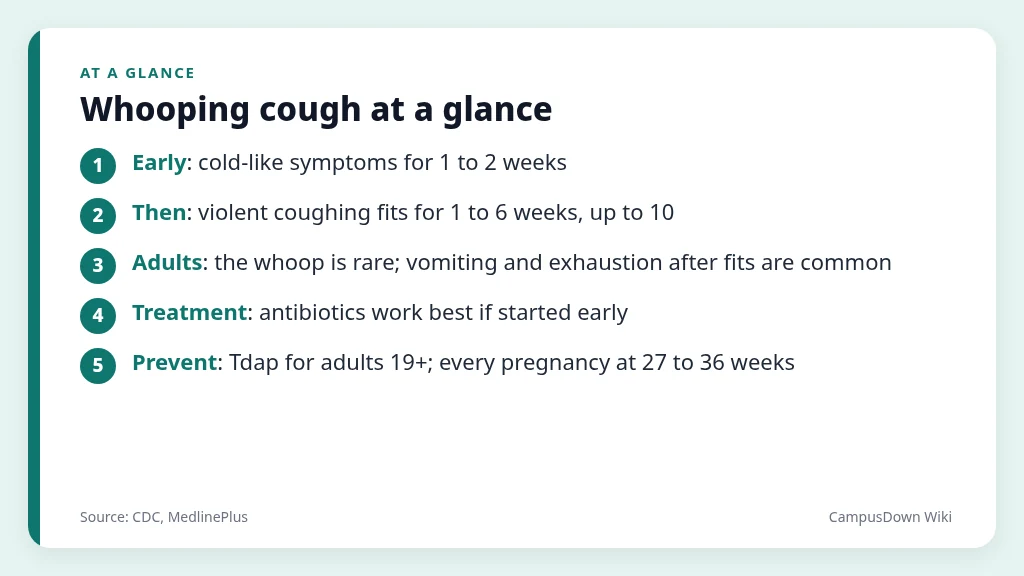
CDC says whooping cough looks like a common cold early on, and providers often don't suspect it until more severe symptoms appear. Early symptoms last 1 to 2 weeks and usually include a runny or stuffed-up nose, a low-grade fever (less than 100.4°F) and a mild, occasional cough.
Later symptoms: the coughing fits
CDC says one to 2 weeks after the first symptoms, people may develop rapid, violent, uncontrolled coughing fits that usually last 1 to 6 weeks but can last up to 10 weeks. Fits can cause people to make a high-pitched "whoop" when they inhale, vomit, feel very tired afterward but usually seem well between fits, have trouble sleeping, struggle to breathe or fracture a rib. Those who get them describe the worst cough of their lives. MedlinePlus says the whoop is rare in infants under 6 months and in older children or adults, and that coughing spells may lead to vomiting or a short loss of consciousness; pertussis should always be considered when vomiting occurs with coughing.
Recovery and relapse
CDC says recovery can be slow, with the cough becoming milder and less common over time; fits may stop and return with other respiratory infections, even many months after the illness started. It also says people who were vaccinated but still get whooping cough generally have a milder illness.
Complications in teens and adults
CDC says teens and adults can get complications like pneumonia, usually less serious than in babies, but some people need hospital care. MedlinePlus lists pneumonia, convulsions, nosebleeds and ear infections among possible complications, with infants having the highest risk of death. See pneumonia and COPD flare signs for other lung conditions that cause cough.
Diagnosis and treatment
MedlinePlus says the initial diagnosis is most often based on symptoms, and a sample of mucus from the nose can be tested in a lab; the test takes time, so treatment is often started before results are ready. It says antibiotics such as erythromycin can make symptoms go away more quickly if started early enough, but most people are diagnosed too late, when antibiotics aren't very effective; the medicines can still help reduce the person's ability to spread the disease. It says cough mixtures, expectorants and suppressants are most often not helpful and should not be used. Ask a pharmacist before using any cough product. See azithromycin for general information on a common antibiotic; only your clinician chooses which antibiotic is right.
Get help now if
CDC says to seek immediate care for breathing difficulties. MedlinePlus says to call 911 or go to an emergency room for bluish skin color, periods of stopped breathing, seizures, high fever, persistent vomiting or dehydration.
Vaccine advice
MedlinePlus says adults age 19 and older should receive 1 dose of the Tdap vaccine, that it is especially important for health care professionals and anyone with close contact with a baby younger than 12 months, and that pregnant women should get a dose during every pregnancy between 27 and 36 weeks to protect the newborn. It says the Tdap should be given at age 11 or 12. Ask your clinician or pharmacist about your own vaccination record.
Questions for your doctor
- Should I be tested for whooping cough?
- Do I need antibiotics, and how long should I stay away from others?
- When am I due for a Tdap booster?
- Which symptoms should send me to the emergency room?
Example scenario: the cough that wouldn't quit
- Who
- Mathilde, 44, a middle-school teacher in Madison, Wisconsin, had a cold that improved, then a cough that came in violent fits.
- What happened
- She started vomiting after coughing and couldn't sleep through the night.
- How it felt
- She felt embarrassed about being sick for weeks.
- What they did
- She called her clinic, asked about testing, and learned that whooping cough can look like a cold at first and that adults may not whoop. Her clinician talked through testing, treatment and her Tdap record, and told her to call sooner if breathing became hard.
- How it turned out
- Mathilde said she wished she'd called after the first week.
This is an illustrative example, not a real patient or a review.
Mathilde's story is an illustrative example. A cough with violent fits, vomiting or trouble breathing needs a clinician's attention.
Most-asked questions about whooping cough
What are whooping cough symptoms in adults?
Cold-like symptoms first, then violent coughing fits with vomiting and exhaustion; the whoop is rare in adults.
Why people ask: "whooping cough symptoms in adults" is #2 for "whooping cough symptoms" (US autocomplete, November 2026).
What are the symptoms and treatment of whooping cough?
Symptoms are above; antibiotics work best if started early, and cough medicines are most often not helpful per MedlinePlus.
Why people ask: "whooping cough symptoms and treatment" is #8 for "whooping cough symptoms" (US autocomplete, November 2026).
What does whooping cough sound like in adults?
A high-pitched whoop can occur after a coughing fit, but MedlinePlus says it is rare in older children and adults.
Why people ask: "whooping cough in adults sound" is #2 for "whooping cough in adults" (US autocomplete, November 2026).
How is whooping cough treated in adults?
With antibiotics prescribed by a clinician, started early if possible; supportive care is also used.
Why people ask: "whooping cough in adults treatment" is #3 for "whooping cough in adults" (US autocomplete, November 2026).
Is whooping cough contagious in adults?
Yes; MedlinePlus calls pertussis highly contagious and says it spreads easily through droplets.
Why people ask: "whooping cough in adults contagious" is #4 for "whooping cough in adults" (US autocomplete, November 2026).
What are the symptoms of whooping cough in adults?
See above: cold-like start, then fits of coughing that may cause vomiting, exhaustion and trouble sleeping.
Why people ask: "whooping cough in adults symptoms" is #5 for "whooping cough in adults" (US autocomplete, November 2026).
Which antibiotics are used for whooping cough in adults?
MedlinePlus names erythromycin as an example; your clinician chooses the antibiotic.
Why people ask: "whooping cough in adults antibiotics" is #6 for "whooping cough in adults" (US autocomplete, November 2026).
How long is whooping cough contagious in adults?
The pages used here don't give a contagious period for individuals; ask your clinician when to stay away from others.
Why people ask: "whooping cough in adults how long is it contagious" is #7 for "whooping cough in adults" (US autocomplete, November 2026).
How long does whooping cough last in adults?
MedlinePlus says symptoms often last 6 weeks but can last as long as 10 weeks, and CDC says coughing fits usually last 1 to 6 weeks, up to 10.
Why people ask: "whooping cough in adults how long does it last" is #8 for "whooping cough in adults" (US autocomplete, November 2026).
How is whooping cough tested in adults?
MedlinePlus says a mucus sample from the nose can be sent to a lab, though diagnosis is often based on symptoms first.
Why people ask: "whooping cough in adults test" is #10 for "whooping cough in adults" (US autocomplete, November 2026).
Related on CampusDown
You can learn more about the health topics hub and check it for yourself in senior health. For related respiratory topics in detail, see influenza, asthma and high-dose flu vaccine.
Frequently asked questions
- What is whooping cough?
- A highly contagious bacterial disease that causes violent coughing fits.
- How long does it last?
- Often about 6 weeks, up to 10 weeks.
- Do adults whoop?
- Rarely, per MedlinePlus; adults often have vomiting and exhaustion after coughing fits.
- Is there treatment?
- Antibiotics work best if started early; cough medicines are most often not helpful.
- Should adults get a booster?
- MedlinePlus advises 1 dose of Tdap for adults 19 and older and a dose in every pregnancy between 27 and 36 weeks.
Whooping cough starts like a cold and then causes weeks of violent coughing fits; adults may not whoop but may vomit, lose sleep or even break a rib. See a clinician early for testing and antibiotics, seek immediate care for trouble breathing, and ask about your Tdap booster.
Browse more guides like this in the U.S. Health Topics hub.
This article is for general education and does not replace advice from your own doctor, nurse or pharmacist.