
Everyone in the house has had a headache since last night, and the dog is acting sleepy. Is it a bug going around, or is something in the air?
This guide uses the CDC page "Carbon Monoxide (CO) Poisoning Basics" (updated October 26, 2026) and the MedlinePlus encyclopedia article on carbon monoxide poisoning (reviewed January 8, 2025). It is general information, not a substitute for emergency care. If you want to learn more about other winter dangers at home, take a closer look at hypothermia and frostbite.
Get help now if
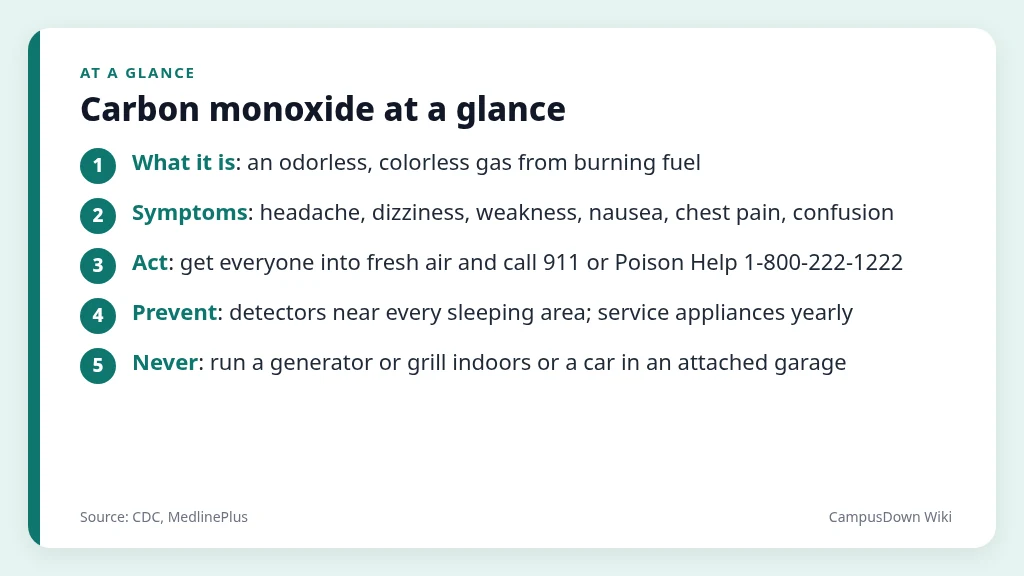
If you think someone has breathed in carbon monoxide, get them into fresh air right away and call 911 or your local emergency number. The Poison Help line is 1-800-222-1222 from anywhere in the United States. Don't wait for symptoms to get worse.
What carbon monoxide is
CDC says carbon monoxide (CO) is an odorless, colorless gas that can cause sudden illness and death if inhaled. MedlinePlus says it is produced from the incomplete burning of natural gas or other products containing carbon, and that it is the leading cause of poisoning death in the United States. CDC says CO is found in fumes produced any time you burn fuel in cars or trucks, small engines, stoves, lanterns, grills, fireplaces, gas ranges or furnaces, and it can build up indoors.

Symptoms
CDC says the most common symptoms are headache, dizziness, weakness, upset stomach, vomiting, chest pain and confusion, and they are often described as "flu-like." MedlinePlus adds drowsiness, fatigue, fainting, shortness of breath, a rapid or abnormal heartbeat, impaired judgment and, at the severe end, convulsions, coma and unconsciousness. It says many symptoms can occur with viral illnesses, so CO poisoning is often confused with them, which can delay getting help.
Two points from the sources deserve attention:
- CDC says people who are sleeping, drunk or under the influence of other substances can die from CO poisoning before they have symptoms.
- MedlinePlus says pets often show symptoms before humans do, and that in small children signs may be subtle, such as fussiness or feeding difficulty.
Who is at higher risk
CDC says everyone is at risk, but infants, older adults and people with chronic heart disease, anemia or breathing problems are more likely to get sick. MedlinePlus lists young children, older adults, people with lung or heart disease, people at high altitudes and smokers, and says CO can harm a fetus. See chest pain and anxiety and heart attack symptoms in women for other causes of chest symptoms that need urgent care.
What to do right away
MedlinePlus says to move the person to fresh air immediately and seek immediate medical attention. It says helpful information for emergency staff includes age, weight, condition and how long the exposure may have lasted, but do not delay calling if you don't have it. Poison Help is free, confidential and open 24 hours a day.
What happens in the emergency room
MedlinePlus says staff will monitor vital signs and the person may receive oxygen, airway support, blood and urine tests, a chest x-ray, an ECG and IV fluids, and that hyperbaric oxygen therapy may be used in some cases. The page says this is for information only; the decision is made by the treating team.
Where CO comes from at home
MedlinePlus lists anything that burns coal, gasoline, kerosene, oil, propane or wood, automobile engines, charcoal grills, portable heaters and stoves, and water heaters that use natural gas. CDC adds portable generators and says:
- Never use a generator inside your home or garage, even with doors and windows open; use it outside, more than 20 feet from windows, doors and vents.
- Never burn charcoal indoors, and never use a portable gas camp stove or flameless chemical heater indoors.
- Never run a car or truck in a garage attached to a house, even with the garage door open.
- Never heat your house with a gas oven.
Detectors and upkeep
CDC says to install battery-operated or battery back-up CO detectors near every sleeping area, check the batteries when you change the clocks each spring and fall, and replace the detector following the manufacturer's instructions or every 5 years. MedlinePlus advises a detector on each floor and one near major gas-burning appliances. CDC advises having your heating system, water heater and other fuel-burning appliances serviced by a qualified technician every year, having the chimney checked or cleaned every year, and having a mechanic check your vehicle's exhaust system every year. MedlinePlus notes that many poisonings occur in winter when furnaces, gas fireplaces and portable heaters are in use and windows are closed.
Questions for your doctor or pharmacist
- Does my heart, lung or blood condition make me more sensitive to CO?
- If I was exposed, which symptoms should I watch for and report?
- Are there follow-up checks I should have after an exposure?
- Can someone review my home's heating and venting with me?
Example scenario: the headaches that weren't a bug
- Who
- Edmund, 61, a retired mail carrier in Duluth, Minnesota, lived with his wife and an older dog.
- What happened
- After a power outage they ran a portable generator in the attached garage with the door cracked, and by evening all three felt dizzy and sick to their stomachs.
- How it felt
- He felt foolish calling 911 for what seemed like the flu.
- What they did
- Edmund remembered a card from the fire department about carbon monoxide, got everyone outside, and called 911 and Poison Help from the driveway. They were checked at the emergency room, and the crew told them never to run the generator indoors or in the garage again.
- How it turned out
- Edmund said he now keeps battery detectors in the hallway and on each floor.
This is an illustrative example, not a real patient or a review.
Edmund's story is an illustrative example. Flu-like symptoms that affect several people at once or ease when you leave the building deserve a quick call.
Most-asked questions about carbon monoxide
What are carbon monoxide symptoms in humans?
CDC lists headache, dizziness, weakness, upset stomach, vomiting, chest pain and confusion; MedlinePlus adds drowsiness, fainting, shortness of breath and a rapid heartbeat.
Why people ask: "carbon monoxide symptoms in humans" is #2 for "carbon monoxide symptoms" (US autocomplete, November 2026).
What are carbon monoxide symptoms in a house?
The same symptoms; MedlinePlus says many poisonings happen in winter when furnaces and heaters are on and windows are closed, and that pets may show signs first.
Why people ask: "carbon monoxide symptoms in house" is #4 for "carbon monoxide symptoms" (US autocomplete, November 2026).
What are carbon monoxide symptoms in a car?
CDC says a small exhaust leak can let CO build up inside a vehicle and advises a yearly exhaust check; if symptoms start while driving, get to fresh air and call for help.
Why people ask: "carbon monoxide symptoms in car" is #6 for "carbon monoxide symptoms" (US autocomplete, November 2026).
Can carbon monoxide symptoms persist for days?
The pages used here don't say how long symptoms last after exposure; ask the treating team about follow-up.
Why people ask: "carbon monoxide symptoms can persist for" is #7 for "carbon monoxide symptoms" (US autocomplete, November 2026).
Are there mild carbon monoxide symptoms?
Headache, dizziness and an upset stomach are among the most common symptoms, and they can resemble the flu, so don't dismiss them if others feel the same.
Why people ask: "carbon monoxide symptoms mild" is #10 for "carbon monoxide symptoms" (US autocomplete, November 2026).
Is there a medication for carbon monoxide poisoning?
The sources describe oxygen, airway support, fluids and in some cases hyperbaric oxygen in the emergency room, not a home medicine.
Why people ask: "carbon monoxide poisoning treatment medication" is #2 for "carbon monoxide poisoning treatment" (US autocomplete, November 2026).
Can carbon monoxide poisoning be treated at home?
No; MedlinePlus says to move the person to fresh air and seek immediate medical attention, and to call 911 or Poison Help.
Why people ask: "carbon monoxide poisoning treatment at home" is #4 for "carbon monoxide poisoning treatment" (US autocomplete, November 2026).
Are there treatment guidelines?
The pages used here are consumer information, not clinical guidelines; the treating team decides care.
Why people ask: "carbon monoxide poisoning treatment guidelines" is #5 for "carbon monoxide poisoning treatment" (US autocomplete, November 2026).
Is hyperbaric oxygen used for carbon monoxide poisoning?
MedlinePlus lists hyperbaric oxygen therapy among treatments the emergency team may use; the team decides whether it is right.
Why people ask: "carbon monoxide poisoning treatment hyperbaric oxygen" is #9 for "carbon monoxide poisoning treatment" (US autocomplete, November 2026).
Related on CampusDown
You can learn more about the health topics hub and check it for yourself in senior health. For winter risks in detail, see hypothermia, and for alcohol and older adults see alcohol and aging.
Frequently asked questions
- What is carbon monoxide?
- An odorless, colorless gas from burning fuel that can cause sudden illness and death if inhaled.
- What are the symptoms?
- Headache, dizziness, weakness, upset stomach, vomiting, chest pain and confusion, often described as flu-like.
- What should I do if I suspect it?
- Get everyone into fresh air, call 911 or Poison Help at 1-800-222-1222, and seek immediate medical attention.
- Where should detectors go?
- Near every sleeping area, per CDC; MedlinePlus also suggests one on each floor and near gas appliances.
- Can I run a generator in the garage?
- No; CDC says never use one inside your home or garage, even with doors open, and keep it more than 20 feet from windows, doors and vents.
Carbon monoxide is invisible and its symptoms look like the flu, so detectors near sleeping areas and yearly appliance checks matter most. If you suspect exposure, get everyone to fresh air and call 911 or Poison Help at 1-800-222-1222, then follow your clinician's advice.
Browse more guides like this in the U.S. Health Topics hub.
This article is for general education and does not replace advice from your own doctor, nurse or pharmacist.