
If you fell in the kitchen and couldn't reach the phone, who would find out, and when? That single question is why families shop for medical alert systems. It's also where marketing gets loud and details get missed.
This guide is based on CMS's Durable Medical Equipment Reference List, NCOA's medical alert guides, an FTC consumer fact sheet on personal emergency response systems (PERS) and NIA's aging-in-place advice. It explains in detail how to compare systems. Talk with your doctor or a social worker about your fall risk and home setup.
How a medical alert system works
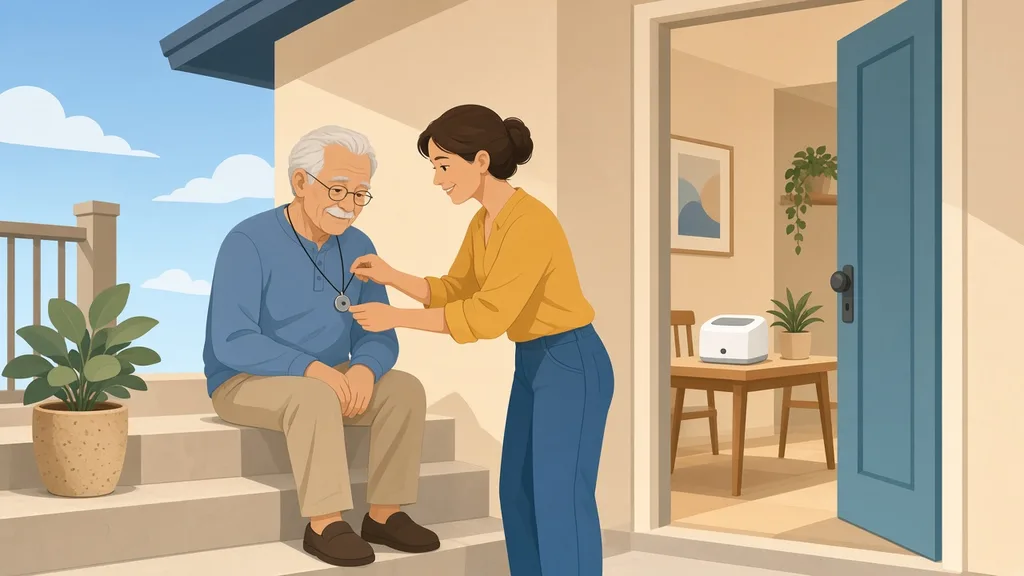
The FTC fact sheet describes three parts: a help button you wear or carry, a console that connects to your phone line, and an emergency response center that takes the call. Today many systems use cellular connections and mobile devices, but the idea is the same: press the button and get help without reaching a phone.

Monitored vs unmonitored
NCOA explains:
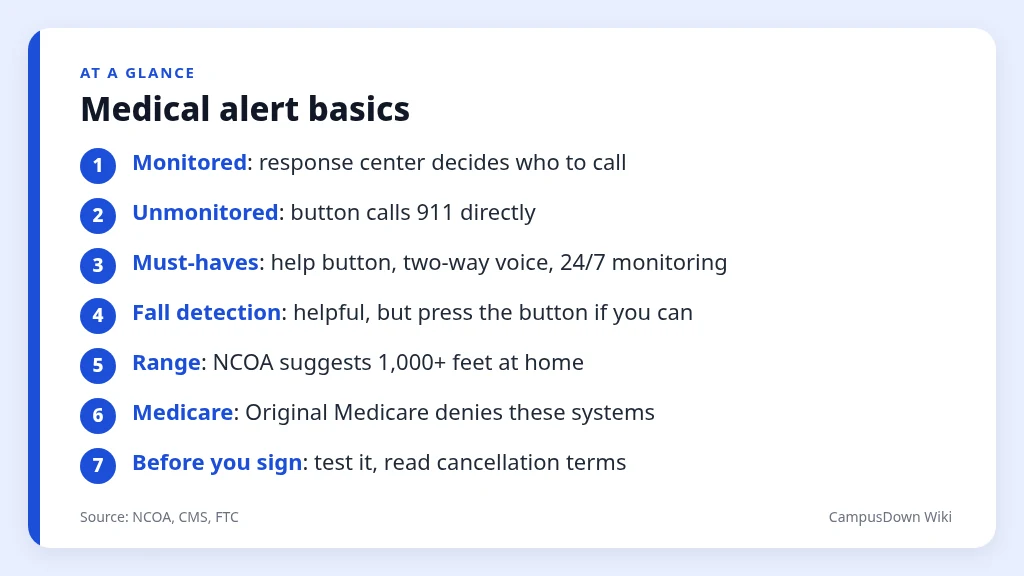
- Monitored: pressing the button connects you to a response center. Staff ask what's wrong and decide whether to send emergency services or contact a family member or friend.
- Unmonitored: the button sends an alert straight to emergency services like 911.
NCOA recommends monitored systems, though they cost more, because someone helps decide the right response. If you live alone or have trouble speaking, ask how the center handles a call where you can't talk.
The three features that matter most
NCOA says most monitored systems include three essentials: an emergency button, two-way communication with the monitoring center, and 24/7 monitoring. Everything else is a choice, such as:
- Fall detection
- In-home range
- Cellular vs landline connection
- GPS for use outside the home
- Battery life
- Caregiver app or alerts
Fall detection: helpful, not perfect
NCOA says automatic fall detection is an add-on that averages about $10 more per month. It also reports that detectors worn on the wrist are less accurate than those worn on the neck or belt, because arms move so much, which can cause false alarms. NCOA's advice is not to rely completely on the sensor: press the help button if you can after a fall.
Fall detection is only one layer. Review your home with our fall prevention checklist, and learn what to do afterward in getting up after a fall.
Range, connection and battery
- Range: NCOA says in-home systems range from about 200 to 1,400 feet and suggests at least 1,000 feet so every room, the yard and the garage are covered.
- Connection: use a landline if you have a reliable one; for cellular, check coverage at your address with the carrier's map.
- Battery: NCOA says most wearables last at least 20 to 24 hours, and some promise several days. Choose one you'll actually keep charged.
- Water resistance: most wearables can be worn in the shower, where many falls happen. Check the product details.
Medical alert system vs smartwatch
A smartwatch with fall detection can call emergency services without a monitoring center. You can take a closer look in our Apple Watch fall detection guide before deciding. A watch works only if it's worn and charged, and you can connect it to a phone; a dedicated pendant may be simpler for people who don't use smartphones.
Does Medicare cover medical alert systems?
CMS's Durable Medical Equipment Reference List (NCD 280.1) says telephone alert systems are denied because they are "emergency communications systems" that don't serve a diagnostic or therapeutic purpose. So Original Medicare doesn't pay for them, and our Medicare DME guide explains which equipment it does cover. Some Medicare Advantage plans offer medical alert benefits as extras; check your plan's Evidence of Coverage.
The FTC's shopping checklist
The FTC suggests:
- Compare several systems and their prices, features and servicing.
- Test the system from every point in and around your home.
- Read the purchase, rental or lease agreement carefully, including cancellation clauses that may add fees.
- Check the unit for defects and ask for the warranty and repair policy.
- Ask the response center if it's open 24/7, its average response time, how staff are trained, and how often it tests your system.
Get help now if
If a salesperson calls or knocks and won't give prices or details except through an in-home visit, the FTC suggests asking for information in writing so you can comparison shop. Don't share your Medicare Number, and see our Medicare fraud guide for common tricks.
Example scenario: the test that found a dead zone
- Who
- Everett, 83, a retired shoe repairman in Pittsburgh, Pennsylvania, lived alone in a two-story home. His daughter, Dulcie, 55, lived two hours away and called every evening.
- What happened
- Last winter he slipped on the basement stairs and lay there for an hour before a neighbor heard him.
- How it felt
- Everett felt embarrassed and insisted he didn't need "a babysitter on a necklace." Dulcie felt a dread every time his evening call went unanswered.
- What they did
- They compared monitored and unmonitored systems and chose a monitored one with a pendant, a landline base and fall detection worn on the neck. When they tested it, the button didn't connect from the basement, so the company swapped the base for a longer-range model. They read the cancellation terms before signing.
- How it turned out
- Everett said he stopped noticing the pendant after a week, except when it let him call for help after a later slip in the garden. Dulcie said the evening calls became chats again instead of check-ins.
This is an illustrative example, not a real patient or a review.
Everett's story is an illustrative example. Features, fees and response times vary by company.
Most-asked questions about medical alert systems
Does Medicare cover medical alert systems?
Original Medicare doesn't. CMS's equipment list denies telephone alert systems as emergency communication devices. Some Medicare Advantage plans offer them as extras.
Why people ask: "does medicare cover medical alert systems" is #1 for "does medicare cover medical alert systems" (US autocomplete, November 2026).
Are medical alert systems for seniors covered by Medicare?
Not under Original Medicare. Ask your Medicare Advantage plan whether it offers a benefit.
Why people ask: "medical alert systems for seniors covered by medicare" is #4 for "medical alert systems for seniors" (US autocomplete, November 2026).
Which medical alert systems for seniors have fall detection?
Many offer it as an add-on. NCOA says it averages about $10 more a month, and wrist-worn detectors are less accurate than neck or belt-worn ones.
Why people ask: "medical alert systems for seniors with fall detection" is #3 for "medical alert systems for seniors" (US autocomplete, November 2026).
Are there medical alert systems for seniors with no monthly fee?
Unmonitored devices that call 911 directly avoid a monitoring fee, but NCOA recommends monitored systems for the help of a response center. Compare total costs.
Why people ask: "medical alert systems for seniors no monthly fee" is #2 for "medical alert systems for seniors" (US autocomplete, November 2026).
How does a medical alert system compare with an Apple Watch?
A watch can call for help if it's worn, charged and connected; a pendant with a monitoring center may be simpler for people who don't use smartphones.
Why people ask: "medical alert system vs apple watch" is #10 for "medical alert system" (US autocomplete, November 2026).
What's the best medical alert system with fall detection and GPS?
Best depends on your needs. Look for a monitored service with two-way voice, GPS if you go out, and a battery you'll keep charged, then test it.
Why people ask: "medical alert system with fall detection and gps" is #3 for "medical alert systems with fall detection" (US autocomplete, November 2026).
Related on CampusDown
Planning home safety? You can learn more about grab bar installation and caregiver burnout.
Frequently asked questions
- Do I need a medical alert system if I have a smartphone?
- Not always, but a phone doesn't help if you can't reach it. A wearable button works when you can't.
- Is fall detection reliable?
- NCOA says it can help but isn't 100% accurate. Press the help button if you can.
- What should I ask before signing a contract?
- Cancellation fees, response center hours and response times, warranty, battery life and whether the system works in every room.
- Does Medicaid pay for medical alert systems?
- It varies by state. Check it for yourself with your state Medicaid office or Area Agency on Aging.
A medical alert system is only as good as the habit of wearing it. Choose a monitored system you'll keep charged, test it in every room, read the contract, and keep fall-proofing your home.
Browse more guides like this in the Home Medical Devices hub.
This article is for general education and does not replace advice from your own doctor, nurse or pharmacist.